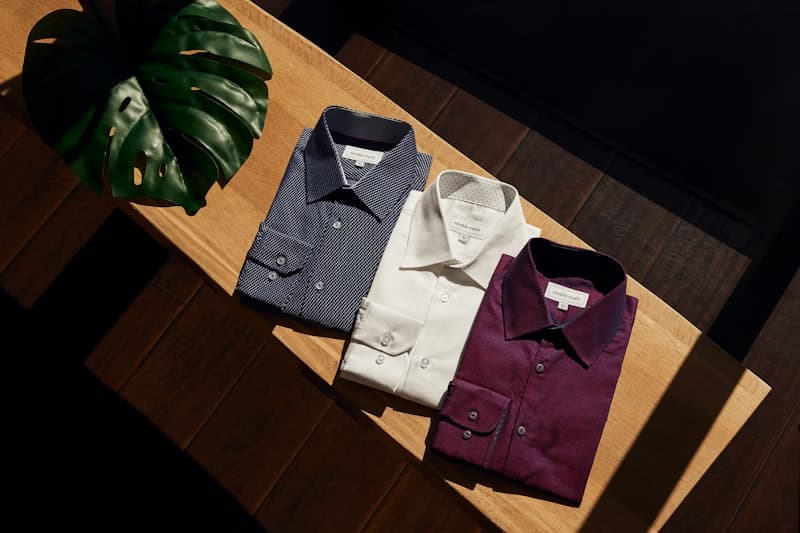
Sustainable & Eco-Friendly Suiting Materials: The Complete Guide to Green Tailoring
From organic wool and Tencel to recycled synthetics and Piñatex, discover the sustainable suiting materials reshaping men's fashion — and how to build an eco-conscious wardrobe without compromising on style.
Introduction
The fashion industry is responsible for approximately 10% of global carbon emissions and is the second-largest consumer of freshwater on earth. Menswear — including suiting — has historically been part of the problem. Conventional wool farming consumes vast amounts of land and water. Polyester suits shed microplastics. And the "fast fashion" approach to formalwear means many suits are worn a handful of times before being discarded.
But change is coming. A new generation of textile innovations — from regenerative wool and lyocell to recycled ocean plastics and even pineapple leather — is making it possible to wear a sharp, well-constructed suit without compromising your environmental values.
This guide covers the full landscape of sustainable suiting materials, the certifications that actually mean something, how to assess a brand's environmental claims, and practical advice for building a green formal wardrobe that still looks immaculate.
Why Sustainable Suiting Matters
Before diving into materials, it's worth understanding why the suiting industry specifically needs to evolve.
The Carbon Footprint of a Conventional Suit
A single off-the-rack wool suit has an estimated carbon footprint of 20–40 kg of CO₂ equivalent. That's roughly the same as driving 100–200 km in a gasoline car. The majority of this comes from:
- Sheep farming: Methane emissions, land use, feed production
- Dyeing and finishing: Chemical-intensive processes that consume large amounts of water and energy
- Transportation: Wool is often shipped from Australia or New Zealand to mills in Italy, then to factories in Southeast Asia, then to retailers worldwide
- Dry cleaning: Perchloroethylene (perc), the most common dry-cleaning solvent, is a suspected carcinogen and groundwater contaminant
The Waste Problem
Estimates suggest that 85% of all textiles end up in landfills each year. While wool is biodegradable under the right conditions (industrial composting), most suits contain synthetic linings, fused interfacings, and plastic buttons that prevent natural decomposition. A polyester-wool blend suit can take 200+ years to break down in a landfill.
The Microfiber Problem
Every time you wash a suit that contains synthetic fibers (polyester, nylon, elastane), microscopic plastic particles enter the water system. These microplastics have been found in human blood, placentas, and remote Arctic ice. Even dry cleaning releases microfibers into wastewater.
The Sustainable Material Landscape
1. Organic & Regenerative Wool
Wool is the most natural suiting fiber — it's renewable, biodegradable, and requires no chemical synthesis. But conventional wool farming has significant environmental impacts: overgrazing leads to desertification, sheep emit methane, and pesticide use contaminates waterways.
Organic Wool is produced without synthetic pesticides, herbicides, or chemical fertilizers. Sheep must be raised on certified organic pasture with humane treatment standards. The result is a cleaner fiber with lower environmental impact.
Regenerative Wool goes further. Regenerative farming practices — rotational grazing, silvopasture (integrating trees), and no-till soil management — actively rebuild soil health, sequester carbon, and increase biodiversity. Well-managed grazing can actually make wool production carbon-negative.
What to look for:
- GOTS certification (Global Organic Textile Standard) — ensures organic fiber content and ethical manufacturing
- ZQ certification — covers animal welfare, environmental management, and social responsibility
- Responsible Wool Standard (RWS) — ensures sheep welfare and land management requirements
- Regenerative Organic Certified (ROC) — the gold standard, covering soil health, animal welfare, and social fairness
Performance: Organic and regenerative wool performs identically to conventional wool — same drape, same breathability, same durability. The difference is entirely in the production method.
Price premium: 15–40% above conventional wool, depending on certification depth.
2. Lyocell & TENCEL™
Lyocell is a man-made cellulosic fiber derived from wood pulp — typically eucalyptus, beech, or spruce. Unlike viscose (a chemically intensive relative), lyocell uses a closed-loop production process that recycles 99% of solvents and water.
TENCEL™ is the branded version produced by Lenzing AG, the Austrian fiber pioneer. It's the most widely available and trusted lyocell for suiting.
Environmental credentials:
- Wood pulp sourced from certified sustainable forestry (FSC or PEFC)
- Closed-loop solvent recycling — virtually no chemical waste
- Biodegradable and compostable under industrial conditions
- Requires 50% less water than cotton to produce
- Uses less energy than polyester production
Performance in suiting: Lyocell has a smooth, silky hand feel with excellent drape. It breathes better than cotton, wicks moisture effectively, and resists wrinkles reasonably well. In blends (typically 30–50% lyocell with wool), it adds softness and reduces the overall carbon footprint of the garment.
Best for: Lightweight summer suits, travel suits (wrinkle resistance), and as a wool blend component for softer hand feel.
Considerations: Lyocell is less insulating than wool, making it better suited for warm-weather suiting. Pure lyocell suits are rare — most are blends.
3. Hemp: The Forgotten Fiber
Hemp is one of the most sustainable crops on earth. It grows rapidly (90–120 days from seed to harvest), requires minimal water, needs no pesticides or herbicides, and actually improves soil health through deep root systems that prevent erosion and aerate the earth.
Environmental credentials:
- Uses 50% less water than cotton
- Grows in poor soil without fertilizer
- Naturally pest-resistant — no pesticides needed
- Sequesters 8–15 tonnes of CO₂ per hectare per growing season
- Biodegradable
Performance in suiting: Hemp fabrics are strong, breathable, and naturally antimicrobial (resistant to odors). The textured, slightly irregular weave gives a distinctive rustic look similar to linen. Hemp wrinkles — though less aggressively than linen — and softens with wear.
Pure hemp suits are casual in appearance, appropriate for summer weddings, garden parties, and creative office environments. Hemp-wool blends (e.g., 55% hemp / 45% wool) offer the best of both worlds: the sustainability and breathability of hemp with the drape and structure of wool.
Best for: Summer suiting, casual blazers, and creative professional settings.
Considerations: Hemp has a distinctive texture that may not suit formal business environments. Dry cleaning is recommended for structured garments.
4. Recycled Polyester & ECONYL®
It sounds counterintuitive — polyester is the enemy of sustainability. But recycled polyester (rPET) transforms waste plastic — typically discarded bottles or fishing nets — into fiber, keeping plastic out of landfills and oceans while using significantly less energy than virgin polyester production.
ECONYL® is a specific regenerated nylon made from discarded fishing nets, fabric scraps, and industrial plastic waste. It's increasingly used in suiting for linings, pocket bags, and blended outer fabrics.
Environmental credentials:
- rPET uses 59% less energy than virgin polyester
- ECONYL® regenerates nylon infinitely without quality loss
- Diverts waste from oceans and landfills
- Reduces crude oil extraction for virgin synthetic production
Performance in suiting: Recycled polyester performs identically to virgin polyester — it's durable, wrinkle-resistant, quick-drying, and can be blended with natural fibers for added performance. ECONYL® has excellent strength and elasticity.
The caveat: Every wash releases microplastics — even from recycled synthetics. Use a Guppyfriend washing bag or a microfiber-catching filter (like the PlanetCare or Filtrol) to capture shed fibers. Better yet, dry clean sustainably (see below).
Best for: Travel suits, performance suiting, linings, and pocket bags.
5. Piñatex (Pineapple Leather)
Piñatex is a natural, non-woven textile made from pineapple leaf fibers — a byproduct of the pineapple harvest. It was developed by Dr. Carmen Hijosa and is produced by Ananas Anam.
Environmental credentials:
- Uses waste from existing agriculture — no additional land, water, or fertilizer
- Biodegradable in industrial composting conditions
- Supports rural farming communities in the Philippines
Suiting applications: Piñatex is primarily used as a leather alternative for shoes, belts, watch straps, and trims. Some avant-garde designers have produced full Piñatex jackets, but it's not yet a mainstream suiting fabric. Look for it in:
- Button covers and detailing
- Belt loops and trim accents
- Shoe and accessory matching
6. Organic Cotton & Linen
Both cotton and linen are natural, biodegradable fibers, but their conventional production has major environmental costs. Cotton is one of the most pesticide-intensive crops globally. Linen (flax) is more sustainable by default but still has environmental impacts from farming and processing.
Organic Cotton eliminates synthetic pesticides and fertilizers, uses 91% less water than conventional cotton (according to the Textile Exchange), and supports healthier soils. Look for GOTS certification.
Organic Linen — or simply responsibly grown flax — is inherently lower-impact. European flax (grown in France, Belgium, the Netherlands) typically uses rain-fed irrigation and minimal chemicals. The Masters of Linen certification from Europe ensures traceability and responsible production.
Performance: Organic cotton suiting has a soft hand but limited structure — best for unlined summer jackets and casual blazers. Linen suits are classic summer staples with unmatched breathability.
Certifications: What Actually Matters
Brands love greenwashing. Here are the certifications worth trusting:
| Certification | Scope | What It Verifies |
|---|---|---|
| GOTS | Organic fibers + manufacturing | At least 70% organic fibers, restricted chemicals, wastewater treatment, social standards |
| OEKO-TEX Standard 100 | Finished product | No harmful chemicals in the final garment |
| OEKO-TEX MADE IN GREEN | Product + production | Same as Standard 100 + sustainable manufacturing and worker safety |
| RWS (Responsible Wool Standard) | Wool | Sheep welfare, land management, supply chain traceability |
| ROC (Regenerative Organic Certified) | Regenerative agriculture | Soil health, animal welfare, social fairness — the most comprehensive |
| FSC (Forest Stewardship Council) | Wood/paper products | Sustainable forestry for lyocell, viscose, and paper-based trims |
| Cradle to Cradle Certified | Circular economy | Material health, product circularity, clean air/water, social fairness |
| B Corp | Company-level | Overall social and environmental performance, transparency, accountability |
Our advice: GOTS for natural fibers, OEKO-TEX as a baseline for any garment, ROC for wool if you can find it. A B Corp certification on a brand shows holistic commitment beyond just materials.
Greenwashing Red Flags
Not everything labeled "eco-friendly" deserves your trust. Watch out for:
- Vague claims without evidence: "Sustainably sourced" means nothing without certification. Ask which certification.
- Single-item focus: A brand that sells a "conscious collection" while the rest of their line uses conventional materials is cherry-picking. Look at the full range.
- Recycled polyester as a savior: Recycled polyester is better than virgin polyester, but it still sheds microplastics and isn't biodegradable. It's a step, not a solution.
- Carbon offsetting without reduction: Offsetting tree planting while maintaining high emissions is less credible than direct emission reduction.
- Confusing "natural" with sustainable: Leather is natural but cattle farming is carbon-intensive. Wool is natural but can come from poorly managed land.
Sustainable Suit Construction
Sustainable suiting isn't just about fabric — construction matters too.
Half-Canvas vs. Full-Canvas vs. Fused
Most affordable suits use fused construction — a plastic-based adhesive (polyamide) bonds the outer fabric to an internal interfacing. This adhesive prevents the suit from being biodegradable at end of life. It also bubbles and delaminates over time.
Half-canvas and full-canvas suits use horsehair or wool canvas that's stitched, not fused. This construction:
- Is biodegradable (natural materials only)
- Lasts 3–5x longer than fused suits
- Can be repaired and re-tailored
- Ages better — the canvas molds to your body
Verdict: A canvas-constructed suit, even in conventional wool, is more sustainable over its lifetime than a fused "eco-friendly" suit that falls apart in two years.
Linings and Buttons
- Bemberg cupro (made from cotton linter waste) is a biodegradable, silky lining — far better than polyester
- Hemp or organic cotton lining is even better
- Corozo buttons (made from tagua nut, also called "vegetable ivory") — biodegradable and renewable
- Recycled plastic buttons — better than virgin plastic but still plastic
- MOP (mother of pearl) — natural, durable, but animal-derived
Dyes and Finishes
- Low-impact dyes use less water and energy, and fix more dye to the fiber (less wastewater runoff)
- Natural dyes (indigo, madder root, cutch) are biodegradable but less colorfast and more expensive
- Waterless dyeing technologies (e.g., AirDye, ColorZen) can reduce water consumption by 95%
- Avoid fluorocarbon-based finishes (waterproofing sprays) — they are persistent environmental pollutants
Top Sustainable Suiting Brands
Luxury / Investment Tier
- Manteco — Italian mill using 100% recycled wool (from pre- and post-consumer waste) with full traceability. Their ReWool line matches virgin wool quality.
- Piacenza 1733 — Uses organic and regenerative wool, vegetable-tanned leather details, and natural corozo buttons. A family mill since the 18th century.
- Canali — Their "Sustain-Made" collection uses recycled wool, organic cotton, and eco-friendly dyes.
- Zegna — The Italian luxury house has a full "Oasi Cashmere" and eco-friendly wool program with traceable supply chains.
Mid-Range / Accessible
- Marks & Spencer — Their "Suit Refresh" and sustainable wool lines are surprisingly good for the price point. Look for their responsible wool sourcing.
- Suitsupply — Launched their "Sustainability" line with GOTS-certified organic suits and recycled polyester options, though their conventional line still dominates.
- Hackett London — Their heritage British suiting includes some sustainable options, particularly in their blazer collection.
- Mango Man — "Committed" line includes GOTS-certified organic cotton blazers at accessible prices.
Custom / Made-to-Measure
- Sumisura — Offers organic wool and eco-friendly linings in fully customizable suits.
- Black Lapel — Custom suits with sustainable fabric options and carbon offsetting on all orders.
- Knot Standard — Eco-friendly fabric library includes recycled wool and TENCEL™ blends.
How to Care for a Sustainable Suit
The most sustainable suit is the one you keep wearing. Proper care dramatically extends garment life.
Cleaning
- Reduce dry cleaning frequency — Dry clean 2–3 times per year max, not after every wear. Most suits just need steaming and airing.
- Find a green dry cleaner — Ask if they use hydrocarbon (DF-2000) instead of perc, or wet cleaning (professional machine washing with biodegradable detergents).
- Spot clean — Address stains immediately with a damp cloth and mild soap rather than a full cleaning.
- Steam, don't press — Steaming removes odors, kills bacteria, and relaxes wrinkles without the heat and pressure of ironing.
Storage
- Wooden hangers — Cedar or beech wood absorb moisture and maintain jacket shape. Avoid wire hangers.
- Breathable garment bags — Use cotton or canvas bags instead of plastic dry-cleaning bags. Plastic traps moisture, leading to mildew.
- Cedar blocks — Natural moth repellent without chemical naphthalene.
- Rotate your suits — Let suits rest 24–48 hours between wears to allow fibers to recover.
Repair
- Replace buttons — Keep spare buttons and replace immediately when loose.
- Patch pocket wear — A good tailor can reinforce or replace pocket linings.
- Re-stitch buttonholes — Loose stitching can be re-done rather than replacing the garment.
- Resole shoes — Quality leather shoes can be resoled 4–5 times, lasting 10–20 years.
The Future of Sustainable Suiting
Bio-Based Synthetics
Companies like Spiber and Bolt Threads are creating bio-engineered fibers — spider silk proteins produced through fermentation — that match or exceed the performance of synthetic fibers without the fossil fuel inputs and microplastic shedding.
Mushroom Leather (Mylo, Reishi)
Mycelium-based leather alternatives are maturing rapidly. Mylo (by Bolt Threads) and Reishi (by MycoWorks) are being adopted by luxury houses for accessories and could enter suiting trim and outerwear within the next 3–5 years.
Circular Suiting Services
Brands are beginning to offer take-back programs — Suitsupply, Zegna, and others allow you to return worn suits for recycling or refurbishment. This keeps materials in circulation rather than in landfills.
Digital IDs
Blockchain-based digital IDs (woven into the care label) will soon provide full supply chain transparency for every garment — from farm to finished suit. Scan a QR code to see exactly where your wool was grown, how the fabric was dyed, and who stitched the jacket.
Summary
Sustainable suiting is no longer a niche concern — it's becoming a mainstream expectation. The key takeaways:
- Prioritize natural fibers (wool, hemp, linen, organic cotton) over synthetics where possible.
- Look for certifications — GOTS, RWS, ROC, and OEKO-TEX are meaningful; vague green claims are not.
- Choose canvas construction for longevity — the most sustainable suit is the one you wear for 10+ years.
- Buy once, buy well — investing in a high-quality suit from a sustainable mill is greener than buying three cheap suits over the same period.
- Care properly — reduce dry cleaning, steam instead of iron, repair instead of replace.
- Consider the full lifecycle — material sourcing, construction, transport, use, and end-of-life all matter.
You don't have to sacrifice style for sustainability. The best eco-friendly suits look, feel, and perform every bit as well as their conventional counterparts — with the added benefit of knowing your formal wardrobe isn't costing the planet.
Frequently Asked Questions
Is wool sustainable?
Wool is renewable and biodegradable, but conventional wool farming has significant environmental impacts — methane emissions, land use, and potential overgrazing. Organic and regenerative wool certifications address these issues. If you're buying wool, look for RWS or ROC certification.
Is recycled polyester as good as virgin polyester?
Recycled polyester performs identically to virgin polyester and uses 59% less energy to produce. However, it still sheds microplastics when washed and isn't biodegradable. It's a better choice than virgin polyester but not as good as natural fibers from a lifecycle perspective.
Can I dry clean a sustainable suit?
Yes, but minimize dry cleaning frequency. Look for a green cleaner that uses hydrocarbon or wet cleaning instead of perc. Most sustainable suits need dry cleaning 2–3 times per year at most — steaming and airing between wears covers the rest.
What's the most sustainable suit fabric?
Hemp is arguably the most sustainable fiber — it grows rapidly without pesticides, requires minimal water, improves soil health, and is biodegradable. For a formal setting, a hemp-wool blend offers the best balance of sustainability and traditional suit aesthetics.
Is organic cotton better than conventional cotton for suits?
Yes — organic cotton eliminates synthetic pesticides and fertilizers, uses significantly less water, and supports better soil health. GOTS certification ensures the organic claim is verified. However, cotton is less structured than wool for traditional suiting, so it works best in casual blazers and summer suits.
What does "deadstock fabric" mean?
Deadstock fabric is surplus fabric from fashion houses or mills that would otherwise go to waste. Using deadstock reduces demand for new production and keeps fabric out of landfills. Many independent and made-to-measure suit makers offer deadstock options.
Are vegan suiting materials more sustainable than wool?
Not necessarily. Vegan synthetic fibers (polyester, nylon) are petroleum-based and shed microplastics. Vegan natural fibers (organic cotton, hemp, TENCEL™) are generally more sustainable than wool from a carbon/water perspective, but may lack wool's durability and longevity. The most sustainable choice depends on the specific material and production method, not just whether it's animal-derived.
How can I verify a brand's sustainability claims?
Check for third-party certifications (GOTS, RWS, OEKO-TEX, B Corp). Look for specific, verifiable claims rather than vague language. Check the brand's sustainability report or policy page. Be skeptical of brands that only have one "conscious" collection while the rest of their line remains conventional.