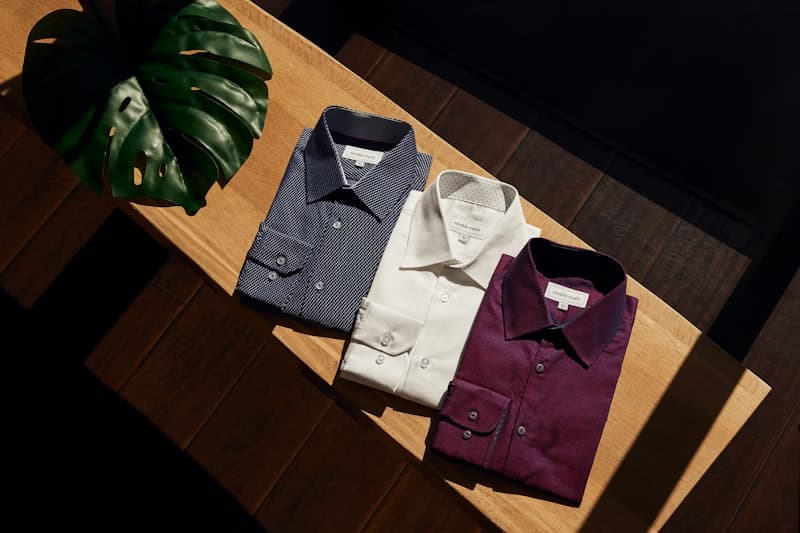
Summer Cotton Wardrobe: Building a Heat-Proof Capsule
Beat the heat without sacrificing style. A curated summer cotton capsule built around oxford cloth, linen-cotton blends, seersucker, and loopwheeled jersey from heritage mills.
Why Cotton Dominates Summer
Synthetic fabrics trap heat against the skin because they lack the natural breathability of cellulosic fibers. Cotton absorbs up to 27 times its weight in moisture vapor before feeling damp, which is why it remains the undisputed king of warm-weather dressing. The best summer cottons go beyond basic T-shirt jersey. They include open-weave oxford cloth, slubby linen-cotton blends, crisp seersucker, and airy voile. Each construction offers a different balance of airflow, structure, and drape.
Modern mills have elevated summer cotton to a level that would have been unimaginable a generation ago. Japanese loopwheelers like Shinya and Merz B. Schwanen produce tubular-knit cotton that breathes through its very construction rather than relying on thin fabric weight. Italian shirting mills like Thomas Mason and Albini weave oxford cloths with a granular texture that stands away from the skin, allowing air to circulate freely. Portuguese flannel mills have pivoted to tropical-weight cottons that retain the soft hand of brushed cotton without the overheating.
The Oxford Cloth Button-Down: Your Summer Anchor
The oxford cloth button-down, or OCBD, is the most versatile piece in a summer cotton wardrobe. A 3.8-ounce oxford from Mercer & Sons or Kamakura Shirts offers enough body to hold a collar roll without being so heavy that it clings in humidity. The key summer detail is a soft, unlined collar that curls naturally when worn open and sits flat under a jacket. Avoid fused collars in summer oxfords because they trap heat and flop when saturated with sweat.
Roll the sleeves with precision. A clean summer sleeve roll requires three folds above the elbow, each about two fingers wide, followed by a final fold that tucks the excess fabric under the cuff. This holds the roll in place without pinching the biceps. Leave the top button undone and consider a half-tuck for off-duty moments. Worn with a pair of tailored chinos in sand or stone, a white or light-blue OCBD has carried men through summers from Palm Beach to Paris without apology.
Seersucker and Its Modern Revival
Seersucker's puckered weave creates a permanent air gap between fabric and skin, which is why it has been a Southern staple since the 19th century. The puckers are formed by weaving cotton yarns under differing tensions so that some threads draw up while others remain flat. This structure promotes airflow and prevents the fabric from sticking to sweat-dampened skin. Traditional seersucker is striped in blue and white, but contemporary mills have diversified into solid navy, gray, and even muted olive.
A seersucker sport coat worn with cream linen trousers is the unofficial uniform of summer garden parties and outdoor weddings. For day-to-day wear, a seersucker button-down shirt paired with dark wash denim or khaki chinos reads as intentional rather than costume. Brands like Sid Mashburn and O'Connell's Clothing offer seersucker suits with soft construction and natural shoulders that drape well without tailoring that feels heavy. The fabric wrinkles, yes, but that is the point. The patina of soft creases signals that you are comfortable in the heat rather than fighting it.
Loopwheeled Jersey and Summer Knits
Loopwheeled cotton jersey is the pinnacle of T-shirt engineering. The loopwheel machines knit fabric in a tubular form using a slow, low-tension process that creates a fabric without side seams and with a natural, breathable stretch. Merz B. Schwanen, The Real McCoy's, and Whitesville all produce loopwheeled tees in weights between 5.3 and 7.2 ounces. A 6.3-ounce loopwheeled tee offers the ideal summer weight: substantial enough to hold its shape and resist nipple show, but open enough in its knit structure to allow airflow.
Summer knits extend beyond the T-shirt. A linen-cotton sweatshirt from John Elliott or Nostalgia provides layering weight without insulation. The blend of roughly 55 percent linen to 45 percent cotton creates a fabric that is crisp to the touch, resists pilling, and dries rapidly when you sweat through it. Crewneck sweaters in cotton-cashmere blends from Gran Sasso or Inis Meain offer evening coverage when the coastal breeze picks up. These pieces pack flat in a weekend bag and emerge ready to wear.
The Linen-Cotton Blazer
Linen-cotton blazers solve the perennial problem of summer tailoring: how to look polished when conventional suit fabrics are unbearable. A well-made linen-cotton jacket uses a 60-40 or 50-50 blend that gives the jacket the rumpled texture of linen and the colorfastness of cotton. Ring Jacket and Caruso both produce unconstructed summer blazers with minimal shoulder padding, no canvassing in the lapels, and a half-lined back that reduces the layer count between jacket and skin.
Wear the linen-cotton blazer with a pair of high-rise cotton trousers in a contrasting shade. A navy and white houndstooth jacket over taupe chinos creates a tonal silhouette that reads as considered without being stiff. Replace the dress shirt with a loopwheeled crewneck tee or a polo from Sunspel or Kent Wang. The soft collar of a polo keeps the outfit in summer territory while the structured shoulder of the jacket provides definition. Loafers or unlined suede derbies complete the look without adding weight.
Care and Rotation Strategy
Cotton garments degrade fastest when they are washed too often and dried too aggressively. Rotate your summer cotton pieces on a strict schedule. A T-shirt should rest for at least 24 hours between wears to allow the cotton fibers to relax and moisture to fully evaporate. Use a garment steamer rather than an iron for most pieces. Steam kills odor-causing bacteria and relaxes wrinkles without pressing the life out of the fabric. Reserve ironing for OCBDs and linen-cotton blazers.
Invest in cedar hangers and breathable cotton garment bags for storage during the off-season. Moth larvae favor protein fibers like wool and cashmere, but they will attack cotton that has food stains or sweat residue. Wash everything before storing for winter and seal in cotton bags with cedar blocks. A well-maintained summer cotton capsule can deliver five years of reliable service from each piece, far exceeding the turnover rate of synthetic alternatives.