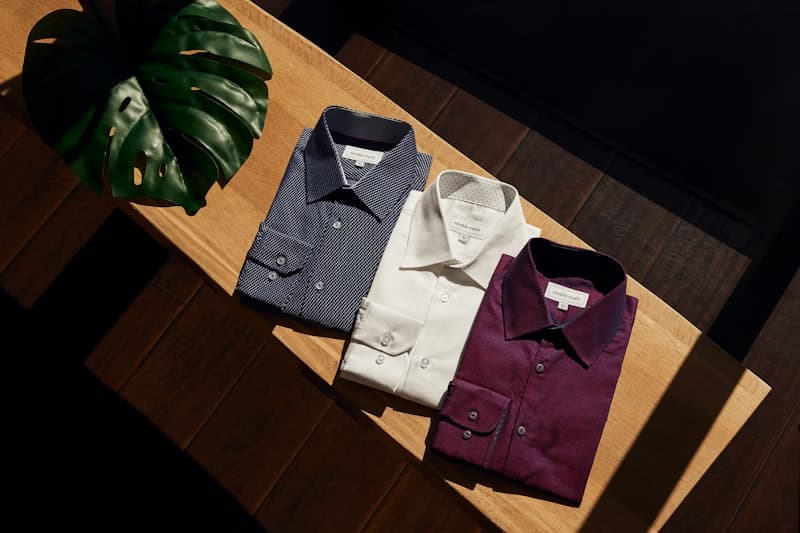
Summer Commute Style: Choosing Breathable, Wrinkle-Resistant Fabrics
What to wear commuting in summer without looking sloppy? From linen blends to performance fabrics, here's your hot-weather style guide.
The Summer Commute Dilemma
Every summer brings the same challenge. You want to dress professionally for the office, but stepping into a subway station or walking fifteen minutes in thirty-five degree Celsius heat means you will arrive at work with a sweat-soaked shirt. By lunchtime you feel grimy, and by mid-afternoon your crisp morning look has devolved into a wrinkled, uncomfortable mess.
The problem is not your style choices. The problem is your fabric selection. Choose the right materials, and you can look polished, professional, and composed even in extreme summer heat. This guide breaks down the best fabric options for summer commuting, from natural classics to modern performance textiles, with specific recommendations for every budget and dress code.
The Gold Standard: Linen
Linen is the undisputed king of summer fabrics for good reason. Its hollow fiber structure allows air to circulate freely, making it two to three times more breathable than standard cotton. Linen can absorb up to twenty percent of its weight in moisture before it begins to feel damp against the skin. Its natural antibacterial properties mean it resists odor much better than cotton, and its rapid drying time keeps you comfortable even in humid conditions.
Pros: Extremely breathable, fast-drying, naturally odor-resistant, feels cool against the skin. Cons: Wrinkles dramatically and quickly. Sit down for five minutes, and you will develop permanent-looking creases at the knees and seat. This is the single biggest barrier to linen adoption in professional settings.
Shopping advice:
- 100% linen shirts are ideal for casual-Friday environments, creative offices, or days without client-facing meetings
- For significantly fewer wrinkles without sacrificing too much breathability, choose a linen-cotton blend — typically fifty-five percent linen and forty-five percent cotton. You retain most of linen's cooling properties while reducing visible wrinkling by roughly half
- A linen blazer is an excellent summer alternative to a full structured suit jacket. Pair it with chinos or dark tailored denim for a look that communicates professionalism while keeping you dramatically cooler than a traditional wool or polyester-blend jacket
- Look for linen fabrics in the 150 to 200 gsm (grams per square meter) range — light enough to be breathable but opaque enough to maintain a professional appearance
The Workhorse: Cotton
Cotton is the most common dress shirt fabric, but not all cotton performs equally in summer conditions. The key differentiators are weave structure and fabric weight.
Poplin (also called Broadcloth): A plain, tight weave that produces a lightweight, smooth fabric. This is the classic summer dress shirt material. Look for weights between 100 and 120 gsm for the lightest, most breathable options that still offer sufficient opacity.
Oxford Cloth: A basket-weave construction that is noticeably heavier and more textured than poplin. Oxford shirts are excellent for business-casual environments and look great in air-conditioned offices, but the heavier weight makes them noticeably warmer during outdoor commutes. Reserve Oxford cloth for days when your commute is short or air-conditioned.
Egyptian or Supima Cotton: Longer cotton fibers produce a smoother, stronger, more breathable fabric. These premium cottons feel noticeably nicer against the skin but share the fundamental limitation of all cotton: they absorb moisture rather than wicking it away, so they will feel damp when you perspire.
Shopping advice:
- Your primary summer dress shirt should be lightweight poplin at or below 120 gsm
- Look for "Non-Iron" or "Wrinkle-Resistant" treatment labels — these shirts undergo a chemical or mechanical process that significantly reduces wrinkling during wear, keeping you looking crisp through the commute and into the afternoon
- A two to three percent elastane (spandex) content adds useful stretch for better range of motion and helps the shirt hold its shape after sitting for extended periods
- Avoid double-weave Oxford cloth shirts in summer — the dual-layer construction traps heat and dramatically reduces breathability
The Overachievers: Performance and Technical Fabrics
If you bike to work, walk more than ten minutes, or use crowded public transit where you cannot control the temperature, natural fabrics alone may not be sufficient. Performance fabrics are engineered specifically to solve the problems that arise during active commutes.
Coolmax: A proprietary polyester technology developed by DuPont. It uses multi-channel fibers (typically four or six channels per fiber) that create a capillary effect, pulling moisture away from your skin to the fabric surface where it evaporates rapidly. Coolmax dries approximately five times faster than cotton, weighs thirty percent less, and feels significantly cooler during physical activity. Ideal for cyclists and walkers who need to arrive at the office presentable rather than drenched.
Tencel (Lyocell): A fiber derived from sustainably sourced wood pulp through a closed-loop production process. Tencel is more breathable than cotton, more durable than silk, and feels noticeably cool and smooth against the skin. It has a natural drape that resists wrinkling far better than linen. Tencel-cotton and Tencel-linen blends offer what many experts consider the best overall balance of breathability, wrinkle resistance, and comfort available in summer fabrics today.
Cool Wool / Merino Wool: If the word "wool" makes you think of heavy winter suits, it is time to update your understanding. Merino wool fibers are incredibly fine — premium Merino measures between eighteen and twenty microns in diameter — and they create an intelligent microclimate against your skin. When it is warm, the fibers release heat. When it is cool, they provide insulation. Merino is naturally moisture-wicking, odor-resistant, and wrinkle-resistant. A Merino wool suit or blazer is the holy grail of summer business attire — it breathes better than most cotton, resists wrinkles better than linen, and can be worn multiple times between cleanings. The only downside is the higher price point.
Shopping advice:
- Tencel blend shirts are the dark horse of summer commuting — more breathable than cotton, less wrinkled than linen, and more refined than synthetic fabrics
- Coolmax-infused dress shirts are specifically designed for active commuters. They look like regular dress shirts but perform like athletic wear
- A lightweight Merino wool T-shirt worn as a base layer is an excellent investment — it regulates temperature, resists odor, and can be worn four to five days between washes without developing smell, making it particularly valuable for travelers
Cut and Color Strategy
Fabric selection is only half the equation. The cut of your clothing and the colors you choose play equally important roles in summer comfort.
Fit and construction tips:
- Summer clothing should fit slightly more loosely than your cooler-weather wardrobe. Tight garments trap heat against the body and make sweat marks more visible
- Choose unstructured or half-lined blazers and suit jackets. Removing shoulder padding and reducing internal lining dramatically improves airflow while increasing freedom of movement
- Look for shirts with rollable cuffs — button-tab cuffs or dedicated roll-up sleeve mechanisms make it easy to adjust your coverage as the temperature fluctuates between outdoor heat and air-conditioned offices
- Trousers should be straight or slightly tapered rather than skinny — more air circulation around the legs
Color strategy:
- Light colors reflect sunlight and heat rather than absorbing them. White, light blue, light gray, beige, and khaki form your core summer palette
- Dark colors absorb more heat, but if your office dress code requires navy or charcoal, you can still stay comfortable by choosing those colors in lightweight, breathable fabrics like linen, Tencel, or lightweight wool
- The "lightweight dark" strategy: buy dark-colored garments in the most breathable fabrics available. This gives you the professional authority of darker colors with the cooling performance of summer fabrics
- Khaki and beige trousers are the best summer alternatives to traditional dress pants — they maintain a business-appropriate appearance while being significantly cooler than dark wool or cotton trousers
Footwear for Hot Weather
Dress shoes are one of the most challenging items for summer commuting. Standard leather oxfords with closed construction and synthetic linings can turn your feet into a sauna within ten minutes of walking.
Best summer commuting shoe options:
- Loafers: The laceless design inherently allows more airflow than lace-up shoes. Choose genuine leather or suede in tan, cognac, or dark brown. Loafers work with most business-casual dress codes and are significantly cooler than traditional oxfords
- Perforated leather derbies (Brogues): The decorative perforations on brogues are not purely ornamental — they function as ventilation holes. A full-brogue shoe has the most perforations and therefore the best airflow. Pair with lightweight trousers for a polished summer look
- Suede shoes: Suede is naturally more breathable than smooth calfskin because its brushed surface texture creates microscopic air channels. Suede loafers or chukka boots are excellent choices for summer business-casual environments
- Boat shoes or deck shoes: These are at the casual end of the spectrum but work well for creative industry offices, casual Fridays, or any environment where the dress code allows smart-casual
The one rule you must not break: Always wear no-show socks (also called invisible socks or footie socks) with summer shoes. Going sockless in leather dress shoes may look stylish, but the accumulated sweat will degrade the leather lining and produce an odor that is very difficult to eliminate. Choose no-show socks made from Merino wool or silver-infused fabrics — these materials wick moisture and inhibit bacterial growth, keeping your shoes fresh much longer.
Building Your Summer Commute Wardrobe
A well-planned summer commuting wardrobe does not require a complete overhaul of your closet. Start with two or three lightweight poplin or Tencel-blend shirts in light colors. Add one linen blazer or unstructured jacket in beige or light gray. Replace one or two pairs of heavy trousers with khaki or light wool options. Choose breathable loafers or brogues as your primary summer footwear.
With these foundation pieces, you can mix and match to create a week's worth of professional, comfortable summer outfits. The key principle is fabric-first decision-making: before you consider style, cut, or color, check the fabric composition. Lightweight, breathable, and preferably wrinkle-resistant. Modern textile technology has advanced enormously in the past decade. There is no longer any excuse for spending the summer months uncomfortable, sweating through meetings, or choosing between looking professional and feeling human.