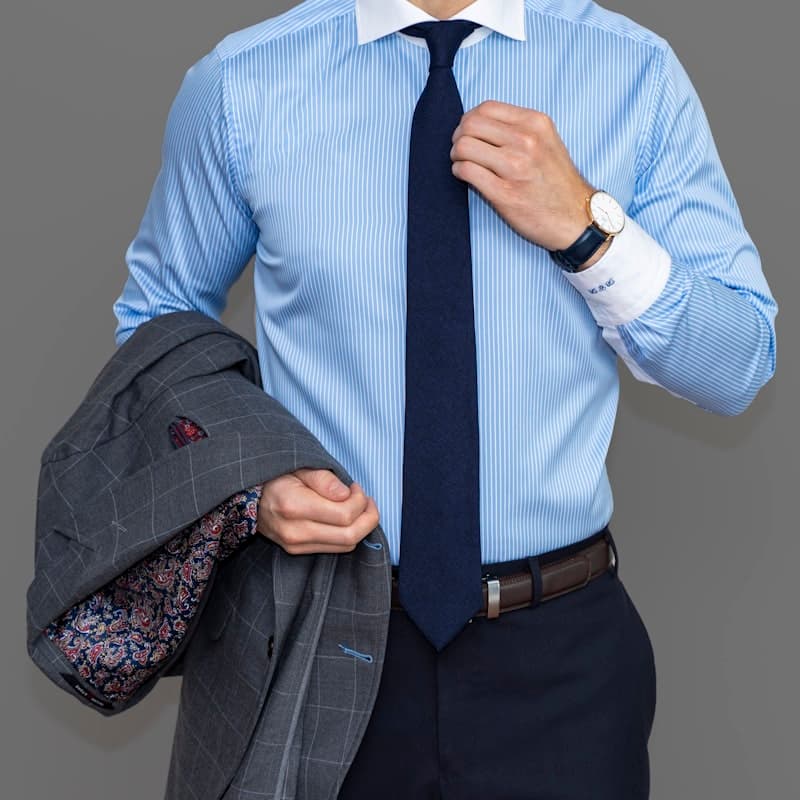
The Complete Suit Guide for Every Occasion — Interviews, Meetings, Weddings, Office & Dinners
From interview to wedding to dinner party, here's how to dress your suit right for any scenario
The worst mistake in suit wearing isn't not knowing how to wear one — it's wearing the wrong one for the occasion. I've seen someone in a full black tuxedo at an afternoon outdoor wedding, and someone in an earth-tone sports suit at a formal interview. Not that you can't — but the vibe was completely off. The golden rule of suit dressing is "match the occasion." Today I'm breaking down the five most common scenarios — interviews, business meetings, weddings, daily office, and dinners — with specific advice for each.
Interviews: Steady and Reliable Is the Goal
Interviews are the #1 reason most people buy a suit. The core principle is one word: reliable. You don't need to show personality through your clothes — you need to convey "this person is professional and trustworthy." The safest choice: a navy suit + white shirt + black leather shoes. Navy conveys steadiness without the severity of black or the casualness of gray.
For the tie, consider two scenarios. If you're interviewing in a traditional industry (finance, law, government, state-owned enterprise), add a solid navy or burgundy tie. For tech or creative industries, skip the tie and leave the top button undone. Either way, no flashy ties, no pocket squares, no cufflinks — interviews aren't fashion shows. The simpler, the better.
Three must-check details before walking in: First, is your jacket buttoned correctly? Single-breasted two-button only buttons the top; three-button buttons the middle one. Second, is about 1 cm (half an inch) of shirt cuff showing past the jacket sleeve? Third, are your shoes polished? Nail these three and your first impression score will be solid. According to HR surveys, well-dressed candidates pass first-round interviews at roughly 37% higher rates than casually dressed ones.
One often-missed point: don't wear a too-slim fit for interviews. You need to look composed and at ease — a tight, narrow-cut jacket makes every movement look strained. Go with a standard or lightly tailored fit so sitting, standing, and handshakes all flow naturally.
Business Meetings: Match Your Formality to Your Role
Business meetings are similar to interviews but more flexible. The key principle is "role matching" — your formality should match your role in the meeting. If you're presenting or leading the discussion, go formal: navy suit with white or light blue shirt and a solid tie. If you're attending as a participant, dial it down — a gray suit with a light blue shirt, no tie needed, paired with brown Derbys. Professional without being stiff.
One absolute rule: never dress more conspicuously than your boss. If they're in navy, don't show up in a bright suit. Business dressing isn't about impressing — it's about looking like a professional.
Pro tip for full-day meetings: keep a spare shirt at the office. Switching to a fresh shirt after lunch noticeably improves your afternoon presence. It's not about the suit, but most people underestimate how much this detail affects your overall image.
Weddings: Look Good, but Not Better Than the Groom
A wedding is really two separate scenes: daytime ceremony and evening reception. For daytime outdoor or church weddings, lean into relaxed elegance — a light gray or gray suit with a white shirt. You can skip the tie or wear a skinny casual one. Brown Derbies or loafers work perfectly. Light colors photograph cleanly in sunlight and won't steal the groom's spotlight.
For the evening reception, you can step it up — navy suit with white or light blue shirt and a refined tie. Black can work, but if the groom is in black, you in black creates an awkward dynamic. Three wedding "don'ts": don't wear white (that's the groom's color), don't wear anything too bright or flashy, and don't clash with the groomsmen's colors.
If you're unsure, gray is the safest wedding color. It's ceremonial without stealing the show — equally fitting under sunlight at the ceremony and under evening lights at the reception.
Daily Office: You Don't Need the Full Set
Daily office suit-wearing is all about "smart casual." You don't need the full suit set — just the jacket paired with khakis or dark jeans, with loafers or Derbys. This has become the mainstream workplace look since 2020. A sports suit with a T-shirt or knit sweater is the most comfortable daily option — polished without being restrictive, refined without being stiff.
For daily colors, you have more freedom. Earth-tone sports suits — khaki, olive green, sand — look outstanding in an office setting. A personal favorite: olive green sports suit with a white T-shirt and navy chinos. Simple, comfortable, never sloppy. If your job involves a lot of moving around, a sports suit is far more practical than pure wool.
One "occasion-switching" trick: wear the jacket for morning meetings to look formal, take it off for afternoon solo work, add a scarf after work for a casual dinner date. One sports jacket can carry you through three different looks in a single day.
Dinner Parties: Impressive Without Being Over-the-Top
Dinners are among the most formal occasions. The classic formula: black suit + white shirt + black tie (or bow tie) + black Oxfords. The all-black combination looks incredibly rich in evening lighting, and black carries an "exclusive formal wear" feel. If it's a very formal dinner (annual gala or awards ceremony), consider a French-cuff shirt with cufflinks — one of the few accessories where you can show personality at a formal event. Silver or gold minimalist ones are safest.
Don't skip the pocket square for dinner. A white linen square in a Presidential or Triangle fold adds instant depth to the outfit. And remember to unbutton your jacket before sitting down — basic dinner etiquette.
Two practical tips: first, choose a tie with quality fabric for dinner — silk or wool ties catch light far better than polyester. Second, if it's winter, wear an overcoat over your suit and check it at the coat room. The walk from entrance to table is part of your image too.
Beyond the Core: Wallet-Level Advice
First day at work: dress one notch more relaxed than your interview self. Navy jacket with khakis, or gray suit with a light blue shirt and no tie. Not so formal you create distance, not so casual you lose professionalism.
Funeral: black suit + white shirt + black tie. Only black and white. No accessories. A funeral is no place for fashion — solemnity and restraint are the deepest respect.
Date night: sports suit with a T-shirt and jeans is the sweet spot. Looks intentional without looking like you tried too hard. Earth tones — khaki or olive — with a light T-shirt create warmth and approachability.
The One-Jacket Capsule Approach
One navy jacket, multiple looks: pair with gray trousers and brown shoes for a wedding; match with navy trousers and black shoes for an interview; wear with khakis and loafers for the office. Same jacket, different bottoms and shoes — three completely different looks. This is the capsule wardrobe logic: fewer pieces, each one versatile.
A quality navy suit can take you to interviews, weddings, meetings, dates, and dinner parties. If you're buying only one suit, make it navy — it covers 90% of the occasions in your life that require a suit. Build from there with gray, black, and earth tones as your experience grows. You won't overbuy, and nothing will sit unworn.