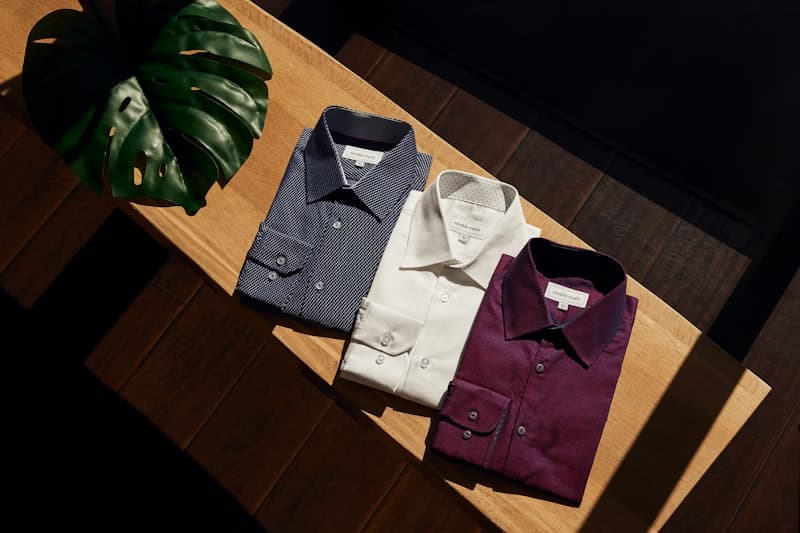
Suit Fit Guide for Every Body Type: Find Your Perfect Silhouette
Introduction: Fit Is Everything
In tailoring, there is one rule that transcends trends, budgets, and brands: fit over everything else. A $400 suit that fits perfectly looks like $2,000. A $2,000 suit that fits poorly looks like $200.
The difficulty is that "good fit" is not universal. A stock size 40R that works for a 175cm, 75kg man will not work for a 175cm, 90kg man with a different distribution of mass. Different body types require different strategies—not just going up or down a size, but fundamentally rethinking proportions.
This guide covers five common male body types, with specific, actionable advice for each.
1. Identify Your Body Type
Stand in front of a mirror and assess your silhouette:
- Athletic: Shoulders ≈ hips, clear waist definition, chest-waist differential of 15-20cm (6-8 inches)
- Stocky: Shoulders > hips, shorter neck, substantial chest and waist
- Slim: Shoulders ≈ hips but narrow overall, minimal chest-waist differential (<10cm / 4 inches)
- Full: Waist > hips or waist ≈ hips, with abdominal projection
- Short: Height under 170cm (5'7"), requires proportional adjustments
If you fall between two categories, prioritize the more prominent characteristic and adapt secondary advice from the other.
2. Athletic Body Type
Profile: Broad shoulders, narrow waist, clear V-taper. This is the body type that off-the-rack suits are designed for.
Key Measurements
- Shoulders: Standard fit; shoulder seam meets the end of the shoulder bone precisely
- Chest: No horizontal pulling or X-shaped creasing when buttoned
- Waist: Natural suppression—don't over-suppress; your natural taper does the work
- Jacket length: Hem reaches the first knuckle of your thumb when standing upright
- Trousers: No break or single break
Recommended Cuts
- Italian tailoring (Canali, Caruso, Zegna): Natural shoulders, defined waist suppression, flowing lines—ideal for athletic builds
- British tailoring (Suitsupply Havana, Hackett): More structured but equally flattering
What to Avoid
- American sack suits (too boxy—wastes your proportions)
- Ultra-slim fits (unless you want a fashion-forward look; movement will be restricted)
3. Stocky / Muscular Body Type
Profile: Broad shoulders, thick chest, shorter neck, powerful build. Common among lifters, rugby players, and naturally dense frames.
Core Challenge
The fundamental tension: a size that fits your shoulders and chest will be too loose in the waist and sleeves; a size that fits your waist won't close at the chest.
Solutions
- Size by shoulders—Shoulders are the hardest part to alter. Buy for shoulder fit, then have the waist and sleeves taken in.
- Two-button single-breasted—Avoid double-breasted; it widens an already broad upper body.
- Wide lapels (9-10cm / 3.5-4 inches)—Narrow lapels look disproportionately small against wide shoulders.
- Flat-front trousers—You don't need the extra room that pleats provide in the seat and thigh.
- Skip the waistcoat—It adds visual bulk to the torso.
Adjustment Guide
- Shoulder padding: Minimal or natural shoulder; avoid adding width with thick padding
- Button stance: Low button stance (below natural waist) elongates the V-shape
- Trouser taper: Moderate taper from knee to ankle, creating an inverted triangle silhouette
- Shirt collar: Spread collar to balance shoulder width with the neck opening
Best Brands / Cuts
- American classic (Brooks Brothers Madison): Generous through chest and shoulders
- Made-to-measure: If your chest exceeds 115cm (45 inches) with a waist under 95cm (37 inches), MTM or bespoke is nearly mandatory
4. Slim / Lean Body Type
Profile: Narrow frame, minimal chest-waist differential, straight silhouette.
Core Challenge
The suit wears the man rather than the other way around. The jacket collapses at the shoulders, the chest looks hollow, and the overall effect is one of borrowed clothing.
Solutions
- Add structure—Choose suits with defined (even heavy) shoulder padding to build visual width.
- Double-breasted—The horizontal lines of a DB jacket add welcome width to a narrow frame.
- Wide lapels (8.5-9cm)—Narrow lapels emphasize slimness; wider ones balance proportions.
- Patch pockets—Add visual volume to the chest area.
- Textured fabrics—Herringbone, tweed, flannel, and glen plaid have a visual expansion effect that smooth worsteds lack.
Adjustment Guide
- Shoulders: Seam can extend 1-1.5cm past the shoulder bone, but no more than 2cm
- Chest: Avoid slim-fit cuts. You don't need to look slimmer; you need to look substantial.
- Waist suppression: Subtle only—aggressive waist suppression exaggerates thinness
- Jacket length: Can be 0.5-1cm shorter than standard to show more leg
- Trousers: Straight leg with a slight break. Avoid slim-fit or skinny trousers.
What to Avoid
- ❌ Slim-fit suits (unless you're deliberately pursuing the London sharp look)
- ❌ Lightweight, drapey fabrics that cling to the body
- ✅ Heavy fabrics: flannel (280-350 g/m²), tweed, high-twist wools
5. Full / Heavy Set Body Type
Profile: Abdominal projection, waist at or exceeding chest measurement.
Core Challenge
The jacket gapes open at the front when buttoned, exposing the shirt beneath. Standard proportions don't account for the belly's forward projection.
Solutions
- Leave it unbuttoned—The most flattering approach. Use the V-shaped lapel opening to create a vertical line.
- If buttoned: Only the top button, with the waist properly adjusted by a tailor
- Dark colors + vertical stripes—Navy, charcoal, and subtle pinstripes create a slimming vertical line.
- Higher button stance—A button point at or slightly above the natural waist shortens the torso visually.
- Avoid double-breasted—Unless you're very confident, DB emphasizes abdominal volume.
Adjustment Guide
- Pockets: Flap pockets (simpler, less visual weight) over patch pockets
- Vents: Double vents accommodate hip and seat movement better than a single vent
- Trouser waist: Sit at the natural waist (navel level), not below the belly. Use suspenders/braces instead of a belt to avoid the "muffin top" compression effect.
- Pleats: Single or double pleats provide necessary room through the hip and thigh
- Shoulders: Defined padding to balance the upper and lower silhouette
Fabric Recommendations
- Preferred: Dark, finely woven worsted wool (Super 110s-130s), which drapes cleanly without clinging
- Avoid: Lightweight linen, seersucker, or any fabric that reveals body contours
6. Short / Petite Body Type
Profile: Height under 170cm (5'7"). The primary goal is visual elongation.
Core Challenge
Standard off-the-rack proportions are designed for average-height men. Sleeves, jacket length, and button stance all need adjustment.
Solutions
- Shorter jacket length—Hem the jacket 2-3cm (1 inch) shorter than standard to maximize leg visibility.
- Higher button stance—Raises the visual center of gravity, making legs appear longer.
- Narrow lapels (7-8cm / 2.75-3 inches)—Prevents horizontal visual cutting.
- Single-breasted two-button—Avoid double-breasted; its horizontal emphasis compresses vertical perception.
- No-pleat, no-break trousers—Clean lines from waist to shoe.
- Point collar shirts—Vertical lines elongate the face and neck.
Adjustment Guide
- Sleeves: Show 1-1.5cm of shirt cuff (slightly more than standard) for vertical emphasis
- Trouser length: No break or cropped (1-2cm above the ankle)
- Shoes: Boots or thicker-soled derbies add 2-3cm of height
- Monochromatic dressing: Single-color outfits (suit + shirt + shoes in the same color family) are the most effective vertical elongator
What to Avoid
- ❌ Horizontal patterns (windowpane checks, bold horizontal stripes)
- ❌ Wide lapels or oversized collars—out of proportion with your frame
- ✅ Fine pinstripes—the most effective vertical lengthening tool
Summary: Body Type Strategy Reference
| Body Type | Core Goal | Button Stance | Lapel Width | Trouser | Fabric |
|---|---|---|---|---|---|
| Athletic | Show proportions | Standard | Standard | Straight | Any |
| Stocky | Reduce bulk | Low | Wide | Slight taper | Mid-weight |
| Slim | Add visual weight | Standard | Wide | Straight, full | Heavy, textured |
| Full | Minimize midsection | High | Standard | Pleated | Dark, draping |
| Short | Elongate silhouette | High | Narrow | Flat-front, no break | Vertical patterns |
The goal of suit selection is not to look "good" in an abstract sense. It is to look right for your body. A suit that accounts for your specific proportions doesn't just make you look better—it makes you feel more confident, more comfortable, and more yourself. And that is the entire point of dressing well.
The Tailoring Session: What to Ask Your Alterations Tailor
Regardless of your body type, buying off-the-rack means you will need alterations. Knowing what to ask for—and what not to touch—is the difference between a suit that fits and a suit that has been ruined by overzealous tailoring.
Always Alter These (The Non-Negotiables)
-
Trouser length and break: This is the most common and safest alteration. Choose between no break (trousers barely touch the shoe), single break (one soft fold at the front), or full break (a deeper stack). For most body types, no break or single break creates the cleanest vertical line—especially important for shorter or stockier builds.
-
Jacket sleeve length: Your shirt cuff should show 0.5 to 1.25 cm (¼ to ½ inch) of fabric beyond the jacket sleeve. Most off-the-rack jackets have sleeves that are 1-2 cm too long. This is a $15-30 alteration that transforms the perceived quality of any jacket.
-
Waist suppression: Taking in the jacket at the waist by 1-3 cm to create a subtle V-shape rather than a box. Athletic and slim builds benefit most from this; full builds should be cautious not to over-suppress, which creates horizontal pulling at the button.
Never Alter These (Stop Before You Ruin It)
-
Shoulder width: Adjusting the shoulder seam is the most expensive and riskiest alteration. Moving it more than 1 cm typically requires reconstructing the entire armhole. If the shoulders don't fit properly off the rack, return the jacket—do not buy it expecting a tailor to fix it.
-
Armhole height: Raising or lowering the armhole changes the entire drape of the jacket and affects how the fabric falls across your chest and back. For stocky or full builds, look for suits with naturally higher armholes rather than asking a tailor to modify them.
-
Lapel width: Narrowing lapels requires re-cutting the entire jacket front. Choose a suit whose lapel proportions already suit your body type.
Body-Type-Specific Alteration Requests
| Body Type | Key Alteration Requests |\n|-----------|------------------------|\n| Athletic | Suppress waist 2-3cm, taper trousers from knee down, ensure chest has enough room |\n| Stocky | Let out waist if needed, lower button stance slightly, shorten jacket 1cm |\n| Slim | Suppress waist, narrow trousers, add darts to shirt if wearing with jacket |\n| Full | Let out waist and seat of trousers, consider vest to conceal gaping, keep jacket |\n| Short | Shorten sleeves and jacket hem, taper trousers aggressively, no break on trousers |\n
Fabric and Pattern Selection by Body Type
Beyond cut and fit, the fabric you choose works with or against your body shape. Here is how to use cloth to your advantage.
Athletic Build: Embrace Texture
Your V-taper means most fabrics work well, but textured weaves (herringbone, hopsack, pick-and-pick) add visual interest without adding bulk. Avoid overly shiny fabrics (high-twist worsted, silk blends) that amplify every contour of your chest and shoulders. For summer, a linen or cotton-linen blend creates a relaxed, approachable silhouette that softens your physique without hiding it.
Stocky Build: Vertical Patterns, Dark Colors
Pinstripes and chalkstripes are your best friends—they draw the eye vertically, elongating your frame. Choose medium-to-dark greys, navy, or charcoal, and avoid light colors that emphasize width. A two-button single-breasted jacket opens a deeper V at the chest than a three-button, which creates more vertical space. For the same reason, avoid double-breasted jackets unless you are over 180 cm.
Slim Build: Heavier Fabrics, Horizontal Visual Weight
You need fabrics that add mass to your silhouette. Flannel, tweed, and cavalry twill all have heavier, more substantial drapes that fill out your frame. Windowpane plaids, glen checks, and other horizontal or grid patterns add visual width. Consider double-breasted jackets and wider lapels (8-9 cm) to broaden your shoulders visually.
Full Build: Matte Finishes, Dark Grounds
Avoid high-shine fabrics (super 180s wool, mohair blends) that catch light and highlight every curve. Matte-finish worsteds, sharkskin, and dark flannels reflect less light and create a smoother, more streamlined silhouette. Subtle patterns like birdseye or nailhead add visual texture without drawing attention to specific areas. Keep trousers in the same color family as the jacket for a continuous, elongating line.
Short Build: Cohesive Color, Fine Weaves
Monochrome dressing is your secret weapon—a suit in a single dark color (charcoal or navy) creates an unbroken vertical line that adds perceived height. Avoid high-contrast combinations (navy jacket, light grey trousers) that cut your silhouette in half. Fine-weave fabrics (super 120s worsted, tight twills) are preferable to bulky tweeds or chunky flannels, which can overwhelm a shorter frame and make you look stockier rather than taller.