The Complete Guide to Suit Fabrics — Read the Label, Pick the Right Suit
From pure wool to blends to synthetics to linen — know what works for you
The Complete Guide to Suit Fabrics — Read the Label, Pick the Right Suit
Fabric is the soul of a suit — and that's not an exaggeration. Take the same silhouette and make it from different fabrics — the feel, the look, the lifespan — completely different tiers. But when many guys go suit shopping, the salesperson says "this is wool," "this is a blend," "this one has great stretch" — it all sounds like gibberish, and you end up judging quality by price alone.
Today I'm breaking down suit fabrics completely: from pure wool to blends to synthetics to linen, plus how to read a care label at a glance. By the end, you'll know exactly what fabric suits your needs.
Step 1: Pure Wool — The King of Fabrics
Pure wool is the "king" of suit fabrics and the truest mark of suit quality. Good imported pure wool runs $40-140 per meter. A full suit needs 2-2.5 meters of fabric — so just the material cost is at least $80-100. But you get what you pay for: wool fibers naturally offer resilience, breathability, and warmth. Wearing it feels crisp and structured without being stuffy.
Pure wool has this special quality called "drapability" — when the fabric hangs naturally, the lines flow smoothly without stiffness, which is why pure wool suits look more luxurious than any other fabric. Pure wool is further divided by source — Merino wool (finer, softer, better feel) and standard wool.
Then there's "worsted" wool (smooth, fine texture — perfect for formal suits) versus "woolen" wool (fuzzier, more textured — leans casual). Fall and winter are perfect for pure wool, and a year-round option is 260-290 gsm (grams per square meter) medium-weight worsted wool.
Step 2: Wool Blends — Best Value
Wool blends offer the best value for money — and it's the fabric type I most recommend for beginners. A wool blend mixes a certain percentage of polyester, nylon, or other synthetics with wool. The ratio is key — higher wool means closer to pure wool in feel; higher synthetic means easier to care for.
The most common blends are "70% wool + 30% polyester" or "50% wool + 50% polyester." A 70% wool blend already feels very close to pure wool in hand feel and breathability, but it's significantly more wrinkle-resistant and durable.
Price-wise, wool blends run about $25-70 per meter, so the material cost for a full suit is roughly $50-175. The sweet spot is wool-blend suits — you get the feel and class of wool without the fussy care requirements of pure wool. My two go-to suits are both wool blends — I can wear them all week to the office, hang them up overnight, and they look crisp again in the morning.
Step 3: Stretch Fabrics — Easy Care but Lacks Soul
Polyester + spandex + viscose is the standard formula for sports suits and stretch suits. The typical breakdown is roughly 65% polyester, 25-30% viscose, and 5-10% spandex. Polyester provides the fabric's skeleton and wrinkle resistance. Viscose adds moisture absorption and comfort. Spandex provides the stretch.
The advantages are clear: great elasticity, easy care, low price. You can wear it on a packed subway, bend to pick things up, or stuff it in a suitcase for business travel — no wrinkles. Price is astonishingly low — $15-40 per meter, meaning a finished suit costs just $25-70.
The downsides: mediocre breathability (you'll sweat in summer) and the lack of natural fiber means no natural luster — the surface always has a faint "plastic" look, easily noticeable when compared to pure wool. My advice: don't choose this fabric for formal occasions, but for daily office or semi-formal wear, the value is genuinely high.
Step 4: Linen — Summer Savior
Linen is a summer lifesaver. Linen fibers offer incredible breathability and moisture-wicking ability — in 35°C (95°F) heat, wearing a linen suit feels several degrees cooler than a synthetic one. Linen costs $25-55 per meter, not expensive, but it has a natural "flaw" — it wrinkles like crazy. Pure linen will be covered in creases ten minutes after you put it on.
That's a property of linen fibers, not a quality issue. In fact, in fashion circles, those natural wrinkles are considered "effortless sophistication." Linen suits are perfect for spring and summer outdoor weddings, vacation formalwear, and relaxed work environments.
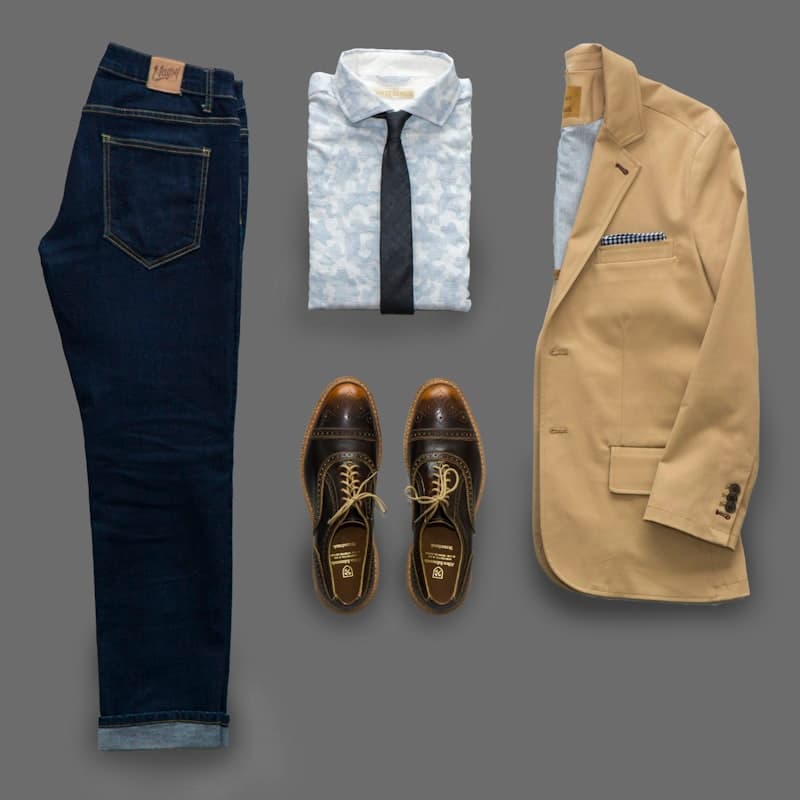
Style-wise, a linen suit over a linen shirt or even a cotton T-shirt looks fantastic with loafers or Derbys — a "relaxed but not sloppy" vibe. But linen isn't suitable for formal business settings — those wrinkles might read as "disrespectful" to some bosses. Know your venue.
Step 5: How to Read the Label
How to spot quality by reading the label? This is a super practical skill. Every suit has a care label sewn into the neck or side seam, clearly listing the fabric composition.
If you see "100% wool" or "Pure Wool" — that's the good stuff. "Wool 70%, Polyester 30%" means it's a blend — the higher the wool percentage, the better. "100% Polyester" or no wool content at all — pure synthetic.
One thing most people don't know — the label also shows "weight" like "260g/m²." Higher = heavier fabric, lower = lighter. Spring/summer suits: 220-260 gsm. Fall/winter suits: 280-350 gsm. And if you see a suit marked "pure wool" for just $50-70, it's almost certainly false advertising — the raw material cost alone is higher than that.
Step 6: Advanced Fabrics Worth Knowing
Beyond these common fabrics, there are "advanced" options worth knowing.
Silk-blend fabrics — adding a small amount of silk creates a soft, subtle luster on the surface. Very classy, but more expensive — $70-200 per meter.
Cashmere-blend fabrics — adding cashmere to wool makes it softer and warmer, an excellent winter choice, but at more than double the price of pure wool.
High-density woven fabrics (Tent Fabric) — actually high-density woven cotton or cotton blends — crisp and sharp lines with great structure but average breathability.
These advanced fabrics are "nice-to-haves," not essentials. Explore them after you've built up wearing experience and a suitable budget.
Step 7: Choosing the Right Luster
One detail about fabric that's often overlooked: luster. Higher luster isn't always better. High-luster fabrics (with silk content or calendared finish) are best for evening events and formal occasions — they shine beautifully under lighting.
For daily office wear, go with matte or low-luster fabrics — understated but quality. The test is simple: hold the fabric up to a light source and check how much it reflects. High reflectivity = high luster. Soft, subtle sheen showing fabric texture = low luster. No visible sheen = matte.
For daily commutes, choose matte or low-luster. Formal dinners, go with high luster. It's subtle, but people who know can spot the difference in an instant.
FAQ
Q: Is pure wool always better than blends?
A: Not always. Pure wool has better drape and feel, but blends have better wrinkle resistance and durability. If you sit at a desk all day or travel frequently, blends might suit you better. Also, a quality blend is a better wearing experience than cheap pure wool.
Q: How do I choose the right fabric weight?
A: Consider your environment. Most of your time in air conditioning? 260-290 gsm works year-round. Often outdoors? Choose 220-250 gsm for summer, 300+ gsm for winter. If you're buying just one suit, 280 gsm is the safest middle ground.
Q: What if my linen suit is too wrinkled?
A: Accept it. Linen wrinkles are part of its charm — don't try to make it look like pressed wool. If you can't stand the creases, try a "linen blend" with a small percentage of polyester — fewer wrinkles while retaining linen's breathability and texture.
Q: Can I buy a 100% polyester suit?
A: Yes, but choose wisely. Not recommended for formal occasions, but fine for daily commutes. The key is good silhouette — a well-tailored polyester suit won't embarrass you. But don't pay more than $70 for it; beyond that, you're better off with a wool blend.
Q: What's the difference between "worsted" and "woolen" fabric?
A: Worsted wool is smooth, fine-textured, and crisp — perfect for formal/business suits. Woolen wool is fuzzy, softer, and more casual. Simply put: worsted is for the office, woolen is for the café.
Q: How can I judge fabric quality when buying online?
A: Look for the fabric composition tag in product images. Focus on wool percentage and weight (gsm). If the product page doesn't mention fabric composition or weight at all, assume it's cheap synthetic. Real wool fabrics always put their composition front and center.
Summary
Here's one last real-world tip: don't be obsessed with "must buy pure wool." If you're on a tight budget, a well-tailored blend or polyester suit delivers far more value than cheap pure wool. Because a suit's soul is 70% silhouette and 30% fabric.
A well-tailored suit — you don't need to explain the fabric. People see it and think "this guy looks sharp." But great fabric with a bad fit — sagging shoulders, sleeves too long, waist too loose — no amount of expensive material can fix that.
My priority order: correct fit over good fabric, good fabric over good brand, good brand over so-called imported fabric. Understand this priority, and you'll never step wrong buying a suit.