The Complete Suit Styling Guide: How to Wear a Suit to Work Every Day
Master the art of wearing a suit daily with confidence. Learn how to choose suiting fabrics, coordinate shirts and accessories, dress suits up and down, and maintain a professional look.
Choosing the Right Suit for Daily Wear
For a daily-work suit, versatility is king. A mid-grey or navy two-piece suit in a year-round weight (around 240 to 280 grams per square meter) will serve you better than three different suits in specialist fabrics. Wool is the default choice — it breathes, resists wrinkles, drapes beautifully, and lasts for years. Super 110s to Super 130s wool is the sweet spot for daily wear: soft enough to feel luxurious yet durable enough to withstand weekly pressing. Brands like Suitsupply ($500 to $900), Spier and Mackay ($400 to $600), and J.Crew Ludlow ($650) offer exceptional value. For tropical climates, consider a wool-mohair blend for added breathability. Avoid polyester blends for daily wear; they trap heat and develop an unpleasant shine over time.
The Art of Dressing a Suit Up and Down
The beauty of a well-chosen suit is its versatility. To dress a suit down for a creative-office environment, lose the tie and swap the dress shirt for a fine-gauge merino wool turtleneck in winter or a linen button-down in summer. Unbutton the jacket and roll up your sleeves slightly. Choose suede loafers or derby shoes instead of oxfords. To dress the same suit up for a client presentation, add a crisp white poplin shirt, a silk tie in a solid grenadine or small-scale pattern, a white linen pocket square, and polished black or dark brown oxfords. Cufflinks — simple silver or mother-of-pearl — elevate the look further. The suit itself remains unchanged; the accessories do all the work.
Shirt and Tie Coordination Made Simple
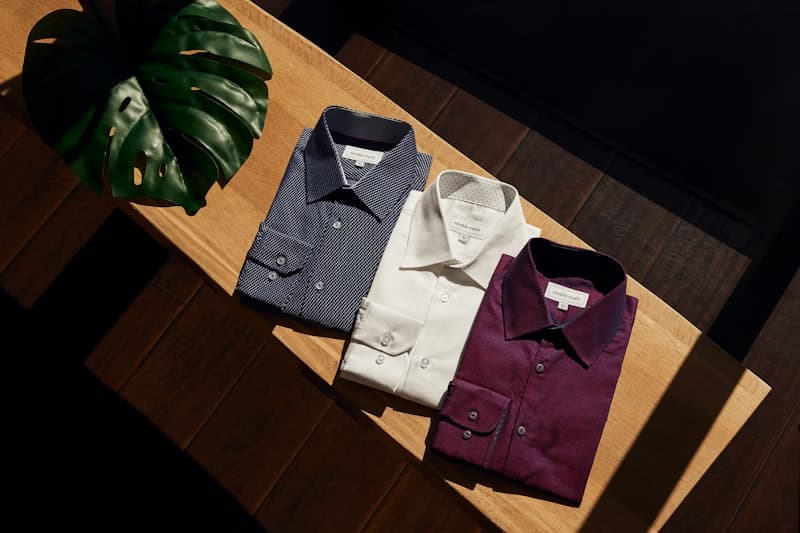
Your shirt and tie should complement your suit without competing for attention. For a navy suit, start with a white shirt — it is the safest and most professional choice. Pair it with a burgundy, navy, or dark green silk tie for classic authority. A light blue shirt is slightly more approachable than white and pairs beautifully with navy or grey suits. For a grey suit, you have even more freedom. White and light blue shirts are again your foundation, but you can also experiment with pink, lavender, or subtle stripes. Ties in burgundy, navy, or charcoal work reliably. A grey suit with a pink shirt and a navy knit tie signals confidence and taste. A white linen pocket square works with everything.
Seasonal Suiting: Fabrics and Layers
Daily suit wearers need to adapt to the seasons. In spring and summer, switch to lightweight wool, linen, or cotton suits in lighter colors like light grey, tan, beige, or sky blue. Unlined or half-lined jackets keep you cooler. A linen-cotton blend suit from brands like Reiss ($600) or Boglioli ($1,200) is ideal for hot days. In autumn and winter, heavier flannel suiting (300 to 380 grams) from brands like Ralph Lauren Purple Label or Canali provides warmth. Darker colors — charcoal, midnight blue, dark brown — are appropriate. Layer with a cashmere overcoat, wool scarf, and leather gloves. A three-piece suit with a waistcoat adds an extra layer of both style and warmth.
Maintenance for the Daily Suit Wearer
A suit worn daily requires proper care. Never wear the same suit two days in a row — wool needs at least 24 hours to recover. Invest in a good valet stand or wooden hanger with broad shoulders to maintain the jacket’s shape. Brush your suit after each wear with a quality clothes brush. Spot-clean stains immediately with a damp cloth, and dry-clean your suit no more than two to three times per season. Use a handheld steamer between wears to remove wrinkles. Rotate between at least three to four suits if you wear one daily, which gives each suit proper rest and extends their collective lifespan to five or more years.