
How to Choose Suit Colors — From Black, Gray, and Navy to Earth Tones
How to Choose Suit Colors — From Black, Gray, and Navy to Earth Tones I've seen countless guys agonize over suit color and just default to black. Why?
How to Choose Suit Colors — From Black, Gray, and Navy to Earth Tones
I've seen countless guys agonize over suit color and just default to black. Why? Because they think black is the most universal, the safest choice. But that very assumption is what makes their suits spend far more time hanging in the closet than actually being worn. Pick the wrong color, and even the most expensive suit is a waste.
Today I'm laying out everything about suit colors — from the classics (black, navy, gray) to the increasingly popular earth tones — what to wear where, what to buy first, and what to buy later.
Step 1: Understand Black's True Position
Black is the first color many people think of for a suit, but it's actually the most limited in use. Black suits have a very specific job: extreme formality. You wear it to a funeral, a formal evening dinner, or occasions that call for black-tie-level attire. Beyond that, black is genuinely inconvenient in daily life.
Think about it — wearing a black suit to the office makes you look like you're heading to a "big meeting" or just came from a funeral. Attend a wedding, and you look more formal than the groom. Casual dinners with friends? Black just changes the whole room's vibe.
Based on observations and feedback from friends, black suits have the highest "dormancy rate" in regular office workers' closets — more than half of owners wear them less than twice a year. So black isn't a "don't buy" — it's a "buy later." It should never be your first suit.
Step 2: Navy — The Master Key
Navy — dark navy blue — is the "master key" of the suit world. This isn't my personal preference; it's verified across countless occasions. Navy sits perfectly between black's formality and gray's casualness — it's formal enough for interviews, business meetings, and formal dinners, yet not so heavy that you can't wear it daily to the office, a friend's gathering, or even a weekend date.
The numbers don't lie: across major suit brand sales statistics, navy has held the top spot for years, accounting for 35-40% of all suit sales. Why? Because navy has the highest "error tolerance" of any color. It flatters every skin tone — yellow, white, or olive — navy looks great. It switches seamlessly from office to wedding. It pairs effortlessly with white shirts, light blue shirts, even knitwear.
So for your first suit, close your eyes and pick navy — you'll never go wrong.
Step 3: Gray's Professional Dominance
Gray suits hold an extremely high position in professional circles. Gray has an innate "office aura" — wearing it makes you appear more professional and composed. If you look into the closets of people in investment banking or law, gray suits often make up the highest proportion.
Gray's charm lies in its "colorlessness" — it never steals the spotlight, yet leaves a clean, sharp impression. Gray works best for daily office wear and business meetings, paired with a white shirt and dark tie for a classic professional look. Gray also has a hidden advantage: it hides dirt better than darker colors. Dandruff or dust on the shoulders is immediately obvious on navy, but gray handles it gracefully.
From a pairing perspective, gray suits work with virtually any shirt and tie color — especially a pink shirt or light blue tie, which creates a refined, upscale feel against gray.
Step 4: Earth Tones for Casual Expression
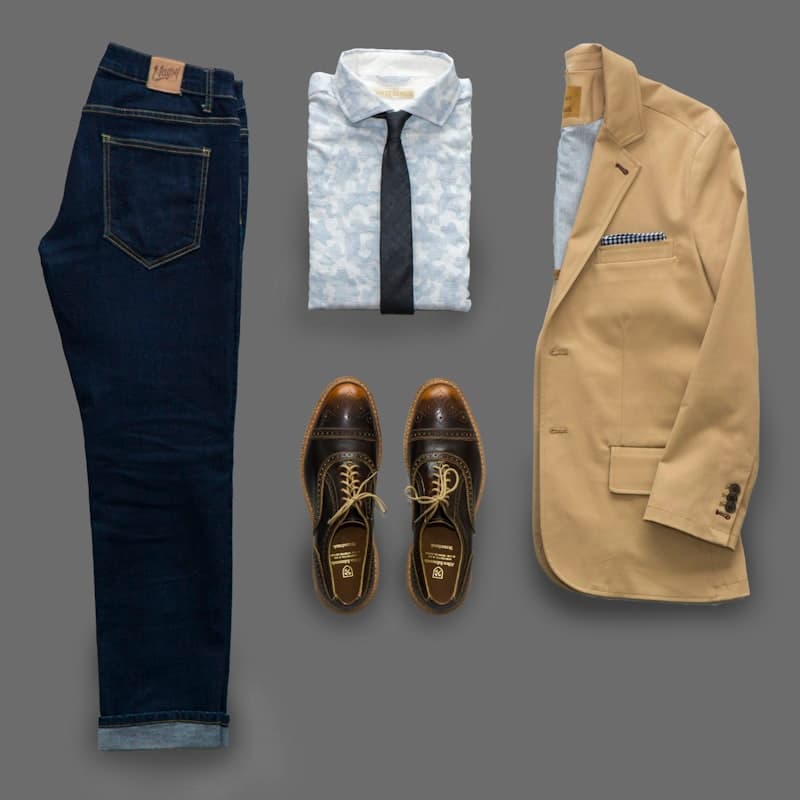
Earth tones — khaki, brown, olive green, sand — have only really exploded in China over the past three to four years. Their defining characteristic is "inherent casualness" — wear them and the message is less "I'm going to a meeting" and more "let's grab a coffee and chat."
Earth tones are best suited for business-casual events, spring and autumn daily wear, and semi-formal social occasions. Their matching logic is different from black, white, or gray — they work best with relaxed items: white T-shirts, knit sweaters, even denim shirts. Styling-wise, earth-tone suits don't need to be worn as full sets — just the jacket over dark casual trousers or khakis creates a great look.
One note: earth tones can be tricky with certain skin tones. If you have a yellowish complexion, khaki might wash you out — opt for darker brown or olive green for a safer choice.
Step 5: Season and Color Matching
Beyond color selection, there's another often-missed factor: the combination of season and color. Spring and summer call for lighter shades — light gray, light blue, beige, khaki. Lighter colors reflect sunlight and create a cooler visual feel. Fall and winter suit darker shades — navy, dark gray, black, brown, olive green. Darker colors absorb heat and feel warmer and weightier.
There's a principle here: "light with light, dark with dark." When your suit is light, keep your shirt and trousers in lighter tones. When the suit is dark, the accompanying pieces should follow suit. For example, a light gray suit with a white shirt and light beige trousers looks harmonious. But pairing dark navy with beige trousers looks disjointed and strange.
Step 6: Buying Order — Practical First, Personality Later
The question I get most often: "Which suit colors should I buy first?" My advice for every beginner: follow this order — navy to gray to black to earth tones.
Navy first — covers over 90% of the occasions you'll encounter. Second, gray — covers daily office and business meetings. Third, consider black — for those rare times when extreme formality is required: interviews, funerals, formal dinners. Fourth, start exploring earth tones — to expand your styling possibilities and turn suits from mere "formal wear" into "fashion pieces."
The logic of this order: first satisfy functional needs with the most practical colors, then expand your style boundaries. Never do the reverse — buying earth tones before black. You might buy earth tones and barely wear them in a year, while having nothing to wear for the occasions that genuinely require a formal suit.
Step 7: The Secret of Light and Color
Here's a little-known secret: the same suit in different colors looks dramatically different under different lighting. A black suit is the most neutral and safe in natural light, but under warm lighting it can look grayish, plus it clings to dust and hair, making it look dirty.
Navy looks perfectly blue in natural light, cool but not harsh under fluorescent office lights, and takes on a slight purple tone under warm yellow light — very elegant. Gray suits have the "smallest reaction to light changes" — they maintain a stable gray tone regardless of the light source, which is one reason lawyers and investment bankers love them.
Earth tones are the most sensitive to light changes — the same khaki suit is a warm honey under morning sun and shifts to a near-brown deep shade by dusk. These details are worth considering before you decide what to buy.
FAQ
Q: How can I get the most outfits with minimal spend?
A: The "two-suit system." First: full navy. Second: full gray. Cross-pairing yields at least six different looks: full navy, full gray, navy jacket + gray trousers, gray jacket + navy trousers, navy jacket + khaki trousers, gray jacket + khaki trousers. With different shirts, ties, and shoes, this extends into a dozen-plus looks covering almost every occasion.
Q: Can I wear black trousers with a navy suit?
A: Not recommended. Black and navy are both dark, but the slight color mismatch looks awkward — from afar it looks like a set, but up close the colors don't match. Navy with gray or navy with beige creates a much better contrast.
Q: What color suits work for yellowish skin?
A: Navy is the safest, gray is second. Be cautious with khaki earth tones — they can wash you out. If you want to try earth tones, go with darker brown or olive green.
Q: What color should I wear to a wedding?
A: Navy or gray are the safest bets. Don't wear black (too funeral-like) or very light white/beige (might be mistaken for the groom). If the wedding theme is relaxed, earth tones are a fine choice.
Q: What color for a job interview?
A: Navy is the best choice, gray is also solid. Avoid black (too severe and distant) and definitely skip earth tones or bright colors (not formal enough). Navy suit + white shirt + dark tie is the golden interview combo.
Q: Can I wear brown shoes with a black suit?
A: No. Black suits only pair with black leather shoes. Brown shoes pair correctly with navy or gray suits. The rule: shoes should always be darker than or equal in darkness to the suit.
Summary
The highest level of suit-wearing isn't making people think your clothes are expensive — it's making them think you're a well-dressed person. A good fit, a clean shirt, well-coordinated colors — nail these basics and you're already ahead of most people.
Color is the first threshold of suit dressing and the easiest way to stand out. Remember this order: navy as foundation, gray for expansion, black for emergencies, earth tones for flair. Build the foundation first, then express your personality.