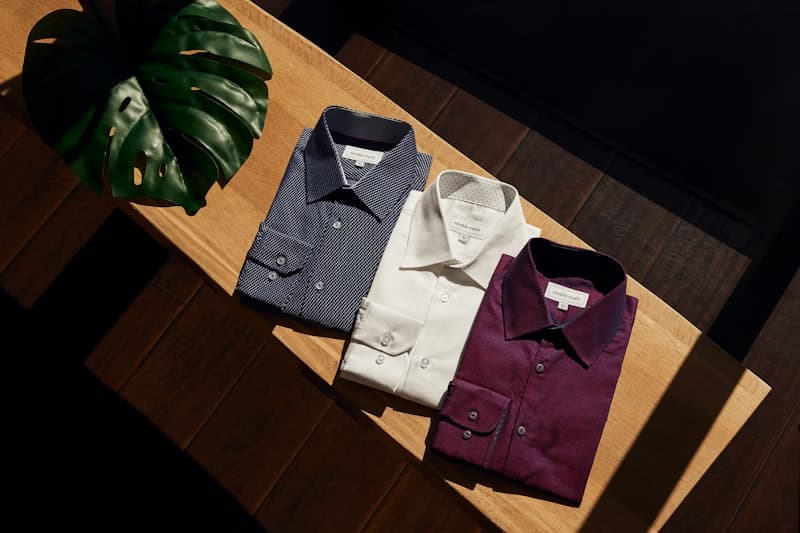
Suit Buying Guide at $150 / $400 / $700 — Best Brands and Styles at Every Price Point
Three budget tiers fully broken down — fabric, fit, and brand recommendations so you buy smart
Suit Buying Guide at $150 / $400 / $700 — Best Brands and Styles at Every Price Point
Buying your "forever suit" on the first try is almost never how it works. Most people spend under $150 on their first suit. The second one is where they start thinking about spending $400-700. But here's the thing: every price range has traps. At $150, you're at risk of getting a bad-cut "Taobao special." At $400, brand markup can make it a straight-up IQ tax. At $700, custom options might leave you with a "test garment" that doesn't fit right.
Here's a breakdown of what you can actually get at each level, what you should buy, and what to avoid.

Under $150 — Entry Level, Value First
At this budget, set realistic expectations: you cannot get full wool, good construction, and a modern cut all at once. Getting two out of three is already a win. The key is picking the most "worth-it" options within your limit.
Fabric: Wool blend (polyester + wool) or all synthetic. You're unlikely to find genuine 100% wool at this price point — even if the tag says "100% wool," it's probably the lowest-grade wool that feels rough and pills easily. A good wool-poly blend actually performs better in daily use. Aim for 30-50% wool content — you get the drape and breathability of wool with the wrinkle resistance and durability of polyester.
Where to shop:
-
Uniqlo — Best bang for your buck. Their Kando or Smart series blazers cost $30-60 (single jacket only, not a set). Comfortable, forgiving fit that works for both slim and stocky builds. The downsides: no boutonnière hole, and no in-store tailoring. Best for: recent grads, first-time suit buyers.
-
HLA / Hailan House — The widest retail presence in China. Their pure wool line runs $110-160, often on sale. Plenty of stores to try on, basic tailoring included. The trade-off: cuts tend to be traditional, waist suppression isn't great, and they lean more "corporate" than stylish. Best for: office newbies on a budget who need a full formal set.
-
Massimo Dutti on sale — Blazers at $100-150 during markdowns. Better fabric than Uniqlo (40-50% wool common), more European-style cuts. Catch: you have to wait for sales, and most cuts run slim and long — not friendly for stocky builds.
How to spend your $150: Put $60-100 toward a Uniqlo blazer (navy), and use the rest for matching trousers. Don't buy a set — at this price, the jacket and pants often don't match in fabric quality, and the pants cut is usually bad. Buying them separately actually looks better.
What to avoid: Any "original $400 on sale for $50" Taobao suit claiming to be full wool — it's almost certainly recycled polyester that'll deform after one wash. Skip anything with large logos or embroidery. Stay away from shiny fabric — at this budget, shiny means plastic-looking.
Around $400 — Quality Upgrade, Chasing Details
$400 is a serious milestone. At this point, you can buy a genuinely good suit. The difference: you get real wool, some fit customization, and brands with distinct house cuts.
First pick: SuitSupply — the benchmark at $400. Their entry-level full-wool sets run $400-550 (outlet pieces can dip below $350). This Dutch brand's biggest advantage is multiple fits — from the fitted "Lazio" to the roomy "Amsterdam," there's a cut for every body type. The fabric is solid: 280g+ Vitale Barberis Canonico (VBC) wool, Italian-made, traceable tags. Stores offer free basic alterations — hem, waist, sleeve length.
SuitSupply fit guide: If you're slim, go "Lazio" — narrow shoulders, tapered waist, close fit. If you're average, "Napoli" is the sweet spot — signature Neapolitan shoulder (light or no padding), natural and comfortable. If you're stocky, "Amsterdam" — wider shoulders, roomier chest and hem.
Second: Indochino (made-to-measure online). Starting around $400 for full custom wool. The draw: everything is cut to your exact body measurements. This is the only service at this price that gives you true custom, not just an adjusted off-the-rack garment. Book a measurement appointment or visit their showrooms (Shanghai and Beijing).
The risk with Indochino: First-time success rate isn't great — a lot of people need alterations on the first delivery. Budget at least 3 weeks for the first version, then another week for revisions. If you need a suit for a date-specific event, skip made-to-measure.
Third: Brooks Brothers sale pieces. This American heritage brand's promotional items ($250-400) are solid — durable fabric, classic cuts. The catch: they run generous (American cut), so if you want a slim look, size down or get alterations. The Madison Fit is the most Asian-friendly.
How to tell if a $400 suit is worth it: Check three things — the fabric tag for wool content (at least 90%), the lining construction (half-canvas, not fused), and the buttons (buffalo horn or shell, not plastic). A $400 suit's value isn't in the logo. It's in these three specs.
Around $700 — Near-Custom and Craftsmanship
$700 is where you can start talking about craftsmanship. At this level, you can pick between premium brand off-the-rack suits and entry-level custom from local ateliers.
Off-the-rack choice: Canali entry-level / sale pieces. Canali is Italian menswear's quiet champion — less flashy than Armani but outclasses almost everything at this price in fabric, cut, and construction. $700 gets you an entry-level full-wool set at Canali's outlet, or a $900-1100 piece through overseas shopping channels. Hand-stitched buttonholes are their signature detail.
Custom choice: Local tailoring studios (LESS, SUITLAB, TopZio, etc.). In China, $700 can get you a full-canvas suit with imported fabric (VBC or Redington level) from a domestic custom shop. Compared to SuitSupply, the advantage is full customization: shoulder width, sleeve length, jacket length — all cut to your exact body with zero off-the-rack compromises.
When to go custom: Choose custom if any of these apply: 1) You're stocky — off-the-rack patterns rarely accommodate your stomach and waist well. 2) You have unusual proportions (long legs, short torso) — standard patterns won't fit. 3) You know exactly what details you want — specific lapel shape, pocket style, button stance.
When to stick with off-the-rack: You have a standard build, height 5'9" to 6'0", weight 130-175 lbs. If your body matches industrial patterns, spending $700 on a Canali or Hugo Boss premium line will be less hassle than custom. Plus, brand-name suits hold resale value much better than custom pieces.
FAQ
Q: Can I buy a wearable suit for under $100?
A: Yes. Hunt for a sale blazer at Uniqlo and pair it with decent trousers. At this level, your goal isn't "looking great" — it's "not looking bad." Save the rest and upgrade when you can afford the $400 tier.
Q: How big is the difference between a $400 suit and a $700 suit?
A: For the untrained eye, not as big as the price gap suggests. The core difference is in craftsmanship — $400 suits are typically half-canvas, while $700 can get you full-canvas. $400 suits have machine-sewn pockets and buttonholes; $700 starts introducing handwork. But for daily wear, a $400 suit is already excellent.
Q: Is custom always better than off-the-rack?
A: Not necessarily. Custom's big advantage is fit — but only if you have a good tailor. A great custom piece beats anything off-the-rack, but a bad custom experience costs more for worse results. If you have a standard build, off-the-rack plus alterations is plenty.
Q: Should I buy discounted suits?
A: Yes, but inspect carefully. Discounted suits are often last season's stock. Pay special attention to shoulder width and waist fit. If the discounted suit doesn't fit well, skip it — alteration costs plus the discounted price may exceed a new full-price suit that fits properly.
Q: How much should I spend on my first suit?
A: Spend what you can afford. If you're just starting out and on a tight budget, under $150 works fine. But if you have some financial flexibility, go straight for the $400 tier — the experience upgrade far outweighs the "sticker shock."
Q: Is buying a suit online reliable?
A: If you know your measurements, buying online from established brands is fine. But for your first suit or if you're unsure about sizing, try on in-store first. Online made-to-measure (like Indochino) requires at least one in-person measurement session.
Three Budgets Compared
| Dimension | Under $150 | Around $400 | Around $700 |
|---|---|---|---|
| Fabric | Wool blend / synthetic | Pure imported wool | Imported full wool / premium blend |
| Lining | Fully fused | Half-canvas | Full-canvas (custom option) |
| Fit options | Limited (S/M/L) | Multiple fits available | Fully customizable |
| Alterations | Basic hem only | Free hem + sleeve + waist | Full custom adjustments |
| Brand premium | Low | Moderate | Some premium |
| Lifespan | 1-2 years | 3-5 years | 5-10 years |
The bottom line: For under $150, buy a Uniqlo or Hailan House basic — solve the "I need something to wear" problem. At $400, go SuitSupply or Indochino — upgrade from "I have a suit" to "I'm wearing the right suit." At $700+, choose custom or Canali-level off-the-rack — this is where you start chasing quality.
Every budget has its place. You don't need to feel bad about a $150 suit, and you don't need to stretch for a $700 one. Buy what fits your budget at your current stage, and save the rest for things that matter more. That's the smartest way to buy a suit.