Smart Casual Dress Code Explained for Modern Men
What Smart Casual Actually Means
Smart casual is the most misunderstood dress code in modern menswear. It is not a half-hearted version of formal wear, nor is it a slightly polished version of your weekend clothes. Smart casual occupies its own register — relaxed in fabric, but considered in silhouette and construction. The goal is to look intentional without looking overdressed, polished without appearing stiff. When done correctly, smart casual signals that you made an effort without trying too hard.
The confusion arises because smart casual exists on a spectrum. At one end, it overlaps with business casual, welcoming blazers and dress shirts without ties. At the other end, it touches elevated weekend wear, where dark denim and clean sneakers are perfectly acceptable. The unifying principle is restraint. Every element in a smart casual outfit should earn its place. If a piece draws attention to itself — a bright pattern, a logo, an overly distressed finish — it likely does not belong. The goal is quiet confidence, achieved through texture, fit, and considered color combinations.
The Three Pillars of a Smart Casual Outfit
Every successful smart casual outfit rests on three anchors: tailored trousers, a refined upper layer, and clean footwear. The trousers are the most important element. A tapered chino in stone, navy, or charcoal immediately establishes the smart casual register. The same chino cut in a relaxed, baggy fit reads as weekend wear. Fit is everything. The trouser should be cut from quality cotton or lightweight wool with a clean break at the shoe. Never wear denim labeled as smart casual if the occasion calls for trousers — but dark, unripped denim in a slim or straight cut works for more relaxed smart casual settings.
The upper layer should be refined but not formal. A knitted polo shirt in merino wool, a fine-gauge crewneck sweater, or an Oxford cloth button-down worn open at the collar all hit the mark. The key is fabric quality. A cheap synthetic polo immediately undermines the look, while a well-knit merino or a crisp cotton shirt elevates everything around it. Blazers are optional — if you wear one, choose an unstructured model in a soft fabric like cotton, linen, or a wool-silk blend. Structured suit jackets look too formal and read as though you removed the tie rather than deliberately dressed smart casual.
Footwear Is the Quiet Tell
Your shoes determine whether a smart casual outfit succeeds or fails more than any other single element. A clean derby shoe, a leather loafer, or a minimal leather trainer all work. The trainer must be unbranded, made of leather, and recently polished. Anything with athletic branding, mesh panels, or visible technology immediately shifts the outfit into casual territory, regardless of the price tag. White leather minimal sneakers from a brand that does not advertise its logo are the safest choice for most men.
Loafers in tan or dark brown suede pair effortlessly with chinos and an open-collar shirt, making them ideal for dinner dates, rooftop events, and summer evenings. Derby shoes in polished leather work best with tailored trousers and a blazer for occasions that lean slightly more formal. Chelsea boots in black or dark brown leather serve as a transitional option for cooler months. The common thread across all these choices is cleanliness. Scuffed, dirty, or heavily worn shoes destroy the smart casual balance faster than any other wardrobe mistake.
Color Palette and the Rule of Restraint
The smart casual color palette should be built on neutrals: navy, stone, charcoal, olive, and white. These colors mix effortlessly and create a cohesive wardrobe where every piece works with every other piece. Pattern should appear once in an outfit, never twice. If your shirt has a subtle stripe, keep your trousers solid and your footwear plain. If your knitwear features a texture like cable or rib, let it stand alone without competing patterns in other layers.
Your one accent color — whether in a knitwear layer, a pocket square, or a watch strap — provides visual interest without disrupting the calm, intentional quality of the outfit. For 2026, the trend has moved away from oversized silhouettes toward cleaner lines, narrower shoulders, and trousers that are slightly cropped at the ankle. The aesthetic leans closer to 1960s Italian tailoring than 1990s American casual: less volume, more precision, and a sharper overall outline that communicates confidence without shouting.
Building a Smart Casual Wardrobe That Works Year-Round
A functional smart casual wardrobe requires surprisingly few pieces. Start with three pairs of trousers: one in stone, one in navy, and one in charcoal. Stone chinos pair with nearly every shirt and shoe combination you can devise, making them the most cost-effective investment in your wardrobe. Add four shirts: one white Oxford cloth button-down, one pale blue version, one fine-knit polo in navy or black, and one linen button-down for summer months. Two knit layers — a fine-gauge merino crewneck in charcoal and a navy cotton cardigan — cover transitional weather and add texture to otherwise simple outfits.
For outerwear, one unstructured blazer in navy or tan and one Harrington jacket in beige or black handle every smart casual situation from spring through autumn. Two pairs of shoes — one leather loafer and one minimal white leather trainer — cover both ends of the smart casual spectrum. With these twelve core pieces, you can create dozens of outfits that all maintain the same polished-but-relaxed register. The discipline lies in removing anything that does not earn its place. Less always wins in smart casual dressing. Remove one element — a second pattern, an unnecessary accessory, a contrast pocket square — and the outfit almost always improves.
Smart Casual Mistakes and How to Avoid Them
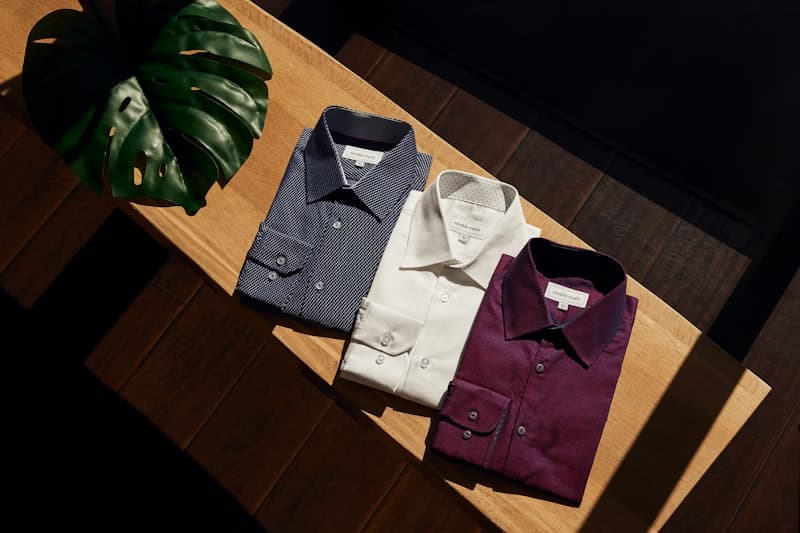
The most common mistake is wearing a dress shirt without a tie and calling it smart casual. A stiff formal dress shirt with a spread collar looks orphaned when worn open. It signals that you simply removed your tie rather than deliberately choosing a smart casual look. Instead, choose shirts designed to be worn without neckwear: button-down collars, camp collars, or medium-spread collars in soft fabrics that hold their shape whether the top button is fastened or undone.
Another frequent error is mixing formal and casual elements in a way that feels indecisive rather than intentional. Wearing a structured suit jacket with ripped jeans and running shoes does not create a balanced smart casual outfit — it creates a confused one. Each element should land in the same register. If your jacket is soft and unstructured, your trousers can be relaxed. If your trousers are tailored and precise, your top layer can be textured and casual. The outfit should read as a single deliberate thought, not a negotiation between different parts of your wardrobe.