How to Dress Smart Casual for Business Meetings
Introduction: Decoding the Smart Casual Dress Code
Smart casual is the most requested yet most misunderstood dress code in modern business. It sits in the uncomfortable middle ground between formal business attire and casual weekend wear. For professional men, getting it wrong can mean standing out for all the wrong reasons — appearing either too stiff and corporate or too sloppy and unprofessional.
The term "smart casual" emerged in the 1980s as workplaces began relaxing strict dress codes, and it has only grown more relevant in the post-pandemic era of hybrid work. Today's business meetings often take place in coffee shops, co-working spaces, or hybrid office environments where a full suit would feel overdressed but jeans and a t-shirt would feel underdressed.
This guide will give you a practical framework for building a smart casual wardrobe that works for any business meeting scenario, from client lunches to networking events to casual Friday presentations.
The Core Pieces: Building Your Smart Casual Foundation
A smart casual wardrobe is built on versatile, high-quality basics that can be mixed and matched to create multiple outfits. The goal is to own fewer pieces that work harder for you.
Blazers and Sport Coats: A well-fitted blazer is the single most versatile piece in a smart casual wardrobe. It instantly elevates any outfit. Choose unstructured blazers in navy, charcoal, or medium grey — they are softer than traditional suit jackets and work well with chinos or dark jeans. Avoid black (too formal) and bright colors (too casual). A wool or wool-blend fabric with a subtle texture works year-round. For warmer months, consider linen or cotton blends.
Trousers and Chinos: Chinos are the backbone of smart casual dressing. They are more formal than jeans but less formal than dress trousers. Invest in two or three pairs in neutral colors: navy, khaki, and olive or charcoal. Ensure they fit properly — no pooling at the ankles and not overly tight. The hem should break just once on the shoe. For colder months, wool trousers in a flannel or worsted wool are excellent alternatives that add warmth and sophistication.
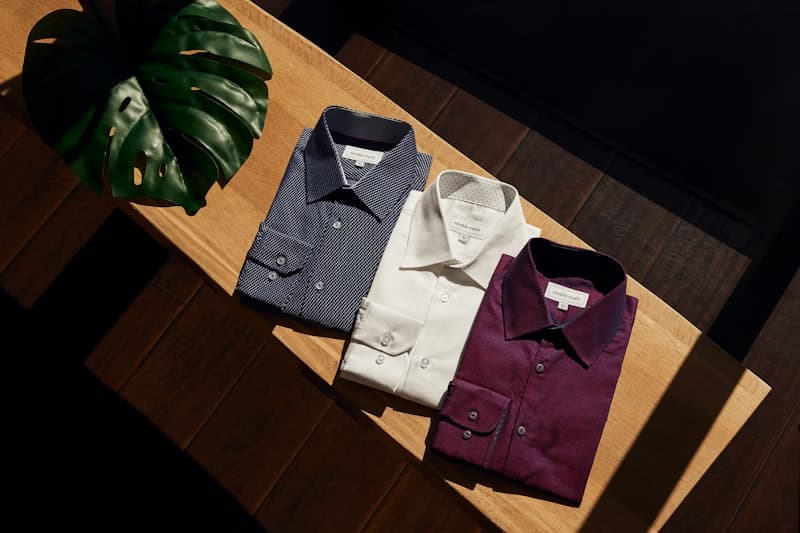
Dress Shirts and Alternatives: The classic button-down collar shirt remains a staple, but smart casual allows for more flexibility. Oxford cloth button-downs (OCBDs) are perfect — they are less formal than poplin dress shirts but still polished. Choose white, light blue, and subtle stripes or checks. Beyond dress shirts, consider high-quality polo shirts in merino wool or cotton pique. They bridge the gap between t-shirts and dress shirts elegantly. For a more contemporary look, henley shirts in neutral colors can work under a blazer in very casual settings.
Knits and Sweaters: Fine-gauge sweaters are excellent alternatives to blazers or suit jackets. Merino wool or cashmere crewnecks and V-necks in navy, grey, and burgundy layer beautifully over button-down shirts. Avoid bulky cable-knit sweaters — they are too casual for most business settings. Quarter-zip sweaters are acceptable but can lean toward "golf course" territory; wear them with confidence but awareness of the context.
Footwear That Completes the Look: Shoes make or break a smart casual outfit. Derbies or bluchers (open-laced shoes) are more casual than oxfords and perfect for smart casual. Brown leather is generally more versatile than black. Loafers — both penny loafers and bit loafers — are excellent choices for warmer months or less formal meetings. Suede offers a refined but casual texture that works perfectly in this dress code. Clean, minimal white leather sneakers (think Common Projects or Axel Arigato) have become acceptable in creative industries, but reserve them for the most casual smart casual scenarios. Never wear athletic sneakers, worn-out shoes, or overly dressy patent leather.
Color Coordination: The Smart Casual Palette
Smart casual dressing rewards subtlety and restraint in color choices. The goal is to look put-together without appearing to have tried too hard.
The Foundation Palette: Build your wardrobe around navy, grey (charcoal and medium), olive, brown, and white. These colors mix effortlessly and create a cohesive, professional look. Khaki and beige work well in warmer months. Burgundy and forest green add depth as accent colors.
The 80/20 Rule: 80% of your outfit should be in neutral, subdued colors. The remaining 20% can incorporate personality through a pocket square, a patterned tie (if wearing one), or a subtle texture in your knitwear. Avoid large logos, bright neon colors, or overly bold patterns in business settings.
Pattern Mixing Guidelines: Smart casual welcomes pattern but requires finesse. Pair a striped shirt with a solid blazer and solid trousers. If your blazer has a pattern (like houndstooth or windowpane), keep everything else solid. The classic rule: vary the scale of patterns. A small check shirt with a large herringbone jacket can work if they share a common color. When in doubt, one patterned piece and two solid pieces is the safest formula.
Seasonal Color Adjustments: Lighter colors (beige, light blue, cream) work better in spring and summer. Darker, richer colors (charcoal, burgundy, forest green) suit autumn and winter. Earth tones like olive, brown, and rust are excellent transitional colors that work across seasons.
What NOT to Wear: Common Smart Casual Mistakes
Understanding what to avoid is just as important as knowing what to wear. These are the most common smart casual mistakes that undermine an otherwise solid outfit.
Overly Distressed Clothing: Distressed jeans, faded denim with holes, frayed hems, or heavily worn-in clothing have no place in smart casual business settings. Your clothes should look intentional, not neglected. Even if you are in a creative industry, save the ripped jeans for the weekend.
Athletic Wear: Performance fabrics, track pants, hoodies (unless very minimal and high-end), gym sneakers, and baseball caps are too casual for smart casual. Even if your meeting is at a coffee shop, dress like you respect the occasion. Athleisure has its place, but the business meeting is not it.
Overly Formal Pieces: A three-piece suit, a stiff spread-collar shirt with french cuffs, a power tie, and patent leather oxfords are too formal. Smart casual is about dialing down the formality, not up. If you look like you are heading to a wedding or a board presentation, you have gone too far.
Ill-Fitting Clothing: Nothing undermines a smart casual outfit faster than poor fit. Sleeves that are too long, shoulders that droop, trousers that pool around the ankles, or shirts that billow — these details signal carelessness. Invest in a good tailor. A $100 blazer that fits perfectly looks better than a $1,000 blazer that fits poorly.
Too Many Accessories: One watch (not a smartwatch with a bright screen), one wedding ring, maybe one bracelet. Avoid chunky chains, multiple rings, branded belts with large logos, and anything that jingles. In smart casual, accessories should be noticed only upon close inspection.
Putting It All Together: Outfit Formulas for Common Scenarios
Scenario 1: Client Lunch at a Nice Restaurant Navy unstructured blazer, light blue OCBD, khaki chinos, brown suede derbies, brown leather belt. No tie. This outfit is polished enough for a client meal but relaxed enough for midday dining.
Scenario 2: Networking Event / Happy Hour Dark olive chinos, white OCBD, merino wool V-neck sweater in charcoal, brown leather loafers. Skip the blazer unless the event calls for it. This is approachable, confident, and appropriate for social business settings.
Scenario 3: Internal Presentation / Team Meeting Navy chinos, light blue button-down, navy blazer with subtle texture, brown leather brogues or derbies. A patterned pocket square adds a touch of personality without going overboard.
Scenario 4: Casual Friday / Creative Agency Visit Dark wash jeans (no rips), white OCBD, navy blazer or fine-gauge sweater, clean white minimalist sneakers or suede chukka boots. This is the most relaxed end of the smart casual spectrum — appropriate for creative environments but still professional.
Conclusion: Dress for the Meeting You Want
Smart casual is ultimately about respect — respect for yourself, for the people you are meeting, and for the occasion. It signals that you took the time to look professional without trying to intimidate or impress through formality. The best-dressed man in a smart casual setting is rarely the one wearing the most expensive clothes. He is the one whose clothes fit perfectly, coordinate thoughtfully, and make everyone around him feel comfortable.
Build your wardrobe slowly, invest in quality over quantity, and always err on the slightly more formal side of smart casual when in doubt. You can always remove a blazer or roll up your sleeves to dial down the formality. You cannot add a jacket or change your shoes if you arrive underdressed.
Master smart casual, and you will never have to second-guess what to wear to a business meeting again.
Grooming and Presentation: No discussion of smart casual is complete without addressing personal grooming. Well-maintained hair, clean and trimmed nails, and appropriate fragrance (subtle, not overpowering) are non-negotiable. Your clothes may be perfectly chosen, but poor grooming will undermine the entire impression. Think of grooming as the frame around the picture — it should be noticed only in its absence. Keep facial hair neatly trimmed or clean-shaven. The goal is to look like you made an effort without appearing to have tried too hard. This attention to detail signals professionalism and self-respect, which are the true foundations of any dress code.