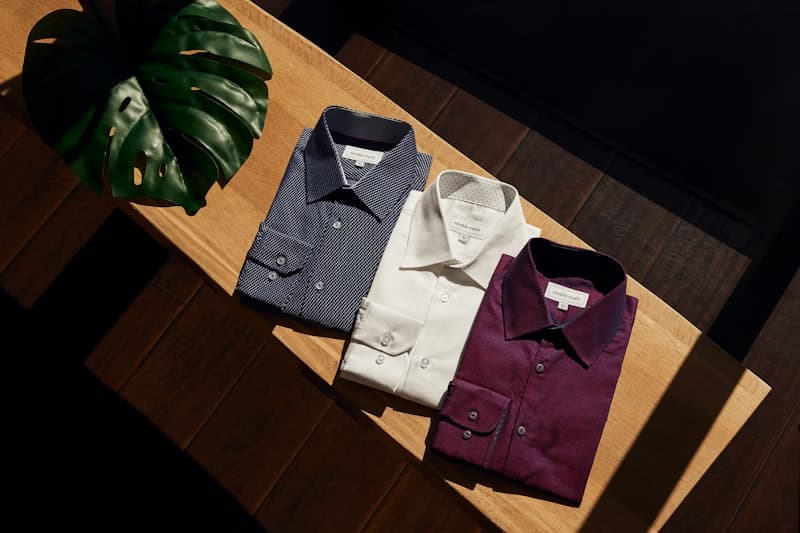
Men's Shirt Fabrics Compared: Cotton vs Linen vs Blends — A Complete Guide
Why does one white shirt look bespoke and another look bargain-bin? The answer is fabric. This guide dives deep into cotton, linen, cotton-linen blends, and performance fabrics — covering fiber types, weaves, thread counts, and real-world buying advice for every scenario and budget.
Men's Shirt Fabrics Compared: Cotton vs Linen vs Blends — A Complete Guide
Fabric Is the Ceiling of Your Shirt's Quality
Two white shirts can look worlds apart. Both are labeled "100% cotton." But one drapes like a dream, while the other looks stiff after three washes.
The difference? Fabric.
In 2026, shirt fabrics range from plain cotton to high-tech performance blends. This guide cuts through the noise, comparing the three core categories — cotton, linen, and blends — so you can make informed choices for every occasion.
Part 1: Cotton — The Baseline
Cotton remains the most common shirt fabric, but not all cotton is equal.
Cotton Varieties
Standard Cotton: Fiber length 20–25mm. Prone to fibrillation (fuzziness). Budget-friendly, but lacks refinement.
Egyptian Cotton: Extra-long staple (30–40mm). Finer, stronger, softer threads. The benchmark for premium shirts.
Sea Island Cotton: The rarest and finest (40mm+). Exceptionally soft and durable. Found only in top-tier bespoke shirts.
Pima / Supima Cotton: American long-staple cotton. Excellent quality-to-price ratio.
How Weave Affects Feel
Poplin / Broadcloth (Plain Weave)
- Simplest weave, smooth surface
- Light and breathable — great for summer
- Wrinkles easily
- Standard for business shirts
Twill Weave
- Diagonal rib pattern on the surface
- Thicker, softer, more wrinkle-resistant
- Better drape — ideal for formal wear
Oxford Cloth (Basket Weave)
- Thicker, more textured, more casual
- The quintessential button-down shirt fabric
- Pairs perfectly with blazers and chinos
Satin Weave
- Lustrous, smooth surface
- Extremely soft hand feel
- Best for evening wear and formal dinners
Thread Count Demystified
Thread count measures threads per square inch. Higher = finer = softer.
- 40s: Entry-level, rougher feel
- 60s: Sweet spot for value — most business shirts
- 80s: Premium business shirts — noticeably softer
- 100s: Top-tier — luxurious feel, higher cost
- 120s+: Ultra-premium — silk-like, but less durable
Our advice: 60–80s for daily wear, 100s for important occasions. Above 120s, you're paying for diminishing returns.
Part 2: Linen — Summer's Undisputed King
Why Linen Excels in Heat
Linen fibers are hollow, creating natural air channels. At 35°C (95°F), a linen shirt feels 2–3°C cooler than cotton — measurable difference, not marketing hype.
Linen also absorbs 20% of its weight in moisture without feeling wet. Cotton manages 7–8%.
Linen Grades
Regular Linen: Coarser fibers, can feel scratchy. Found in budget brands.
Belgian Linen: Finer, longer fibers from European flax. Smoother and more expensive (1.5–2x regular).
Irish Linen: The gold standard. Exceptionally fine weaves. Used in luxury shirting.
The Linen Trade-Offs
- Wrinkles instantly — some see this as character, others as sloppiness
- Shrinks 5–10% on first wash — buy with allowance
- Limited formality — too wrinkled for boardroom meetings
The Blend Solution
Modern linen blends address pure linen's weaknesses:
- Linen-Cotton (55/45): Best overall balance — retains breathability, adds comfort
- Linen-Tencel: More luster, smoother hand
- Linen-Elastane (97/3): 3% stretch dramatically reduces wrinkling
Part 3: Blends and Performance Fabrics
Cotton-Polyester (65/35 or CVC)
Pros: Almost wrinkle-free, cheap, durable Cons: Poor breathability, synthetic feel, prone to pilling Best for: Budget travel shirts, uniforms
Bamboo Fabric
Pros: Natural antibacterial properties, very soft, good moisture management Cons: Weak when wet, less durable than cotton, often just viscose in disguise
Tencel / Lyocell
Pros: Extremely soft, excellent moisture wicking, eco-friendly production Cons: Moderate wrinkle resistance, premium pricing
Coolmax / Performance Fibers
Pros: Maximum moisture wicking, quick-drying, wrinkle-free Cons: Looks athletic, slippery feel, not suitable for formal wear
Comparison Table
| Metric | Cotton (80s) | Linen | Cotton-Linen | Performance |
|---|---|---|---|---|
| Breathability | ★★★ | ★★★★★ | ★★★★ | ★★★ |
| Comfort | ★★★★ | ★★★ | ★★★★ | ★★★ |
| Wrinkle Resistance | ★★ | ★ | ★★★ | ★★★★★ |
| Formality | ★★★★★ | ★★★ | ★★★ | ★★ |
| Durability | ★★★★ | ★★★ | ★★★ | ★★★★★ |
| Price | $$ | $$ | $–$$ | $$$ |
| Best Use | Business, meetings | Summer casual | Commuting | Travel, sports |
Scenario-Based Recommendations
- Important business meeting: 80–100s cotton (poplin or twill)
- Daily office: 60–80s cotton or cotton-linen blend
- Summer commute: Linen-cotton blend or high-count linen
- Casual Friday: Oxford cloth or cotton-linen
- Business travel: Performance blend (wrinkle resistance is king)
- Evening dinner: 120s+ cotton or mercerized cotton
- Commuting in heat: Coolmax or performance fiber
Practical Buying Tips
- Check the care label — "100% cotton" means nothing without the thread count and weave
- Touch before buying — The same "pure cotton" can feel vastly different between brands
- Account for shrinkage — Cotton and linen both shrink. Buy with slight allowance in collar and sleeve length.
- Stock at least two fabric types — Cotton for formal, linen or blend for casual/summer
- Invest in white — Your white shirt is the quality benchmark. Budget more for it than any other color.
The Bottom Line
There's no single "best" shirt fabric — only the best fabric for your climate, workplace, and lifestyle. A good rule of thumb: 60–70% cotton for your core wardrobe, 30–40% linen and blends for flexibility.
Get the fabric right, and even a simple white shirt can look like it cost ten times what you paid.