Building a Neutral Tones Wardrobe That Works
A neutral-toned wardrobe is the foundation of effortless style. Learn which shades to choose, how to layer them, and why less color actually gives you more options.
Why Neutrals Are a Strategic Choice
A neutral wardrobe is not about playing it safe. It is about building a system where every piece works with every other piece. When your palette is restricted to shades of beige, grey, navy, olive, black, and white, you eliminate the guesswork of matching. Every shirt pairs with every pant. Every jacket works over every sweater. The result is fewer items that produce more outfits.
This approach also simplifies shopping. You stop buying statement pieces that only work with one specific outfit. Instead, you invest in quality garments within a coherent range of tones. Each purchase strengthens the system rather than cluttering it. Over time, you own less clothing but have more to wear.
Choosing Your Core Neutrals
Not all neutrals are created equal. The most versatile foundation consists of five core shades: navy, charcoal, olive, stone, and off-white. Navy and charcoal anchor your formal and semi-formal pieces. Olive adds a soft earthiness that bridges warm and cool tones. Stone and off-white bring lightness for spring and summer without the harshness of pure white.
Black is optional. It works best in leather goods — shoes, belts, bags — and in knitwear. For trousers and jackets, black can feel severe against softer neutrals. If you want a true black, limit it to one or two pieces and build around them deliberately. Many neutral wardrobes function perfectly with zero black.
Building the Foundation: Trousers
Start with three pairs of trousers that cover your temperature range. A charcoal wool or wool-blend pant works for cooler months and dressier settings. A stone or khaki chino covers spring and summer casual. A navy cotton or cotton-linen trouser splits the difference and works year-round in most climates.
Fit is critical with neutrals because there are no patterns or colors to distract the eye. Trousers must be hemmed to the correct length and tailored through the seat and thigh. Poor fit is immediately visible when the palette is restrained. Invest in a good tailor — it transforms a five-hundred-dollar wardrobe into a thousand-dollar look.
Building the Foundation: Tops
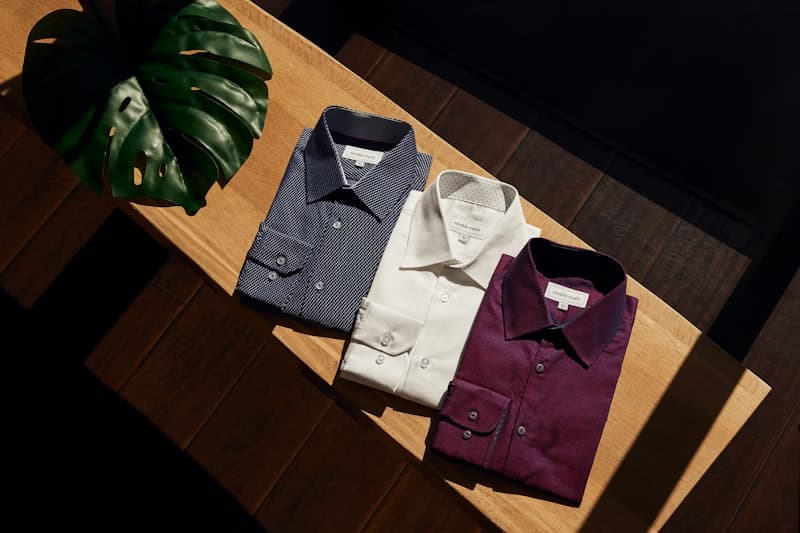
Your top layer should follow the same logic of the five core shades. Three to four button-down shirts in white, light blue, and a subtle stripe or check provide the dressier end. Three to four T-shirts in off-white, navy, charcoal, and olive cover casual needs. Two to three sweaters — a navy crewneck, a charcoal V-neck, and an olive cardigan — handle layering.
Texture becomes your secret weapon. When everything is in the same color family, fabric variation creates visual interest. Pair a smooth cotton Oxford shirt with a chunky wool knit. Wear a linen T-shirt under a brushed cotton jacket. The interplay of smooth, rough, matte, and sheen keeps a neutral wardrobe from looking flat.
Layering Neutrals Without Looking Boring
Layering neutrals requires paying attention to value — the lightness or darkness of each shade. The rule of three applies: light, medium, and dark. A light off-white T-shirt, a mid-tone olive overshirt, and dark navy trousers create natural depth. If all three layers are the same value, the outfit blends into a single blob.
Monochromatic outfits — all one color family — work beautifully when you vary texture and value. An all-navy outfit feels sophisticated, not dull, when the components differ: a brushed cotton jacket, a merino sweater, and wool trousers each catch light differently despite being the same hue.
Accessories as the Exclamation Point
In a neutral wardrobe, accessories carry the personality. A tan or cognac leather belt and matching watch strap add warmth. A textured wool scarf in a slightly lighter or darker shade breaks up the torso. Footwear in suede — particularly in snuff, tan, or grey — adds soft texture that contrasts with smoother trouser fabrics.
Bags and outerwear follow the same palette. A navy waxed canvas tote, a stone field jacket, a charcoal raincoat — each reinforces the system. The cumulative effect is a wardrobe where everything coordinates effortlessly, freeing your mental energy for more important decisions.