Navy Suit Styling: How to Wear the Most Versatile Piece in Your Wardrobe
Master the navy suit: fit fundamentals, shirt and tie pairings, footwear rules, modernizing tricks, and seasonal fabric advice. Includes eight outfit formulas for any occasion.
Why Every Man Needs a Navy Suit
Of all the garments a man can own, the navy suit offers the highest return on investment. It is the single most versatile piece in any wardrobe, capable of functioning at weddings, funerals, job interviews, business meetings, evening dinners, and even dressed-down social events when styled appropriately. No other color or fabric category achieves this range. Charcoal suits are too somber for celebratory occasions. Black suits are reserved for the most formal events. Light gray suits lack the authority needed for high-stakes professional settings. Navy sits perfectly in the middle. It commands respect without intimidation, conveys taste without ostentation, and pairs with virtually every shirt, tie, shoe, and accessory you might own.
The navy suit's versatility extends to its fabric and construction range. A tropical wool navy suit works for summer weddings. A heavier worsted wool navy suit handles winter board meetings. A unstructured, soft-shouldered navy suit in cotton or linen serves as a blazer alternative for business casual environments. With careful selection, a single navy suit can span three seasons and an infinite variety of occasions. The key is understanding the specific variables that determine a navy suit's formality and adapting your styling accordingly.
Fit Fundamentals: The Foundation of Everything
No amount of styling can compensate for a poorly fitting navy suit. The shoulders should sit flush against your natural shoulder line without extending beyond the bone. The shoulder pad, if present, should not create a ridge or gap when you raise your arm. The jacket body should close without pulling at the button, and the lapels should lie flat against your chest without gaping. The sleeve length should end at the base of your thumb joint, revealing approximately half an inch of shirt cuff. The jacket length should cover your seat and reach approximately to the middle of your thumb when your arms are relaxed at your sides.
Trousers deserve equal attention. The waist should sit at your natural waistline, requiring no belt or side-adjusters to hold them in place. The seat should follow your body without sagging, and the front should hang straight without pulling at the zip. The hem should have a single break resting on the top of your shoe. No break or cropped hems work for shorter men who want to elongate their silhouette, but this is an advanced styling choice. If you are buying off the rack, expect to invest in alterations: sleeve shortening, trouser hemming, and waist suppression are almost always necessary and transform a reasonable fit into an exceptional one.
Shirt, Tie, and Pocket Square Combinations
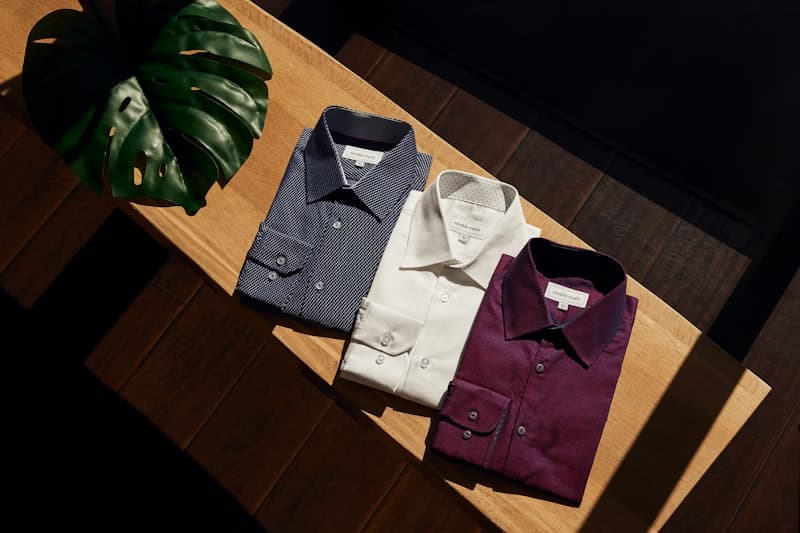
The navy suit provides a neutral canvas that accepts nearly any shirt and tie combination. The safest starting point is a white spread-collar or point-collar dress shirt. White offers maximum versatility and ensures your outfit never looks wrong, regardless of the tie or occasion. Light blue is the second-most versatile option, slightly less formal than white but more interesting. Blue shirts also create a monochromatic look with a navy suit that reads as sophisticated. For less formal settings, pale pink, ecru, or subtle blue-and-white striped shirts add personality without pushing past professional boundaries.
Tie choices define the formality and character of your navy suit outfit. A solid navy grenadine tie creates a classic, understated look appropriate for interviews and conservative meetings. A burgundy or maroon tie adds warmth and is the second most versatile choice after navy. Patterned ties introduce personality: striped ties in school or club colors, foulard prints in small repeating patterns, or polka dots in contrasting colors. The pocket square should complement but never match your tie. A white linen pocket square in a simple straight or puff fold works with every combination. For more personality, choose a silk square that picks up a secondary color from your tie without repeating its pattern exactly.
Footwear Rules: Shoes That Elevate or Undermine
Shoe choice can elevate a navy suit outfit from good to exceptional or drag it from appropriate to awkward. The classic pairing is dark brown leather oxfords or derby shoes. Brown creates a flattering contrast against navy blue, and the warm tones add visual interest that black shoes lack. For maximum versatility within your shoe collection, a medium-to-dark brown cap-toe oxford in calfskin leather is the single best investment. It works with navy, charcoal, gray, and beige suits across all formalities. For less formal situations, dark brown loafers or suede chukka boots can replace oxfords while maintaining a dressed-down elegance.
Black shoes with a navy suit are a perfectly acceptable combination, particularly for evening events, formal occasions, and conservative industries. The navy-and-black combination reads as more formal and slightly more severe than navy-and-brown. Patent leather black oxfords are the standard choice for black-tie events if you do not own a tuxedo. Avoid black shoes with navy if the suit has any visible texture or pattern, such as a subtle windowpane or birdseye weave. The contrast between the formal smoothness of black calfskin and the texture of the suit fabric creates a disconnect. Suede shoes in either brown or burgundy bridge the formality gap beautifully, adding texture that complements rather than competes with the suit.
Modernizing Your Navy Suit
The navy suit need not feel stiff or old-fashioned. Several styling techniques can modernize its appearance while maintaining its professional integrity. First, experiment with the jacket's button stance. A slightly higher button stance creates a more elongated, contemporary silhouette. Second, consider a soft or unstructured construction for your next suit purchase. Unstructured jackets have minimal padding and lining, draping more naturally on the body and working in warmer weather. Third, embrace wider lapels. The past decade's slim lapels are giving way to lapels measuring 8 to 9 centimeters at the widest point, which look more authoritative and balanced.
Accessories offer another path to modernization. Replace a traditional leather watch strap with a metal bracelet or a fabric NATO strap. Swap a silk tie for a knitted silk or wool tie, which reads as more relaxed and contemporary. Try a crisp white t-shirt under your suit jacket instead of a dress shirt for evening occasions or creative industry events. This move shifted from radical to widely accepted over the past few years. The contrast between the formality of the jacket and the simplicity of the t-shirt creates visual tension that reads as confident and intentional. Just ensure the t-shirt is high quality, thick enough to hold its shape, and perfectly white or black.
Seasonal Fabric and Styling Adjustments
A navy suit can work year-round with the right fabric and styling adjustments. For spring and summer, choose a tropical-weight worsted wool in 9 to 10 ounce fabric. The open weave allows airflow while maintaining the suit's structure. Pair it with a light blue or white cotton shirt, no vest, and brown suede loafers or unlined oxfords. Skip the tie for maximum comfort and roll the jacket sleeves slightly when seated. A linen or cotton navy suit provides even more breathability for the hottest months, though the trade-off is increased wrinkling.
For fall and winter, a 12 to 14 ounce worsted wool provides warmth and a more substantial drape. Flannel wool navy suits offer a soft, brushed texture that is perfect for cold-weather events. Pair with a heavier shirt fabric such as an Oxford cloth button-down, a wool or cashmere tie, and dark brown leather boots or oxfords. Add a charcoal or camel overcoat for outdoor transitions. The lighter-weight warm-weather suit can transition to cooler months by layering a merino wool turtleneck under the jacket, replacing the dress shirt and tie entirely. This layered look is both practical for temperature regulation and visually compelling.