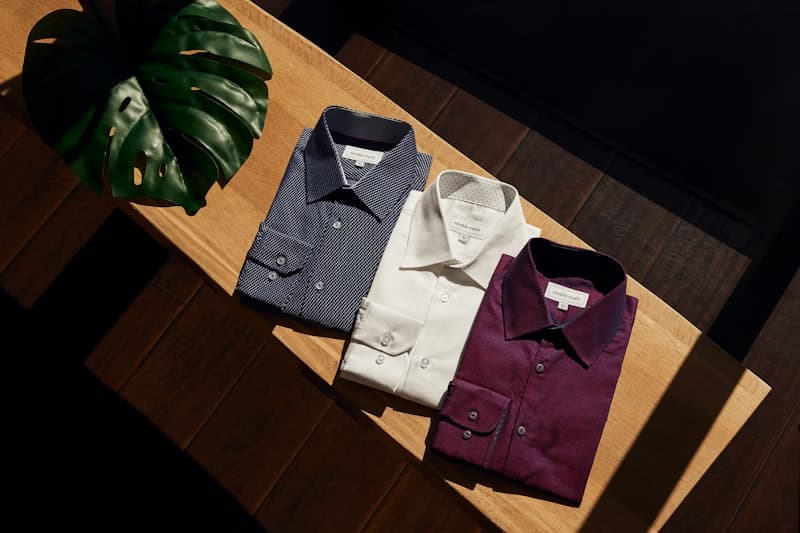
Build a Complete Men's Capsule Wardrobe: 30 Pieces, Infinite Outfits
A systematic guide to building a men's capsule wardrobe. Learn the 30-piece core collection, color coordination framework, and outfit planning system that creates unlimited combinations.
The Philosophy of the Capsule Wardrobe
A capsule wardrobe is built on a counterintuitive insight: owning fewer clothes gives you more outfit options. The logic is simple. When every piece in your wardrobe coordinates with every other piece, the total number of possible outfits grows exponentially with each addition. A 30-piece capsule generates over 400 unique outfit combinations. A 100-piece wardrobe of unrelated items might generate fewer than 20 wearable combinations, with most of those pieces sitting unworn.
The capsule approach solves the three most common wardrobe problems: decision fatigue from too many mediocre options, wasted money on impulse purchases that don't coordinate, and the frustration of having nothing to wear despite a full closet. A well-planned capsule reduces getting-dressed time from 10 minutes of indecision to 2 minutes of intentional selection. This daily time saving compounds to over 40 hours per year — almost a full work week.
The Core 30-Piece Framework
The foundation is a 30-piece core collection excluding accessories, outerwear, shoes, and workout gear. Divide into three categories: tops (12 pieces), bottoms (8 pieces), and layers (10 pieces). Tops include 4 Oxford cloth button-downs in white, light blue, blue gingham, and white University stripe, 2 solid t-shirts (navy and heather gray), 2 henleys, 2 polos, and 2 lightweight sweaters in navy and charcoal.
Bottoms should cover: 2 pairs of dark wash jeans (straight or slim-straight fit), 1 pair of khaki chinos, 1 pair of navy chinos, 1 pair of olive chinos, 1 pair of charcoal wool trousers, 1 pair of light wash jeans for casual looks, and 1 pair of linen pants for summer. Layers include: 1 navy blazer, 1 charcoal houndstooth sport coat, 1 denim jacket, 1 field jacket, 1 camel topcoat, and 5 versatile sweaters and cardigans covering essential colors.
The Color Coordination System
A capsule wardrobe needs a deliberate color palette. Base colors (60% of wardrobe) should be navy, charcoal, olive, khaki, and white. These colors form the foundation that coordinates with everything. Accent colors (30%) include burgundy, forest green, camel, and light blue. Statement pieces (10%) in rust, mustard, or emerald green add personality through strategic selections.
The coordination rule: any top in a base or accent color works with any bottom in a base color. Any layer works over any top. This creates 200+ valid combinations from your core collection. Use accent and statement pieces in the items closest to your face — shirts, sweaters, and tie alternatives — since these draw the most attention. Keep bottoms and shoes in base colors for maximum flexibility.
Seasonal Rotation and Maintenance
A true capsule wardrobe adapts to seasons through rotation, not expansion. Create spring-summer and fall-winter capsules using the same core framework. Swap 8-10 seasonal pieces: linen shirts and pants for summer, heavier sweaters and a wool topcoat for winter. Store off-season items properly in garment bags with cedar blocks to prevent moth damage and maintain fabric quality.
Implement a one-in-one-out rule to maintain capsule discipline. When you buy a new piece, remove a comparable existing piece. This prevents wardrobe creep and ensures every addition is intentional. Every 6 months, review your capsule: remove pieces worn fewer than 3 times and analyze why. Was the fit wrong? The color unflattering? The quality disappointing? Each removal teaches you something about your personal style preferences, making future purchases more targeted and satisfying.
Building Your Capsule on a Budget
Start with a 10-piece mini-capsule: 3 tops, 2 bottoms, 2 layers, 1 pair of shoes, and accessories. This minimal set still generates 20+ outfits and costs under $500 if chosen carefully. Focus on fit first — a $30 thrifted blazer that fits perfectly looks better than a $500 off-the-rack blazer that needs alterations. Spend your budget on the pieces that get the most wear: good shoes, a quality blazer, and well-fitting jeans.
Shop strategically: invest in the pieces that contact the ground or get the most handling (shoes, bags, outerwear), spend moderately on foundational pieces (chinos, OCBDs, sweaters), and save on trendy or statement items (patterned shirts, colored trousers, fashion-forward accessories). This tiered spending approach allocates budget to where quality matters most while preserving flexibility for experimentation.