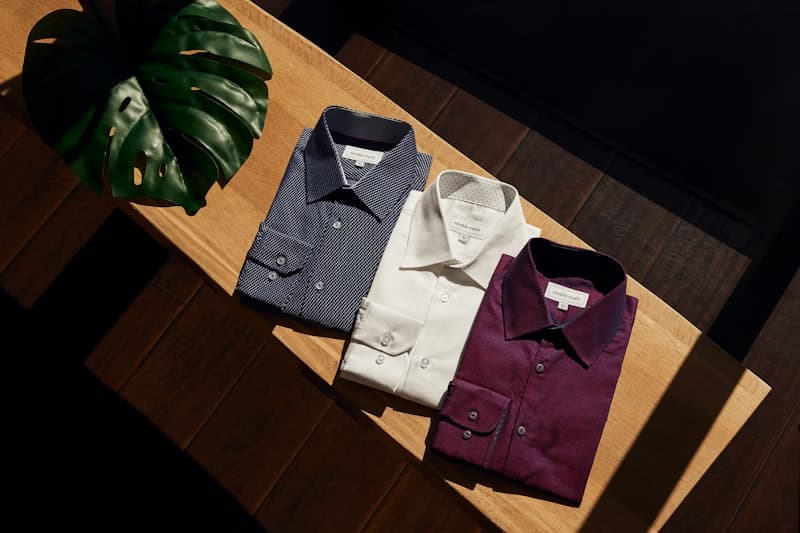
Men's Suit Fit Guide: The Basics
A well-fitted suit transforms your appearance. This guide covers shoulders, chest, sleeves, trousers, and every critical measurement that separates good from great.
Why Fit Matters More Than Fabric or Brand
A man in a perfectly fitted off-the-rack suit will always look better than one swimming in a designer suit three sizes too large. Fit is the single most important factor in how a suit is perceived, because the human eye instinctively registers proportion, balance, and silhouette before it registers cloth quality or label. A suit that fits well communicates self-awareness, attention to detail, and respect for the occasion. A suit that fits poorly — regardless of cost — communicates the opposite. The good news is that you do not need bespoke tailoring to achieve a great fit. Off-the-rack suits can be altered significantly by a competent tailor, and understanding which adjustments are possible and which are structural deal-breakers will save you money and frustration. This guide walks through every critical measurement point so you know exactly what to look for.
Shoulders: The Non-Negotiable Foundation
The shoulders are the most difficult area to alter and therefore the most critical starting point. The seam where the sleeve meets the body should sit exactly at the edge of your natural shoulder bone — not hanging off the side, not pinching inward. If the shoulder seam extends past your shoulder bone, the suit will look like it belongs to a larger man; if it falls short, the jacket will feel restrictive and the sleeves will pull when you move your arms. To check, stand with your arms relaxed at your sides. The shoulder pad or seam should end precisely where your arm begins its downward slope. Excess fabric beyond this point cannot be cost-effectively removed because the armhole and sleeve head must be completely reconstructed. When shopping, reject any jacket whose shoulder fit is off, regardless of how well it fits elsewhere. This is the one area where compromise is not an option.
Chest and Waist: Balancing Room and Shape
The chest should fit closely without pulling or gaping. Button the middle button of a two-button jacket or the top button of a three-button jacket, then run your hand across your chest. The fabric should lie flat without any horizontal tugging at the button — if you see an X-shaped pull across your torso, the jacket is too small. You should be able to slide a closed fist between your chest and the buttoned jacket comfortably, no more and no less. The waist suppression — how sharply the jacket narrows at your midsection — creates the classic V-shaped silhouette. A well-fitted suit tapers inward at the waist without wrinkling or bunching. If the jacket hangs straight down with no waist definition, it is too boxy. If fabric bunches horizontally above the button, the waist is too aggressively suppressed. A good tailor can adjust waist suppression by taking in or letting out the side seams, typically by up to two inches total.
Sleeve and Jacket Length
Sleeve length is one of the most impactful and easiest corrections a tailor can make. The correct length shows between a quarter and half an inch of shirt cuff below the suit sleeve when your arms hang naturally at your sides. The suit sleeve should end at the base of the wrist bone — the ulnar styloid — where your hand meets your arm. Any longer and the jacket consumes your hands; any shorter and it looks like you outgrew it. Some men prefer a modern crop showing three-quarters of an inch of cuff, but this is a stylistic choice rather than a rule. Jacket length is more subjective but follows a reliable guideline: the bottom of the jacket should cover your seat and end roughly at the midpoint of your thumb when your arms are relaxed. A jacket that is too short makes your legs look disproportionately long; one that is too long shortens your legs and makes you appear shorter overall.
Trouser Fit: Seat, Thigh, and Break
Trouser fit begins at the seat — the fabric should follow the contour of your body without sagging or stretching tight across the buttocks. If you see horizontal pull lines across the back pockets when standing, the trousers are too tight through the seat. If fabric bunches behind the knees, the trousers are likely cut too full through the thigh. The rise — the distance from the crotch seam to the waistband — determines where the trousers sit on your waist. Modern suits favour a mid-rise that sits naturally at or just below the navel. Low-rise trousers are prone to gaping at the back when you sit and are best avoided for professional suiting. The break — where the trouser hem meets your shoe — comes in three variations: no break (hem hovers above the shoe), half break (slight crease at the front), and full break (deep fold at the front). A half break is the most universally flattering and works with any shoe style.
Common Alterations and Their Costs
Understanding what can be changed — and at what cost — helps you shop smarter. Jacket sleeve shortening is the most common alteration and typically costs twenty to forty dollars, including button relocation if needed. Taking in or letting out the jacket waist costs thirty to sixty dollars. Trouser hemming is straightforward and costs fifteen to twenty-five dollars. Trouser tapering or letting out the waist costs twenty to forty dollars. What cannot be changed easily: shoulder width, armhole height, jacket length beyond one inch in either direction, lapel width, and button stance. If any of these are wrong on a jacket, move on to the next option. Budget an additional one hundred to two hundred dollars for alterations on a new suit and factor this into your total cost. A six-hundred-dollar suit with two hundred dollars of expert tailoring will outshine a one-thousand-dollar suit worn straight off the rack.