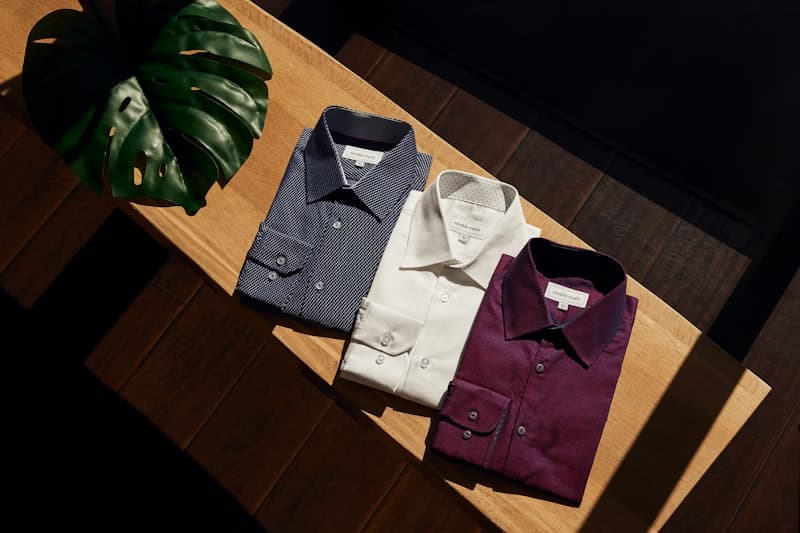
Natural Fabric Shirts for Men: Cotton, Linen, Silk, and Wool — How to Choose and Care
A complete guide to cotton, linen, silk, and wool shirts for men. Learn which fabric suits each season and occasion, how to identify quality, and proper care techniques that extend garment life.
Why Natural Fibers Matter
Synthetic fabrics dominate fast fashion because they are cheap, easy to produce, and require minimal finishing. But they come with serious trade-offs: they trap heat, hold odors, pill after a few washes, and shed microplastics into waterways. Natural fibers — cotton, linen, silk, and wool — breathe, regulate temperature, age gracefully, and ultimately feel better against the skin. A well-made natural fiber shirt can last a decade with proper care, while a polyester blend often looks tired after a single season.
This guide covers the four major natural fibers used in men's shirts, broken down by weave, weight, and finishing. You will learn how to identify quality at the fabric level, which weaves suit which occasions, and exactly how to care for each fiber to maximize its lifespan. Brand recommendations across budget tiers are included so you know where to spend and where to save.
Cotton: The Everyday Essential
Cotton is the backbone of most men's shirt wardrobes. It is comfortable, breathable, absorbent, and versatile across weaves and weights. The quality of a cotton shirt depends on three things: staple length, thread count, and weave construction.
Staple Length Matters
Cotton fibers are measured by length, known as staple. Short-staple cotton (under one inch) is used in cheap shirts — it pills, loses color, and feels rough. Long-staple cotton (one to one point five inches) produces smoother, stronger yarns. Extra-long staple (ELS) cotton — Egyptian, Giza, Sea Island, Supima — exceeds one point five inches and produces the softest, most durable fabrics. A shirt made from Giza 45 cotton, like those from Luca Faloni or Kiton, feels dramatically different from a standard cotton shirt.
Key Cotton Weaves
Broadcloth is a tight, smooth weave with a subtle sheen. It is the default for dress shirts and formal occasions. Oxford cloth is a basket weave with a soft, textured hand feel. It is more casual and durable — ideal for button-down collar shirts. Twill has a diagonal rib pattern that resists wrinkles and drapes well. Pinpoint oxford is a finer, tighter version of oxford cloth that splits the difference between broadcloth and regular oxford. Royal oxford is a premium basket weave with a distinctive texture.
Which Cotton Shirt to Buy
For business dress shirts, choose pinpoint oxford or broadcloth in 80s to 100s two-ply cotton. This weight balances breathability with opacity — you should not see skin through a white dress shirt when buttoned. Charles Tyrwhitt's non-iron shirts at $70 for three offer excellent value. Kamakura Shirts at $110 produce superior Tokyo-fit shirts with genuine mother-of-pearl buttons and single-needle stitching. For the premium tier, Charvet at $400 or Kiton at $600 produce the finest cotton dress shirts in the world.
For casual shirts, choose oxford cloth in a heavier weight. Uniqlo's Supima cotton OCBD at $40 is the best budget option for casual wear. Mercer & Sons at $130 makes traditional Ivy-style OCBDs with full plackets and locker loops. Gitman Vintage at $200 offers the best intersection of quality and style with interesting seasonal fabrics.
Caring for Cotton
Cotton can be machine washed in cold water on a gentle cycle. Hot water shrinks cotton, especially after the first few washes. Hang dry whenever possible — machine heat damages fibers and accelerates fading. Iron while damp or use a steamer. Avoid bleach; it weakens fibers and causes yellowing. For white shirts, an oxygen-based brightener like OxiClean every few washes maintains whiteness without damage. Properly cared for, a good cotton shirt lasts three to five years of regular wear.
Linen: The Warm-Weather Champion
Linen is made from flax plant fibers and has been worn for thousands of years in hot climates. It is two to three times stronger than cotton, dries faster, and wicks moisture away from the body. Linen wrinkles — that is inherent to the fiber — but the wrinkles are part of its aesthetic appeal. A linen shirt signals that you are comfortable enough to embrace imperfection.
Identifying Quality Linen
Quality linen has a clean, even weave without loose slubs or thin spots. The fabric should feel crisp, not rough — cheap linen can be scratchy, while well-made linen softens dramatically with each wash. Irish and Belgian linen are traditionally considered the highest quality due to longer flax fibers and retting processes. Italian linen from brands like Loro Piana or Zegna represents the luxury tier. Look for linen weights between 150 and 200 GSM for shirts — lighter fabrics are more transparent but cooler, heavier fabrics are more opaque but warmer.
When to Wear Linen
Linen is ideal for temperatures above 75 degrees Fahrenheit. It works as a casual shirt untucked with chinos or shorts, and as a smart-casual shirt tucked under an unstructured blazer. Avoid linen for formal business settings — the wrinkles read as unkempt in conservative environments. For summer weddings and garden parties, a white or light blue linen shirt under a cotton-linen blazer is perfect.
Best Linen Shirts
Uniqlo's linen shirts at $40 are surprisingly good for the price — the fabric is mid-weight and the cut is relaxed but not baggy. Alex Mill's linen shirts at $130 use a slightly heavier Italian linen with a soft wash that reduces initial stiffness. Gitman Vintage linen shirts at $200 offer the best fabric and construction in the mid-range, with genuine shell buttons and reinforced seams. For pure luxury, Brunello Cucinelli's linen shirts at $600 use an exclusive cashmere-linen blend that is impossibly soft.
Caring for Linen
Linen can be machine washed on a gentle cycle in cold or warm water. Do not over-dry — remove from the dryer while still slightly damp to reduce wrinkling. Iron at high heat with steam. Linen actually benefits from ironing while still damp. Alternatively, embrace the wrinkles: hang a linen shirt in a steamy bathroom to relax the worst creases, then wear it with confidence. Never dry clean linen unless absolutely necessary — the chemicals break down the natural fibers over time.
Silk: The Luxury Statement
Silk is the smoothest, most lustrous natural fiber. It is also the most delicate. Silk shirts for men fall into two categories: dress silk for formal occasions and casual silk for elevated evening wear. Silk is naturally temperature-regulating — it keeps you cool in heat and warm in cooler weather — but it is also highly absorbent and shows sweat easily.
Types of Silk Fabric
Charmeuse silk has a glossy front and matte back. It is the classic silk shirt fabric — smooth, fluid, and drapey. Twill silk has a diagonal weave that is slightly more durable and less shiny. Crepe de Chine has a pebbled texture and matte finish that reduces the formal appearance. Raw silk has a nubby texture and is more casual. For most men, a solid navy or charcoal twill or crepe de Chine shirt offers the most versatility.
When to Wear Silk
Silk shirts are appropriate for evening events, galas, dates at upscale restaurants, and creative industry social functions. They are not appropriate for daytime office wear, casual errands, or any setting where a t-shirt would suffice. A silk shirt worn under a blazer or suit jacket creates a refined, textural contrast. Worn alone, it makes a statement. Choose dark, saturated colors for evening — black, midnight navy, deep charcoal, and forest green are always appropriate.
Best Silk Shirts
Theory's silk shirts at $250 offer a clean, modern silhouette with minimal detailing. Sunspel at $300 makes a subtle crewneck silk shirt that pairs perfectly under blazers. Eton's silk shirts at $350 feature contemporary cuts with excellent fabric. For the pinnacle, Kiton's pure silk shirts at $800 are hand-finished with pearl buttons and silk thread throughout.
Caring for Silk
Silk requires gentle care. Dry cleaning is the safest option for structured silk shirts. For casual silk, hand wash in cold water with a gentle detergent like Woolite or The Laundress Delicate Wash. Never wring or twist — press water out gently. Air dry flat away from direct sunlight. Iron on low heat while slightly damp. Silk protein fibers are sensitive to light, heat, and perspiration — rotate wear to prevent fiber degradation.
Wool: The Cold-Weather Base Layer
Wool shirts are underappreciated in most wardrobes, but a fine-gauge merino wool shirt is one of the most versatile cold-weather pieces you can own. Wool insulates even when wet, resists odors naturally, and drapes beautifully. The key is choosing the right weight and weave.
Merino vs. Other Wools
Merino wool, especially in 16.5-micron or finer grades, is soft enough to wear directly against the skin without itching. Lambswool is slightly coarser and warmer. Cashmere wool is the softest but least durable. For a wool shirt, choose extra-fine merino in a single-ply or two-ply knit. The ribbed or jersey-knit merino shirt from brands like Outlier or Uniqlo is effectively a thick t-shirt that performs like a mid-layer.
When to Wear Wool Shirts
Wool shirts work for fall and winter casual wear, active outdoor settings, travel, and layering under jackets and coats. A merino wool polo works for smart-casual winter outfits. A merino wool henley adds rugged texture under a leather jacket. For outdoor activities, a merino wool long-sleeve shirt regulates temperature better than any synthetic alternative.
Best Wool Shirts
Uniqlo's extra-fine merino crewneck sweaters at $50 are the budget champion for wool layering. Outlier's merino cut-two t-shirt at $110 is the gold standard for merino casual wear. Icebreaker's merino henleys and polos at $100 to $150 are ideal for travel and outdoor use. John Smedley's Sea Island cotton shirts are technically cotton, but their merino and cashmere knits at $200 to $300 are world-class. For pure luxury, Loro Piana's Tasmanian wool shirts at $600 use the finest Australian merino in a lightweight weave.
Caring for Wool
Wool does not need frequent washing — airing it out after wear is often sufficient. When washing, use cold water and a wool-specific detergent. Never use hot water, which causes felting and shrinkage. Lay flat to dry — hanging wet wool stretches it permanently. Use a steamer instead of ironing. Store wool shirts folded with cedar blocks to deter moths. With proper care, a wool shirt lasts five to ten years.
Choosing the Right Fabric for Each Season
Spring and fall call for mid-weight cotton oxford, lightweight merino, and cotton-linen blends. Summer demands pure linen, fine cotton broadcloth, and silk for evenings. Winter requires merino wool and heavy oxford cotton. The ideal wardrobe contains at least four cotton shirts (two dress, two casual), two linen shirts (one white, one blue), one silk shirt (navy or charcoal), and one merino wool shirt or sweater. This combination covers every occasion from a summer beach wedding to a winter board meeting.