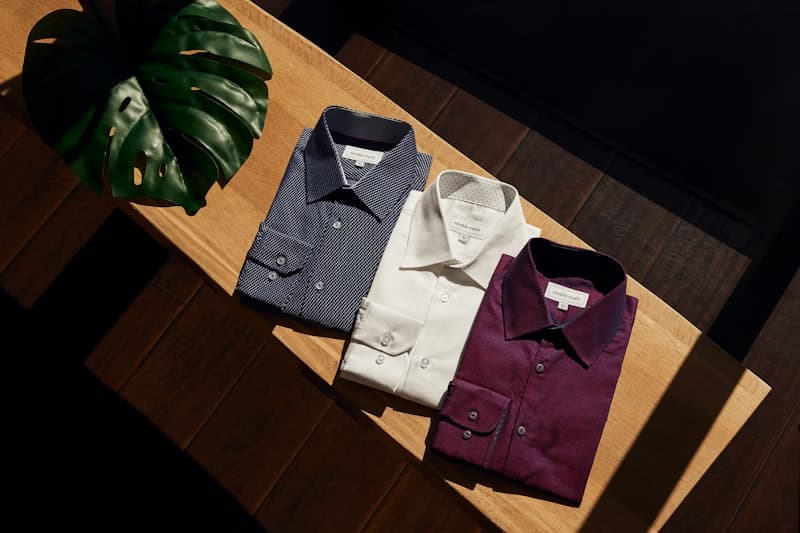
Men's Business Casual Style Guide: Seamless Transitions from Boardroom to Dinner
What Business Casual Really Means
"Business Casual" might be the most misunderstood dress code in the professional world. For some, it means "the shirt with a collar"; for others, it's a carefully curated blazer-and-chinos combination that took 20 minutes to assemble.
The truth is that Business Casual isn't a single standard — it's a spectrum. It exists on a gradient between "full suit" and "pure casual," requiring you to adjust based on the occasion, your company culture, and your daily schedule.
In 2026, with hybrid work now the norm, professional men face a new challenge: a morning video call at home, an afternoon in the office, and an evening business dinner — all in the same outfit. One blazer needs to carry the entire day.
This guide is built on a single logic: use layering + fabric quality + fit as the three pillars to construct a flexible, adaptable Business Casual wardrobe.
The Core Business Casual Wardrobe
Before diving into outfits, let's identify the pieces worth investing in. These eight items form the foundation:
Tops
1. A Well-Fitted Blazer (Not a Suit Jacket)
This is the single most important Business Casual piece. Unlike a traditional suit jacket, a blazer has a more relaxed cut, more diverse fabrics, and often features metal buttons or patch pockets. Choose a navy or charcoal wool-blend blazer — it works with everything from jeans to dress trousers. The key: natural shoulders without heavy padding. An unstructured Italian-style soft jacket is the ideal choice — it retains the silhouette of a jacket while wearing like a thick shirt.
2. High-Quality Oxford Cloth Button-Down (OCBD)
The OCBD is the white canvas of Business Casual. Button-down collars work better with blazers than spread collars because the collar points stay in place — no tie required. Buy one in white and one in light blue, and you'll cover 90% of outfit combinations.
3. Merino Wool T-Shirts and Polos
In hot weather or relaxed environments, a well-fitted merino wool knit polo can replace a shirt entirely. The 2026 trend: knit polos have transcended pure casual wear and now appear at business dinners in creative fields and tech companies. The key is fabric quality — fine merino knit looks significantly more refined than cotton.
4. Cashmere or Heavy-Knit Sweaters (V-Neck/Crew Neck)
In fall and winter, sweaters serve as the mid-layer under a blazer. V-necks expose the shirt collar for richer layering. Crew necks work better for purely casual contexts. Stick to neutrals (oatmeal, navy, charcoal) and avoid bright colors or large logos.
Bottoms
5. Chinos
Chinos are the backbone of Business Casual bottoms. The key is the cut: skinny fits are outdated. The 2026 standard is straight-tapered — straight through the thigh, gently tapering to the ankle without being tight. Colors: khaki, navy, olive green — these three pair with every blazer and top.
6. Wool Dress Trousers
For formal meetings, a pair of wool trousers that don't match your blazer can instantly elevate your look. Example: navy blazer + gray wool trousers reads as intentional and sophisticated, not like you forgot your suit jacket at home.
7. Dark Raw Denim
Business Casual allows jeans — with conditions. They must be dark raw (deep indigo) or black. No washing, no distressing, no whiskering. Cut: straight or slim-straight, never skinny.
Footwear
8. Loafers and Derby Shoes
Loafers are the iconic Business Casual shoe. Leather-soled penny loafers with wool trousers, rubber-soled with chinos. For more formal contexts, brown derby shoes (open lacing) are more appropriate than Oxfords — they're less formal, with a softer silhouette.
Four Core Outfit Formulas
Formula 1: Classic Business (Formal Meetings / Client Visits)
- Jacket: Navy blazer
- Shirt: White OCBD
- Bottoms: Gray wool trousers
- Shoes: Brown leather-soled loafers or dark brown derbies
- Accessories: Navy patterned tie (optional), brown belt
- Vibe: "I take this meeting seriously, but I don't need the armor of a suit"
This combination strikes the perfect balance between formality and comfort. The blazer provides structure, the gray trousers break the "suit" illusion, and the loafers signal confidence without rigidity.
Formula 2: Smart Casual (Daily Office / Team Meetings)
- Jacket: Gray or navy blazer
- Shirt: Light blue or off-white OCBD
- Bottoms: Khaki chinos
- Shoes: Brown rubber-soled loafers or dark suede chukka boots
- Accessories: No tie. White linen pocket square.
- Vibe: Approachable authority
This is the classic form of Business Casual — the blazer-and-chinos combination works in nearly every professional environment. Fit is everything here: blazer shoulders landing exactly at your shoulder bone, shirt cuffs showing exactly 1cm beyond the jacket sleeve, trouser hem just brushing the top of your shoe with no pooling.
Formula 3: Summer Lightweight (Hot Weather / Creative Fields)
- Jacket: None. Replace with a knit polo or lightweight linen shirt.
- Bottoms: Khaki or navy chinos
- Shoes: Suede loafers (no socks) or white leather sneakers (minimal, clean)
- Accessories: Braided belt, sunglasses
- Vibe: Effortless competence
The key to summer Business Casual is subtraction. A knit polo in a dark neutral (navy, charcoal, olive) replaces both shirt and blazer while maintaining a structured silhouette. Choose cotton-linen blends for breathability; avoid pure linen (it wrinkles within hours and looks unkempt).
Formula 4: Winter Layers (Cold Weather / All-Day Business)
- Jacket: Heavy wool blazer or peacoat
- Mid-layer: V-neck cashmere sweater over a shirt (collar folded out)
- Bottoms: Olive chinos or dark wool trousers
- Shoes: Dark brown Chelsea boots or thick-soled derbies
- Accessories: Cashmere scarf, leather gloves
- Vibe: Substantial and intentional
Layering is the core strategy for cold-weather Business Casual. The three-layer system (shirt + sweater + jacket) offers visual depth and actual warmth. Rule of thumb: the outer layer should be thickest, the inner layer thinnest, with the mid-layer bridging the two.
8 Never-Fail Styling Rules
Rule 1: Fit is non-negotiable. No amount of money spent on a garment compensates for poor fit. Blazer shoulder seam at the shoulder bone, shirt cuff at the wrist bone, trouser hem just touching the shoe.
Rule 2: No more than three colors per outfit. Follow the 60-30-10 rule: 60% dominant color (navy blazer), 30% secondary (khaki pants), 10% accent (brown belt or pocket square).
Rule 3: Fabric weight equals formality. Worsted wool > cotton > linen > synthetic blends. The finer the weave, the more formal the impression.
Rule 4: Zero logos. Business Casual communicates taste through fabric and fit, not branding. Smaller logos are better. No logos are best.
Rule 5: Match your belt to your shoes. This is the most commonly broken rule and the most immediately noticeable. Brown shoes + black belt (or the reverse) instantly signals that you don't know what you're doing.
Rule 6: Socks matter more than you think. The inch of sock visible when you cross your leg says more about your attention to detail than your tie. Dark, fitted mid-calf socks are the safe choice. Patterned or colored socks are for creative environments only.
Rule 7: Dress one level above your environment. Dressing significantly better than your peers marks you as ambitious. Dressing like you're going to a board interview when everyone else is in hoodies makes you look clueless. Observe the most respected person in your organization and aim for their level.
Rule 8: Invest in core pieces, not trends. A $300 blazer worn for 5 years is better value and higher quality than five $60 fast-fashion blazers each worn for one season.
Seasonal Wardrobe Checklist
- Spring: Navy blazer, light blue OCBD, khaki chinos, brown loafers
- Summer: White knit polo, navy chinos, suede loafers (no socks)
- Fall: Charcoal blazer, white OCBD, olive chinos, brown derbies
- Winter: Peacoat, V-neck cashmere sweater, dark chinos or wool trousers, Chelsea boots
Each four-piece seasonal capsule costs roughly $800-$1,200 total and yields over 50 different outfit combinations through cross-mixing. When your wardrobe becomes a system rather than a collection of individual pieces, getting dressed every morning transforms from a daily frustration into a simple, confident decision.