Complete Guide to Men's Fabrics: From Cotton to Cashmere
A comprehensive guide to men's suit and shirt fabrics — wool, cotton, linen, cashmere, and blends. Learn thread count, weave types, and seasonality for smarter wardrobe choices.
Wool: The Backbone of Men's Tailoring
Wool is the undisputed king of suiting fabrics. It breathes, drapes beautifully, resists wrinkling, and insulates naturally. The most common suiting wool is worsted wool — fibers combed to lie parallel before spinning. Worsted wool comes in weights from 150 grams for tropical summer suits to 400 grams for heavy winter overcoats. Super numbers like Super 120s or Super 150s refer to the fineness of the fibers. For an all-purpose suit, Super 120s to Super 130s delivers the best balance of comfort, appearance, and longevity. Flannel wool, with its brushed surface, is ideal for cooler months and casual suiting.
Cotton: Beyond the Oxford Cloth
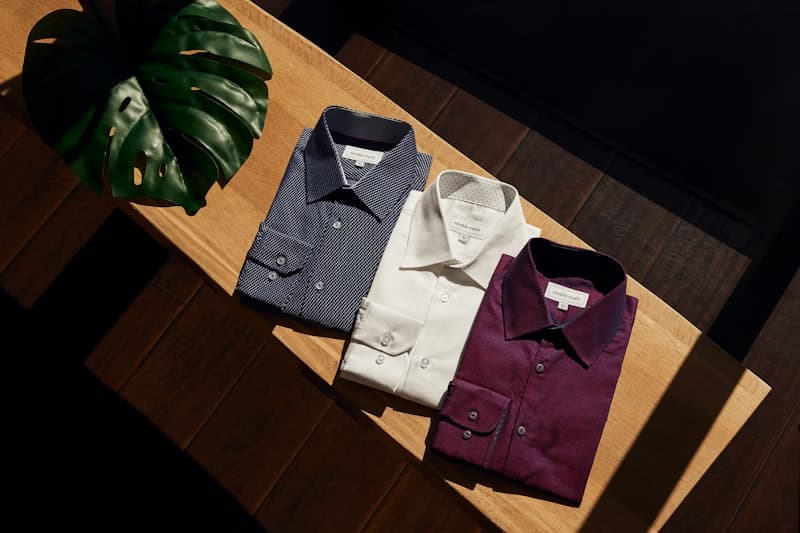
Cotton is the workhorse of men's wardrobes. Oxford cloth is the classic button-down shirt material — its basket weave creates a textured fabric that wears casually. Broadcloth is the smoothest, most formal cotton weave for dress shirts. Twill cotton shows diagonal ribbing and drapes better than broadcloth. The key metric for cotton quality is fiber length. Long-staple cotton like Egyptian, Giza 45, or Supima produces stronger, softer yarns. Sea Island cotton, the rarest variety, has fibers over two inches long. For everyday shirting, look for two-ply cotton — two threads twisted together — which resists fraying.
Linen and Summer Fabrics: Staying Cool in Style
Linen is the go-to fabric for hot weather, woven from flax fibers that conduct heat away from the body. A good linen shirt can reduce perceived temperature by several degrees. The trade-off is wrinkling — linen creases easily and permanently. For suits, linen is best in unstructured, unlined jackets without shoulder padding. Linen-cotton and linen-wool blends reduce wrinkling while retaining breathability. Hopsack wool is another excellent warm-weather suiting option with a loose, porous weave.
Cashmere, Silk, and Luxury Blends
Cashmere comes from the undercoat of cashmere goats and is valued for exceptional softness and insulating properties. A cashmere sport coat weighs roughly half of what a comparable wool jacket weighs and provides three times the warmth. However, pure cashmere is delicate. Most practical garments blend cashmere with wool at ratios like 10 to 30 percent. Silk adds luster and strength. A wool-silk blend creates fabric with a subtle sheen ideal for evening wear. Mohair adds crispness and wrinkle resistance to wool blends.
Synthetic Blends: When and Why to Use Them
Pure synthetics have no place in formal menswear, but strategic blends serve real purposes. Adding 2 to 5 percent elastane to wool creates stretch trousers that survive airline seats without bagging. Nylon at 10 to 20 percent boosts abrasion resistance in suit elbows and trouser seats. Polyester in raincoats reduces weight and drying time. The key is proportion — a garment that is 95 percent wool with 5 percent elastane retains virtually all of the natural fiber's qualities while adding practical flexibility.