Build a Men's Casual Wardrobe That Actually Works: The Essential Capsule Strategy
Stop staring at a full closet with nothing to wear. Learn how to build a versatile men's casual wardrobe with curated essentials that mix, match, and transition effortlessly.
The Philosophy: Fewer Pieces, Better Combinations
A great casual wardrobe is not about quantity — it is about connectivity. Every piece you own should work with at least three others in your closet. When you achieve this level of coordination, dressing becomes effortless and your style improves automatically. The goal is a capsule of roughly 25 to 30 items that cover all your casual needs across seasons, from running Saturday errands to meeting friends for drinks on a Friday evening.
Start by auditing your current wardrobe. Pull everything out and sort into three piles: keep, tailor, and remove. The keep pile contains items that fit well, are in good condition, and you genuinely wear. The tailor pile holds pieces with potential that need hemming, taking in, or other adjustments. The remove pile includes anything stained, faded beyond recovery, ill-fitting, or unworn in the past twelve months. Be ruthless — a cluttered closet makes dressing harder, not easier.
Once you have cleared the excess, identify the gaps. Most men lack sufficient high-quality t-shirts, well-fitting jeans, and versatile footwear. These are the workhorses of casual dressing and deserve the bulk of your budget. Resist the temptation to buy novelty pieces — printed t-shirts, heavily distressed jeans, or bright-colored sneakers that match nothing. Build the foundation first, then add personality through textures, subtle patterns, and accessories.
The Core Tops: T-Shirts, Polo Shirts, and Button-Downs
Invest in heavyweight cotton t-shirts and nothing lighter. A 200 GSM or higher fabric weight drapes better, holds its shape, and does not become transparent when stretched. Buy at least six: two white, two black or charcoal, one navy, and one heather grey. These colors form the backbone of every casual outfit. Crew necks are most versatile, but a couple of scoop-neck or V-neck options add variety for layering.
Polo shirts belong in every casual wardrobe as the bridge between t-shirts and button-downs. Choose pique-knit cotton polos in solid colors — navy, burgundy, olive, and white. Avoid logos, contrast collars, and novelty details. The collar should stand up crisply without curling after washing. Premium polos from heritage brands like Fred Perry, Lacoste, and Sunspel offer superior collar construction and fabric durability that justify their higher price point.
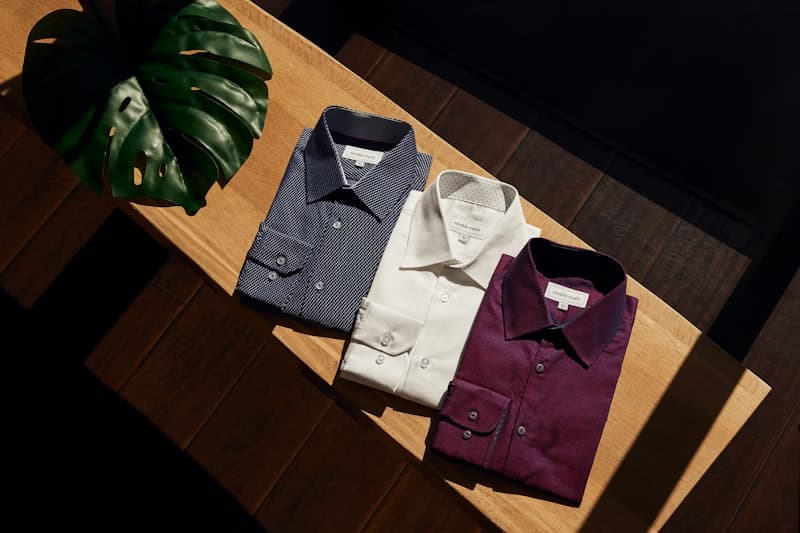
For button-down shirts, focus on Oxford cloth and chambray. An Oxford cloth button-down in light blue or white is arguably the single most versatile shirt in men's fashion — it works with jeans, chinos, shorts, and even under a casual blazer. Chambray shirts offer a denim-like appearance with lighter weight and softer hand feel. Add one linen button-down for summer and one brushed flannel for winter. All should fit well in the shoulders and allow comfortable movement without being baggy.
Bottoms: Jeans, Chinos, and Shorts
Jeans are the cornerstone of casual bottoms. Own exactly three pairs: one dark wash (raw or rinsed indigo), one mid-wash (vintage or stonewash), and one black or charcoal. The dark wash pair serves for evening and smart-casual occasions. The mid-wash pair handles daily wear. The black pair offers an alternative to blue denim. All three should be straight or slim-straight fits — skinny jeans trend in and out, but a classic fit never looks dated.
Chinos provide the tailored element in casual dressing. Khaki or stone chinos are essential, and a navy or olive pair adds depth. Choose cotton chinos with a hint of stretch — one to two percent elastane improves comfort without compromising the fabric's appearance. Flat-front chinos with a tapered leg create a clean silhouette that pairs well with everything from sneakers to loafers. The hem should sit with a slight break on your shoe, just like suit trousers.
For shorts, stick to a five to seven inch inseam ending two to three inches above the knee. This length is universally flattering and neither too long nor too short. Choose cotton chino shorts in navy, khaki, and olive. Avoid cargo pockets, excessive branding, and athletic mesh fabrics for anything beyond the gym. Linen shorts in cream or light blue are excellent for hot weather but require careful coordination to avoid looking like beachwear.
Outerwear and Footwear: The Foundation Layers
A casual wardrobe needs three outerwear pieces: a denim jacket, a lightweight bomber or field jacket, and a merino wool sweater. The denim jacket should be a classic trucker style in medium or dark indigo, slightly broken in but not distressed. Wear it open over t-shirts and button-downs alike. The bomber jacket — in olive cotton, black nylon, or brown leather — serves as the transitional piece for spring and fall evenings.
Lightweight field jackets in khaki or sage cotton poplin are excellent for layering over sweaters and under heavier coats. Look for a clean design without excessive pockets or military-inspired hardware that dates quickly. For warmth, a merino wool crewneck sweater in navy, charcoal, or burgundy pairs over collared shirts or alone on milder days. Merino is temperature-regulating, odor-resistant, and machine-washable — superior to cotton sweaters in almost every way.
Footwear makes or breaks a casual outfit. You need exactly four pairs: white leather sneakers (common projects aesthetic, not athletic), brown leather desert boots or chukkas, dark brown or walnut leather loafers, and a pair of clean canvas sneakers. The white sneakers are your most-worn pair and deserve the highest budget — they go with every single outfit in your wardrobe. Rotate footwear daily to extend the life of each pair and allow them to air out.
Accessories and Layering Strategy
Belts should match your dominant shoe color. One brown leather belt and one black leather belt suffice for almost every casual outfit. The belt should be one and a quarter to one and a half inches wide — narrower belts feel dressy, wider belts feel utilitarian. A canvas web belt in navy or olive adds a sporty alternative for summer outfits with shorts and white sneakers.
Watches complete a casual outfit without overcomplicating it. A stainless steel dive watch on a bracelet is the most versatile choice, equally at home with jeans and a t-shirt or chinos and a button-down. Alternatively, a field watch on a leather or NATO strap offers a rugged aesthetic that pairs naturally with casual clothing. Avoid oversized cases — 38 to 42 millimeters is the sweet spot for most wrist sizes.
Layering is the secret to making a small wardrobe feel large. Master the formula: base layer (t-shirt or henley) plus mid layer (button-down or sweater) plus outer layer (jacket or vest). Varying these three pieces produces dozens of distinct outfits from the same core items. Pay attention to fabric weights — a thin merino base layer under an Oxford shirt under an unlined field jacket works across all seasons and creates visual depth through contrasting textures.
Seasonal Rotation and Maintenance
Divide your casual wardrobe into two overlapping seasonal sets. Spring and summer share lightweight fabrics: linen, chambray, cotton, and tropical-weight wool. Fall and winter share heavier fabrics: flannel, denim, moleskin, and merino. The core items — dark wash jeans, white sneakers, leather belts, and your watch — span all seasons. Rotate accordingly when the weather shifts, packing off-season items in breathable storage bins.
Proper maintenance extends the life of every garment. Wash jeans only when truly dirty — every ten to fifteen wears is sufficient. Turn them inside out, wash cold, and hang dry. T-shirts benefit from the same treatment to prevent collar stretching and fabric pilling. Sneakers should be cleaned with a gentle soap solution and a soft brush after every few wears, and leather boots need conditioning every season to prevent cracking.
Evaluate your wardrobe twice a year, at the change of spring and fall. Identify pieces that have worn out or no longer fit your lifestyle. Replace them deliberately, choosing quality over quantity. Over time, your casual wardrobe becomes a curated collection of pieces that genuinely work together, eliminating the morning frustration of standing before a full closet with nothing to wear.