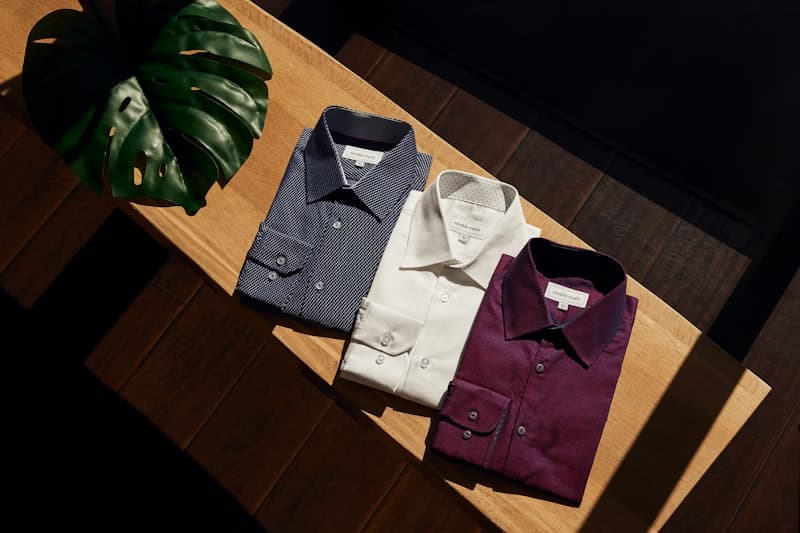
Casual Formal Color Matching — Smart Styling for the Modern Man
Master the art of color matching for business casual wear. Learn how to build a neutral base, incorporate accent colors, and create polished outfits that transition seamlessly from desk to dinner.
The Foundations of Color in Men's Business Casual
Color coordination is one of the most underrated skills in men's fashion. Many men own perfectly good individual pieces but struggle to combine them into outfits that look intentional rather than accidental. The difference between a man who looks effortlessly stylish and one who looks like he grabbed the first thing from his closet often comes down to a few basic principles of color theory.
Business casual occupies a unique space in the dress code spectrum, sitting somewhere between the strict formality of a suit-and-tie environment and the complete freedom of weekend wear. This makes color choices particularly important — you need to look professional enough for the workplace but relaxed enough to seem approachable. The wrong colors can make you look either overly stiff or inappropriately casual.
The key to mastering business casual color matching is understanding value (how light or dark a color is), saturation (how intense or muted a color is), and temperature (whether a color leans warm or cool). By learning to balance these three dimensions, you can create outfits that are visually coherent, flattering, and appropriate for any business casual setting.
Building Your Neutral Foundation
Every well-dressed man needs a solid foundation of neutral colors. Neutrals are the backbone of any wardrobe because they work with everything, never go out of style, and allow you to build outfits quickly without overthinking. In business casual, the essential neutrals are navy, charcoal, olive, brown, and various shades of white and cream.
Navy is arguably the most versatile neutral in menswear. It is dark enough to convey authority but lacks the harshness of black, making it suitable for blazers, trousers, chinos, and knitwear. Charcoal gray occupies a similar role but reads as slightly more formal — ideal for trousers in an office where chinos might be too casual. Olive green has become a modern neutral staple, offering a subtle earthiness that pairs beautifully with almost any other color.
When building your neutral foundation, prioritize quality over quantity. A single well-fitting navy blazer, two pairs of neutral trousers (one navy or charcoal, one khaki or olive), and three or four neutral button-down shirts will form the core of a business casual wardrobe that can produce dozens of outfit combinations.
Understanding the Color Wheel for Men
The color wheel is a practical tool for coordinating your outfits. The basic principle is simple: colors opposite each other on the wheel (complementary colors) create strong visual contrast, while colors next to each other (analogous colors) create harmonious, subtle combinations. For business casual, analogous combinations are generally safer and more sophisticated.
For example, pairing a light blue shirt with a navy blazer and olive trousers creates an analogous flow through the blue-green spectrum. Adding a complementary accent — such as a burgundy tie or brown leather shoes — introduces visual interest without overwhelming the outfit.
Color temperature also matters. Warm colors advance visually and draw attention, while cool colors recede and create a calming effect. In business casual, using cool colors as your base and reserving warm colors for small accents creates a professional, grounded look.
The 80-15-5 Rule for Accent Colors
One of the most practical guidelines for incorporating accent colors is the 80-15-5 rule. Roughly 80% of your outfit should be neutral base colors, 15% should be your secondary or complementary color, and 5% should be a bold accent that provides visual pop. This ratio ensures cohesion while still having personality.
For example, an outfit might consist of charcoal trousers and a white shirt (80% neutral), a light blue blazer (15% complementary), and a patterned pocket square with a hint of burgundy or mustard (5% accent). The accent draws the eye without dominating the look. This works equally well with ties, socks, watch straps, or glasses frames.
When choosing accent colors, consider your skin tone and hair color. Men with warm undertones look best in earth-toned accents like rust, mustard, olive, and warm brown. Men with cool undertones are better served by jewel tones such as burgundy, emerald, navy, and charcoal.
Seasonal Color Adjustments for Business Casual
Color matching is not static — the same palette that looks perfect in autumn can feel heavy in spring. In spring, embrace lighter neutrals such as beige, stone, and light gray, and introduce pastel accents like pale pink, mint green, or baby blue. Summer calls for even lighter colors and lower contrast outfits. White, cream, light blue, and soft shades of pink and lavender are ideal.
Autumn and winter allow for richer, deeper color palettes. Burgundy, forest green, rust, and camel become excellent accent colors against a backdrop of charcoal, navy, and dark brown. Heavier fabrics like flannel and tweed naturally suit these deeper tones. The key is to shift your colors gradually as the seasons change.
Common Color Mistakes and How to Avoid Them
The most common error is wearing black in a business casual context where it looks too severe. Black is best reserved for formal evening wear. For business casual, charcoal, navy, or dark brown almost always serve you better. Another frequent mistake is over-matching — wearing a tie that exactly matches your shirt. While coordination is good, exact matching looks costume-like.
Finally, many men underestimate the impact of accessories on color coordination. A leather watch strap, belt, and shoes should relate to each other in color but do not need to match exactly. Stick to one metal tone (silver or gold) for your watch, belt buckle, and any jewelry. Consistency in these small details signals thoughtfulness.