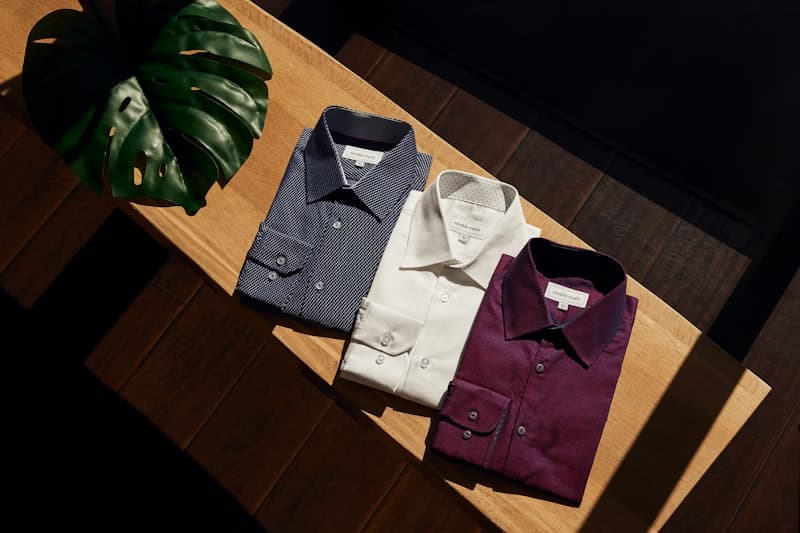
Men's Accessory Styling: Level Up Your Look with Details
The difference between a good outfit and a great one is almost always in the details. Learn how watches, belts, bags, and even socks can elevate your entire look without breaking the bank.
Most men spend 90% of their styling energy on the clothes themselves — picking the right cut, the right color, the right fabric. And those choices matter. But the thing that separates a decent outfit from a truly sharp one is almost always in the accessories. The same white button-down and charcoal trousers tell completely different stories depending on whether you pair them with a stainless steel dive watch or a plastic digital one. Accessories aren't an afterthought. They're the punctuation marks on your outfit — small, but they change everything.
There are two common traps when it comes to men's accessories. The first is wearing nothing at all — going completely bare, which can make even a well-fitted suit look unfinished. The second is wearing too much — stacking rings, bracelets, necklaces, a watch, and a lapel pin all at once, like a walking jewelry display. The real art of accessorizing is restraint: one great piece beats ten mediocre ones every time. This guide walks through the essentials — from functional accessories like watches and belts to purely decorative pieces — and gives you a system for building your own accessory wardrobe.
Watches: The One Investment Piece
A watch is one of the few pieces of jewelry men can wear daily without looking overdressed, and it's the single best investment you can make in your appearance. A good watch will outlast a dozen jackets and will do more for your perceived attention to detail than any other item you own.
If your daily style leans toward formal wear or business casual, a simple three-hand watch on a steel bracelet or leather strap is your safest bet. Look for a case diameter between 38mm and 42mm — anything smaller looks dated, anything larger looks like you're compensating. White or black dials are the most versatile. Entry-level Swiss watches from brands like Tissot, Hamilton, or Longines offer exceptional value in the $500–$2,000 range. The movements (ETA 2824 or Sellita SW200) are workhorses that will run accurately for decades with regular servicing.
If your style is more casual and sporty, consider a dive watch or a pilot's watch. Seiko's dive watch lineup offers incredible value under $500 — the build quality, lume, and accuracy punch far above their price point. A dive watch pairs effortlessly with a t-shirt and jeans, adding visual weight to an otherwise simple outfit without looking try-hard.
One rule worth following: never wear a fake watch just to look important. People who know watches will spot a fake immediately, and people who don't know watches won't care what you're wearing anyway. A genuine $200 G-Shock that's been through real adventures with you carries more authenticity and character than a counterfeit Rolex that screams insecurity.
Belts: The Most Underrated Detail
The golden rule of belts is simple: match your belt to your shoes. Black shoes take a black belt, brown shoes take a brown belt. This is the most basic rule of formal dressing, and yet it's broken constantly. A well-tailored suit paired with a belt that clashes with the shoes is like a great song with a wrong note in it — most people won't be able to name what's off, but they'll feel it.
Belt width matters too. Dress belts should be between 30mm and 35mm wide — anything narrower looks too delicate, anything wider looks rugged and informal. For casual belts, the range is wider (25mm to 40mm), but make sure the belt width matches your belt loops. A skinny belt on wide loops looks ridiculous, and vice versa.
Material-wise, full-grain or top-grain leather is the standard for quality belts. Embossed leather, canvas, and woven leather are better suited for casual wear. One detail that's easy to overlook: the buckle finish. Polished buckles are more formal, brushed buckles are more casual, and a simple pin buckle is far more classic than a plate buckle. If you're buying just one belt, get a black smooth leather belt with a pin buckle at 32mm width. It will work with every pair of dress pants and chinos you own.
Bags: Where Utility Meets Style
In professional settings, your bag sends a signal before you've said a word. A battered, misshapen briefcase with scuffed corners can undermine an otherwise excellent suit faster than almost anything else.
Backpacks aren't automatically wrong for business settings, but you need to choose carefully. A dark-colored, minimalist backpack without obvious logos or sporty details can work. But canvas backpacks and bright-colored gym-style backpacks belong at the gym. If your budget allows, a leather tote or a structured leather messenger bag is the most versatile choice — it can hold a laptop and documents while looking perfectly appropriate in client meetings.
For casual and travel scenarios, crossbody bags and messenger bags are great options. The key is proportion — a bag that's too large for your frame makes you look smaller. Someone who's 5'9" will look perfectly balanced with a 30cm-wide crossbody bag, but switching to a 40cm-wide style starts looking like you're carrying luggage.
Socks: The Secret Signature
Socks are the most overlooked accessory in men's fashion, which makes them the perfect place to show you care about details. In formal settings, socks should be long (mid-calf at minimum) and dark. Black, charcoal, and navy are non-negotiable. The cardinal sin of formal dressing — visible bare leg when crossing your legs — is entirely preventable with proper sock length.
But in casual and smart-casual settings, socks are your canvas. A subtle pattern — micro-dots, fine stripes, or a windowpane check — peeking out between the hem of your cuffed chinos and your shoe is exactly two centimeters of personality that signals intentionality without screaming for attention. Many men are afraid of colored socks, but the trick is coordination: match your sock color to an accent color elsewhere in your outfit. Wearing a shirt with burgundy stripes? Burgundy socks tie the whole thing together in a way that feels deliberate and polished.
Eyewear: Architecture for Your Face
If you wear prescription glasses, they're the most prominent accessory on your face and arguably the most important. Frame shape should work with your face shape, not against it. Round faces benefit from rectangular or square frames that add angular definition. Square faces are softened by round or oval frames. Heart-shaped faces look best in frames with a wider lower half that balances a broader forehead. In terms of color, black, tortoiseshell, and silver are timeless choices that work across all skin tones and styles.
Sunglasses follow similar logic. Aviators work on almost everyone. Square frames suit oval and heart-shaped faces. Round frames complement square jawlines. But there's one non-negotiable technical requirement: UV400 protection. Never buy sunglasses based on style alone. Dark lenses without proper UV protection cause your pupils to dilate, letting in more harmful UV rays than wearing no sunglasses at all. Check the label before you buy.
Other Accessories
Rings: Less is more. Maximum two rings, preferably on the same hand. Silver is more versatile than gold for most skin tones and outfits.
Cufflinks: If you wear French-cuff shirts, cufflinks are a fantastic detail. Simple silver or gold spheres are the most versatile starting point. Mother-of-pearl and enamel are excellent upgrades. Avoid novelty shapes.
Tie bars and lapel pins: A tie bar should sit between the third and fourth buttons of your shirt — not higher, not lower. Lapel pins have made a strong comeback. A single simple metal pin on your jacket lapel gives a dark suit an instant focal point.
The Rule of Five
Here's a simple rule that works in any situation: limit yourself to five accessories total. This counts everything — watch, belt, rings, glasses, bag, bracelet, everything. Functional items (watch, glasses) count toward this limit just as decorative ones do. The logic is simple: accessories should enhance your outfit, not compete with it. When someone notices your accessories, it should be because they complement your overall look, not because they're shouting for attention. Five is enough to look intentional. More than that, and you start to look like you're trying too hard.
Accessories are the difference between being dressed and being well-dressed. Invest in a few quality pieces, wear them with intention, and let the details do the talking.