Entry-Level Workwear: Building 5 Professional Outfits on a $400 Budget
Just graduated and confused about office dress codes? Build 5 polished looks with a minimal budget — specific pieces and brands included.
Why Your First Work Wardrobe Matters
You just landed your first job after graduation. Your brain is full of technical manuals, company policies, and the names of 47 new coworkers you'll forget by tomorrow. The last thing you want to think about is what to wear.
But here's the uncomfortable truth: in your first 90 days, people are forming opinions about you based on your appearance — whether they mean to or not. It's called the "halo effect" in psychology. Colleagues who see you as well-dressed unconsciously assume you're also well-organized, competent, and promotion-worthy. It's not fair, but it's real.
The good news? You don't need a designer wardrobe. With $400, you can build a capsule collection that produces 5 distinct outfits, covers every common office scenario, and won't make you look like you're wearing your dad's clothes. Here's the exact blueprint.
The Shopping List ($395 Total)
2 Blazers ($140)
Navy single-breasted blazer, notch lapel ($80) — Your MVP. Go for wool-blend fabric (look for at least 40% wool on the tag). Half-lined construction breathes better and costs less. Notch lapels are the most versatile. Where to buy: J.Crew Factory's wool blazer (on sale $70-90), H&M's linen-blend blazer ($60), or thrift a quality brand and spend $20 on tailoring.
Charcoal or light gray blazer ($60) — Charcoal reads more formal and works for colder months. Light gray is ideal for spring/summer and creates excellent contrast with navy trousers. Avoid: Black blazers (too formal, reads "funeral"), shiny polyester fabric, and overly slim "Euro" cuts.
Fit tip: The shoulder seam should sit exactly at your shoulder bone — not hanging off, not digging in. This is the single most important fit point on a blazer. A $20 tailoring bill to fix shoulder fit is money better spent than a $200 blazer that doesn't fit.
3 Pairs of Trousers ($90)
Navy flat-front slim-straight trousers ($35) — Your workhorse. No pleats (pleats are for older men and larger budgets). Slim-straight is the sweet spot: modern without being trendy. Where: Uniqlo's Kando Pants ($39.90), Old Navy's slim-fit chinos ($25-35).
Khaki or tan chinos ($30) — The second most important bottom. Khaki chinos + navy blazer is the single most versatile smart-casual combination in menswear. Where: Dockers Alpha Khakis ($40-50, wait for sales), Target's Goodfellow brand ($25).
Charcoal wool-blend trousers ($25) — Pairs with your charcoal blazer for a "suit" effect, or worn solo with an oxford shirt. Where: Thrift stores are goldmines for decent wool trousers — look for brands like Haggar, Docker's Premium, or Banana Republic.
Avoid: Skinny-fit anything, pants that pool over your shoes (get them hemmed for $10), and pants with excessive branding or pocket detailing.
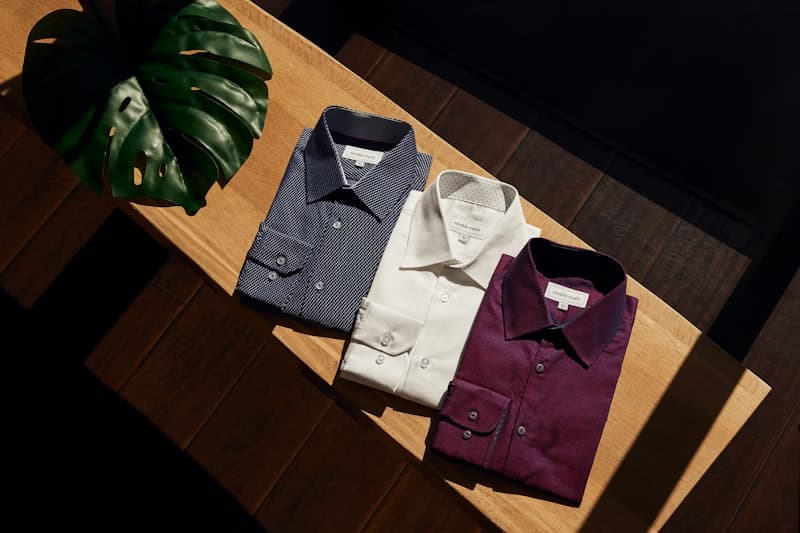
5 Shirts ($80)
White Oxford cloth button-down (OCBD) × 2 ($30) — Oxford cloth is thicker and more casual than broadcloth, which makes it ideal for daily wear without looking like a tuxedo shirt. The button-down collar keeps things young and relaxed. Where: Uniqlo's Oxford shirt ($29.90), J.Crew Factory ($25 on sale).
Light blue broadcloth × 1 ($15) — After white, light blue is the safest and most versatile shirt color. A touch more formal than Oxford cloth, good for client-facing days. Where: H&M's slim-fit ($17.99), thrifted Brooks Brothers ($5-10).
Blue/white Bengal stripe or micro-check × 1 ($20) — Pattern adds texture without being loud. A thin stripe or tiny check pattern reads as intentional and polished. Where: Target's Goodfellow brand ($15-20).
Light pink or lavender Oxford × 1 ($15) — Once you've exhausted blue and white, pastels are the next safe step. Pink reads confident and approachable. Where: Thrift stores, H&M.
Fit tip: Shirt collar should button comfortably without choking you — you should be able to slip one finger inside. Sleeves should end at your wrist bone. If you can't find off-the-rack shirts that fit, a $10 tailor alteration on the sides is worth it.
2 Pairs of Shoes ($85)
Dark brown derby shoes or loafers ($55) — Derbies are more casual than Oxfords and more forgiving with fit. Dark brown (not black) is the most versatile shoe color — it pairs with navy, charcoal, khaki, and denim. Where: Clarks desert boots in beeswax leather ($60-80 on sale), Thursday Boot Company's captain ($80 on clearance), or thrifted Allen Edmonds ($20-40 + $30 resole).
Minimal white leather sneakers ($30) — The secret weapon of modern office wear. Look for all-white or mostly-white with minimal branding. No neon. No thick basketball soles. Where: Stan Smiths ($60-80 on sale), or Keds/Veja alternatives. The Uniqlo canvas sneakers ($19.90) work in a pinch.
Avoid: Black dress shoes (they look dated under 40 and clash with khaki/chinos), pointy-toe anything, and shoes that are scuffed or dirty — shoe care products cost $10 and extend life by years.
The 5 Outfits
Look 1: Client Meeting / Interview
Navy blazer + Navy trousers + White OCBD + Brown derbies → The "suit without being a suit" look. The tonal navy pairing creates a cohesive silhouette. Add a pocket square (white cotton, $3) for extra polish.
Look 2: Daily Office Standard
Charcoal blazer + Khaki chinos + Light blue shirt + Loafers → Maximum contrast = maximum visual interest. The light blue softens the charcoal's heaviness. Roll sleeves once for a working-vibe.
Look 3: Casual Friday
Charcoal blazer + Charcoal trousers + Striped shirt (no tie) → The "I own a suit but I'm keeping it casual" move. Open collar, no tie. Add the white sneakers if your office is truly casual.
Look 4: No-Jacket Day
Khaki chinos + White OCBD + White sneakers → Your baseline. Roll the sleeves to mid-forearm. Tuck or untuck depending on office culture (tucked is safer). The white sneakers keep it young.
Look 5: After-Work Drinks
Navy blazer + Khaki chinos + Pink or lavender shirt + Loafers → Transitions from desk to bar seamlessly. The pastel shirt adds personality. Switch from the derbies to loafers for a more social vibe.
Color System: The 60-30-10 Rule
- 60% Dominant Color: Navy, charcoal, khaki — your base palette
- 30% Secondary: White, light blue — your shirt layer
- 10% Accent: Brown (shoes, belt) — small pops of warmth
Colors to avoid: Black (unless you're a waiter or at a funeral), bright colors (save those for weekends), and patterns-on-patterns (if your shirt has stripes, your blazer should be solid, and vice versa).
Where to Splurge vs. Save
Spend more on:
- Shoes: They take the most abuse and are the first thing people glance at. A $100 shoe that fits well beats a $300 shoe that doesn't.
- Blazer fit: Even a $50 thrifted blazer looks like $500 after a $20 tailoring session. Shoulders first, then length, then waist suppression.
- Shirt collar fit: A collar that's too tight makes you look uncomfortable. A collar that's too loose makes you look sloppy. Get this right.
Save on:
- Belts: $15-20, clean and simple. No giant buckles, no logos. Match your shoe color.
- Socks: Solid navy, charcoal, or maroon. 12-pack of gold-toe or similar for $15. No white socks with dress pants (ever).
- Ties: You probably won't wear one daily. One navy knit tie ($15) and one grenadine or solid silk ($20) cover 100% of tie-required situations.
- Bag: A clean backpack or simple canvas tote. You don't need a leather briefcase yet.
Final Advice for the First 30 Days
- Wait and observe before buying more. Start with the 10 core pieces listed here. Wear them for two weeks. Notice what your colleagues wear. Notice what feels missing. Then buy your next piece intentionally.
- Read the fabric label. "60% wool + 40% polyester" is a sweet spot for durability and breathability at this price point. 100% polyester traps sweat and looks shiny.
- Buy a handheld steamer ($20-30). Wrinkles are the #1 enemy of budget clothing. A steamer makes even a $20 shirt look deliberate.
- Watch the office culture. If your boss wears hoodies, you can dress down. If clients come through weekly, keep a blazer on your chair back. Adapt don't overcommit.
$400 is enough. The key isn't how much you spend — it's buying the right pieces, getting them to fit passably, and knowing how to combine them. These 5 outfits give you a professional baseline. From here, you can build deliberately. One piece at a time.