Business Casual Mastery: Dressing with Authority Without the Tie
Master the art of business casual with proven strategies that project authority and competence. No tie required. From blazers to sneakers, build a powerful office wardrobe today.
The Great Unbuttoning of the Modern Office
The death of the necktie in corporate America has been reported for two decades, yet the reality is more nuanced. The tie is not dead — it has simply retreated to its proper domain of formal meetings, client presentations, and court appearances. For the ninety percent of workdays that fall outside those scenarios, business casual has become the de facto dress code. The problem is that no one ever defined what business casual actually means. The phrase was coined in the 1960s by Hawaiian shirt manufacturers promoting aloha wear as office-appropriate, and the confusion has persisted ever since. What men need is not a rigid dress code but a framework for making decisions.
The goal of business casual is to project competence, authority, and attention to detail without the formality of a suit and tie. This requires a different set of skills than formal dressing. Without the visual shorthand of the necktie, your shirt collar, jacket fit, trouser break, and shoe choice must carry more weight. Every element becomes more visible and more scrutinized. The man who masters business casual understands that the absence of a tie is not a license for sloppiness but an invitation to demonstrate sophistication through other means. The rules are different, but they are real.
The Blazer as Your Command Center
The most important garment in a business casual wardrobe is the odd jacket — a blazer or sport coat worn without matching trousers. A tailored jacket instantly raises the perceived formality of any outfit while remaining a step below a full suit. Choose a navy blazer in a textured fabric like hopsack, tropical wool, or a wool-mohair blend. The texture matters because it distinguishes your jacket from a suit jacket. Smooth worsted wool reads as part of a suit, which looks odd when paired with chinos. Textured fabric telegraphs intentionality: this jacket was designed to be worn separately. The fit should be trim but not tight.
The shoulder should end exactly at your natural shoulder bone, the lapels should lie flat against your chest, and the sleeves should show a quarter to half an inch of shirt cuff. If your blazer does not meet these criteria, invest in tailoring before you wear it to work. A well-fitted jacket from a mid-range brand will always look better than an ill-fitting jacket from a luxury house. The second jacket option is a tweed or corduroy sport coat in brown, olive, or rust for cooler months. These heavier fabrics project warmth and approachability, making you seem more accessible during one-on-ones and team meetings. Rotate between your navy blazer and your textured sport coat to signal that you have a deliberate wardrobe system, not just a single good jacket you wear every day.
The Shirt as Your Canvas
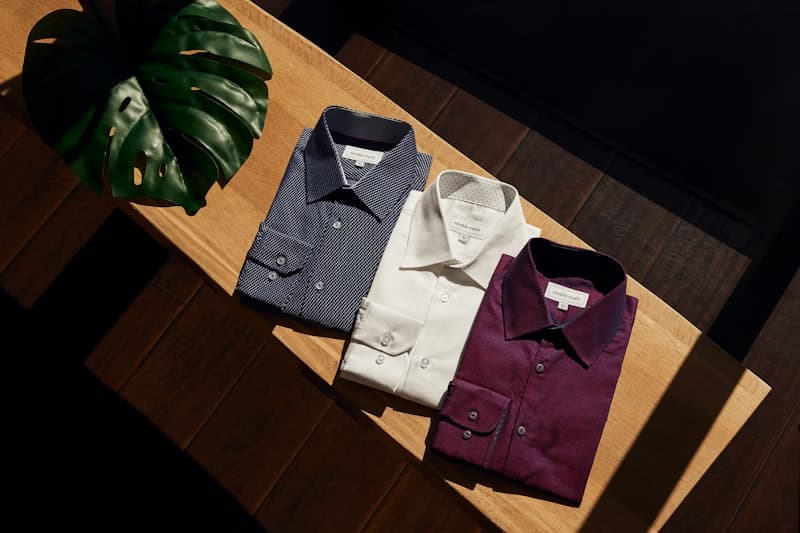
Without a tie, the shirt becomes the focal point of your outfit, and your choices expand dramatically. The white Oxford cloth button-down remains the safest and most versatile option. The button-down collar, with its signature collar buttons, was originally designed for polo players to keep their collars from flapping in the wind, but it has become the defining collar of American business casual. It is relaxed enough to go tieless without looking unfinished, yet structured enough to sit properly under a blazer. Beyond white, consider light blue, pale pink, or soft ecru for variety. These colors read as intentional choices rather than defaults. The fabric weight matters seasonally. In summer, choose oxford cloth or pinpoint oxford for their breathability and texture.
In winter, flannel or heavy twill shirts provide warmth and a more substantial drape that holds its shape under a jacket. For warmer offices or when you want a more refined look, a crisp poplin shirt in a bengal stripe or subtle check works well. The key is to ensure your collar has sufficient structure to stand up on its own. Spread collars and cutaway collars that lie flat against the shirt body can look droopy and sad without a tie knot to prop them up. Stick with button-down, point, or semi-spread collars that maintain their shape. The final shirt consideration is the cuff. Barrel cuffs with a single button are appropriate for all business casual settings. French cuffs without a tie can look costume-like — save them for situations where you would also wear a tie.
Trouser Territory: Beyond Khakis
Business casual trousers have expanded far beyond the beige chinos that defined the 1990s dot-com uniform. Your foundation should be a pair of stone or navy chinos in a stretch cotton twill. These should be flat-front, hemmed with a slight taper, and broken once on your shoe. The rise should be mid to high — low-rise trousers that require a belt to stay up look sloppy and reveal your dress shirt's tail when you sit down. For a more polished look, add a pair of cavalry twill or whipcord trousers in olive or charcoal. These fabrics have a defined diagonal weave that reads as more formal than standard chinos but less formal than worsted wool. They hold a crease well and transition seamlessly from a blazer-and-tie morning meeting to a blazer-without-tie afternoon working session.
Dark denim is acceptable in most business casual environments, provided it meets three criteria: no rips or distressing, a dark indigo or black rinse, and a straight or slim-straight cut. Avoid skinny jeans, distressed denim, and light washes at all costs. If you are unsure about your office's denim policy, observe what senior leadership wears. If the CEO wears jeans to Friday meetings, you have clearance. If nobody above your level wears denim, follow their lead. The trouser hem is worth particular attention. A slight break — where the fabric just touches the top of your shoe with one soft fold — is the universal signal of intentional dressing. No break reads as trendy, and a full break or puddling reads as dated. One clean fold, no more.
Footwear for the Tie-Free Professional
Your shoes carry disproportionate weight in a business casual outfit because they are the most visible accessory and the easiest place to get it wrong. The default choice is a dark brown derby shoe or a blucher — essentially a lace-up shoe with open lacing that is slightly less formal than an Oxford. Brown is preferred over black because it pairs naturally with the navy blazer, earth-toned trousers, and leather belts that dominate business casual dressing. For a slightly more relaxed look, a penny loafer in dark brown calf leather or black shell cordovan projects effortless style. Loafers are the perfect business casual shoe because they telegraph the message: I am dressed for work but relaxed enough to slip my shoes off at my desk.
If loafers feel too casual for your office, consider a wholecut Chelsea boot in brown or black leather. Chelsea boots with their elastic side panels and clean silhouette split the difference between a dress shoe and a casual boot, working equally well with chinos and wool trousers. The controversial but increasingly accepted option is the minimalist white leather sneaker. In creative fields, tech companies, and modern advertising agencies, a clean white leather sneaker from a brand like Common Projects or Axel Arigato has become standard business casual footwear. The rule is simple: the sneaker must be all white (or white with minimal neutral accents), made of real leather, absolutely clean, and paired with trousers that have a defined silhouette.
White sneakers worn with slouchy chinos and an untucked polo cross a line from casual into sloppy. Master the balance and you will look contemporary rather than underdressed.
The Unseen Rules of Business Casual
The unwritten rules of business casual are what separate the man who looks intentional from the man who looks confused. First, the belt and shoes rule is non-negotiable. Your belt should match your shoes in color and approximate leather type. A brown calf belt with brown calf shoes. Black shell cordovan belt with black shell cordovan loafers. This is not a suggestion — it is a principle that observers may not consciously notice but will intuitively sense when violated. Second, fit is everything. Business casual garments reveal poor fit more mercilessly than suits do. A suit's structured shoulders and canvas construction can mask imperfect tailoring. An unstructured blazer over a chambray shirt has no such camouflage. Every garment must fit properly at the shoulders, chest, and waist.
Third, know your office's actual temperature. The jacket-heavy business casual wardrobe makes sense in air-conditioned environments but looks tortured in a stuffy, non-air-conditioned workspace. If your office runs warm, lean toward a lightweight linen or fresco wool blazer and keep a cotton sweater at your desk for cold conference rooms. Fourth, the bag matters. A scuffed nylon backpack undermines a carefully curated outfit. Invest in a leather briefcase, a canvas and leather tote, or a high-quality leather backpack in brown or black. Your bag is the most visible carrier of your professional identity after your shoes. Finally, err on the side of being slightly overdressed. The man who is a touch too formal is remembered as serious and professional.
The man who is too casual is remembered as sloppy and unserious. In the ambiguous landscape of business casual, a slight surplus of formality is always the safer bet.