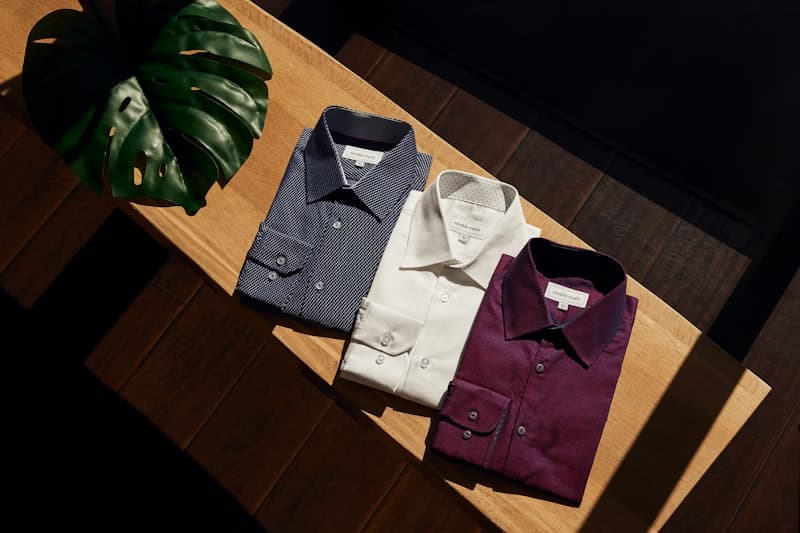
How to Wear Dress Shirts: The Complete Guide from Collar to Cuff
The most underrated wardrobe staple. From collar styles to cuff details to fabric quality - elevate your shirt game completely.
The Dress Shirt: Architecture of a Man's Wardrobe
A suit gets worn a few times a year. A coat only in winter. But a dress shirt? If you work in an office, you wear one five days a week. Even if you don't, there's the Oxford for weekend dates, the linen for summer vacations, the poplin for job interviews. The dress shirt is the most-worn garment in any man's closet, yet most men buy theirs based on color and size alone, ignoring the three things that actually determine quality: collar, cuff, and fabric.
Collar Styles: The Frame for Your Face
The collar is the closest thing to your face. It's the first thing people notice. Getting it right matters enormously.
Point Collar
The default. The angle between the points is roughly 75 degrees. It works with every face shape and every tie knot. If you only own one dress shirt, make it a point collar. Safe, classic, never wrong.
Spread Collar
A wider angle (120+ degrees) that looks more formal and elegant. Designed for wider tie knots like the Windsor. Particularly flattering on round faces - the wider angle creates length. This is the go-to collar for business professionals who want to project authority.
Button-Down Collar
The points have small buttons that fasten to the shirt body. Invented for polo players to keep their collars from flapping. Today it's the definitive casual dress shirt collar. Best worn without a tie - the buttons keep the collar in place naturally.
Mandarin/Standing Collar
A short collar that stands up without folded points. Clean, modern, minimalist. Ideal for occasions where you'd wear a shirt but no tie.
Tab Collar
A tab of fabric connects the two collar points underneath the tie knot, held in place by a small stud or button. Traditional, preppy, and very intentional. Best reserved for formal dinners or occasions where you want to show you know the rules.
Cuff Details: The Finishing Touch
Your cuffs are visible whenever you reach for a handshake, lift a glass, or gesture while speaking. They're the second most-noticed detail on a shirt.
Barrel Cuff
The standard. One or two buttons fastening the cuff around your wrist. Simple, versatile, appropriate for every occasion from the boardroom to the bar. Get this on 90% of your shirts.
French Cuff (Double Cuff)
A longer cuff that folds back on itself and is fastened with a cufflink. This is the most formal cuff style. Reserved for suits, black tie, and important business dinners. Simple gold or silver cufflinks beat novelty cartoon characters every time.
Milanese Cuff
The rarest style. The cuff is sewn shut with no buttons or cufflinks - you have to slide your hand through it. Very Italian, very sprezzatura. If you find a Milanese cuff shirt that fits you well, buy it on the spot.
Fabric: The Foundation of Quality
Poplin (Broadcloth)
The lightest, smoothest weave. Plain weave construction gives it a crisp, smooth hand feel. Ideal for summer and formal wear. Wrinkles easily - and that's a feature, not a bug.
Oxford Cloth
Basket weave - thicker and more textured than poplin. The definitive casual dress shirt fabric. Pairs perfectly with khakis, loafers, and no tie. Never wear an Oxford cloth shirt with a suit unless you're going for an intentionally relaxed look.
Twill
Diagonal weave pattern with a soft drape. Twill resists wrinkles better than poplin. Warmer and heavier, making it ideal for fall and winter.
Linen
The undisputed king of summer fabrics. Incredibly breathable, lightweight, and comfortable. Linen wrinkles - aggressively, immediately, and characteristically. Don't fight it. Linen is supposed to look relaxed.
Royal Oxford
A finer, silkier version of Oxford cloth. It has a slight sheen and drapes beautifully. Perfect for semi-formal occasions.
Fit: The Dealbreaker
A $500 shirt worn poorly looks worse than a $50 shirt worn perfectly. Fit is everything.
- Neck: Button the top button. You should be able to slide two fingers between your neck and the collar. One finger is too tight, three is too loose.
- Shoulders: The shoulder seam should sit exactly at the edge of your shoulder bone. Not drooping down your arm, not pulled in toward your neck. This is the hardest fit point to alter.
- Sleeves: With your arms hanging naturally at your sides, the cuff should just cover your wrist bone. Under a jacket, 1-1.5 cm of shirt cuff showing is the standard.
- Body: You should be able to pinch no more than 1-2 inches of fabric at your waist when the shirt is tucked.
The Color System
Core Colors (Own These First)
- White: The absolute essential. Works with every jacket, every tie, every occasion. Buy two.
- Light Blue: The second essential. More approachable than white, just as versatile. The default office shirt.
- Light Pink: The most underrated shirt color. Pairs spectacularly with navy suits.
Advanced Colors
- Lavender/Purple: Excellent with gray suits. Adds warmth without being loud.
- White with Blue Pinstripe: The Wall Street classic. Wear with a solid tie.
- Blue Gingham: The perfect balance of casual and professional.
Tie Pairing Rules
- Solid shirt + Patterned tie - Safest, most reliable combo
- Striped shirt + Solid tie - Equally safe, very professional
- Checked shirt + Solid tie - Casual but intentional
- Never: Striped shirt + Striped tie - Unless the stripes are dramatically different widths
The Details That Separate
- No tie? Unbutton the top button. Never button it without a tie.
- Button-down collar + no tie is the best no-tie look.
- Always button your cuffs - even without a jacket.
- Straight hem = tuck-in shirt (dress shirts). Curved hem = untucked shirt (casual shirts).
- Ironing priority: Collar, cuffs, and placket (the button strip) - these three areas get the most visual attention.
The Bottom Line
A man who knows his shirts doesn't need flashy accessories or expensive suits. The shirt is the foundation. When the foundation is right - right collar, right fit, right fabric, right cuff - everything else follows naturally. Audit your shirts today. Check the collars, check the fit, check the fabric. Replace the ones that fail. In three months, your entire wardrobe will look different. Good style doesn't start with a jacket. It starts with the thing underneath.