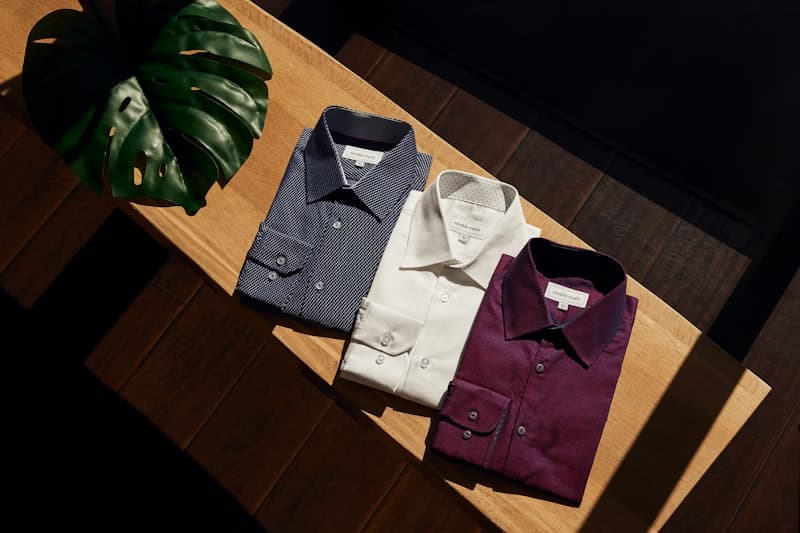
Dress Shirt Fabric Types: A Complete Guide to Thread Counts and Weaves
From poplin to twill, Oxford to end-on-end — learn how fabric weave, thread count, and cotton quality affect your dress shirt's look, feel, and longevity.
Cotton Varieties: Egyptian, Pima, and Sea Island
The foundation of any great dress shirt is the cotton it is made from. Not all cotton is created equal — the length of the cotton fibre, known as the staple, directly determines the fabric's strength, softness, and lustre. Long-staple cotton varieties produce finer, stronger yarns that can be woven into smoother, more durable fabrics. Short-staple cottons, by contrast, result in fabrics that pill, lose shape, and feel rougher against the skin.
Egyptian cotton is the most famous long-staple variety, grown in the Nile River Valley. Genuine Egyptian cotton produces exceptionally soft and breathable fabrics, though the term is widely misused by manufacturers using only a small percentage of Egyptian fibres. Pima cotton, grown primarily in the United States and Peru, offers a similar quality at a more accessible price point. At the top of the hierarchy sits Sea Island cotton, a rare extra-long-staple variety from the Caribbean that produces the most luxurious dress shirt fabrics in the world — incredibly smooth, lustrous, and resistant to wrinkling.
Thread Count: Separating Fact from Marketing
Thread count refers to the number of horizontal and vertical threads woven into one square inch of fabric. The conventional wisdom is that higher thread counts mean better quality, but the reality is more nuanced. For dress shirts, the sweet spot sits between 80s and 140s thread count. Fabrics in this range offer an ideal balance of softness, breathability, and durability. Below 80s, the fabric may feel coarse. Above 140s, you enter into superfine territory where the fabric becomes delicate and prone to wear.
Be wary of marketing claims around ultra-high thread counts — fabrics labeled 200s, 300s, or higher are often the result of multi-ply construction that inflates the number. A 200-thread-count fabric made from two-ply 100s yarns is not necessarily finer than a single-ply 140s fabric. The ply refers to how many individual yarns are twisted together to form a single thread. Two-ply fabrics are generally more durable than single-ply, but the quality of the cotton and the skill of the mill matter far more than any single number on a tag.
Poplin vs. Twill: The Two Heavyweights
Poplin, also called broadcloth, is the most popular dress shirt weave worldwide. It features a simple plain weave construction where each horizontal thread passes alternately over and under each vertical thread. The result is a smooth, lightweight, and tightly woven fabric with a crisp hand feel and a subtle sheen. Poplin shirts are ideal for professional settings, especially under a suit, because they present a clean, uniform appearance. They excel in warm weather thanks to their lightweight construction, though lighter colors can sometimes be slightly transparent.
Twill weaves are distinguished by a diagonal rib pattern created when weft threads travel over two or more warp threads before passing under one. This structure makes twill fabrics significantly more durable, softer, and more wrinkle-resistant than poplin. Twill shirts drape beautifully on the body and have a noticeable sheen that adds a subtle sense of luxury. They are thicker and warmer than poplin, making them better suited for cooler months and year-round office wear. The diagonal weave also hides stains and wrinkles better, making twill a practical choice for long workdays and travel.
Oxford and Pinpoint: Casual Meets Refined
Oxford cloth is the most recognisable casual shirt fabric, characterised by its basket-weave construction. In an Oxford weave, two or more warp threads are crossed by two or more weft threads simultaneously, creating a distinctive grid-like texture. The hallmark of a true Oxford shirt is the contrast between a colored warp thread and a white weft thread, producing a heathered, multi-tonal appearance. Oxford shirts are thick, durable, and comfortable — they read as relaxed and are best worn buttoned to the collar without a tie or with a knit tie for a preppy look.
Pinpoint Oxford occupies a middle ground between casual Oxford and formal poplin. It uses the same basket-weave structure but with finer yarns and a tighter weave, resulting in a fabric that retains the texture of Oxford while approaching the refinement of poplin. Pinpoint shirts are an excellent choice for business casual environments — they are dressy enough for the office but relaxed enough for dinner afterward. The fabric is thicker than poplin, so it holds its shape well throughout the day and resists wrinkling better than finer weaves.
End-on-End, Herringbone, and Dobby Weaves
End-on-end weave creates a subtle, two-tone texture by alternating two different colored yarns in the warp or weft. From a short distance, the shirt appears to be a solid color, but closer inspection reveals a delicate, heathered pattern that adds visual depth without being loud. End-on-end fabrics are lightweight, crisp, and breathable, making them ideal for summer dress shirts. They pair beautifully with lightweight suits and are equally at home in the office or at a weekend event.
Herringbone is a variation of the twill weave where the diagonal direction reverses at regular intervals, creating a characteristic V-shaped chevron pattern that resembles fish bones. Herringbone fabrics are heavier and more textured than standard twill, offering excellent warmth and visual interest. They work well for winter dress shirts and pair naturally with tweed or flannel suits. Dobby weaves, meanwhile, are produced on special looms that lift individual warp threads to create small geometric patterns — dots, diamonds, or squares — that are woven directly into the fabric. Dobby shirts add a bespoke touch to any wardrobe without being flashy.
Choosing Fabric for Climate and Occasion
Your climate and daily activities should guide your dress shirt fabric choices. For hot, humid summers, poplin and end-on-end weaves in lightweight cotton are your best options — they allow maximum airflow and dry quickly. Linen-cotton blends are also excellent for extreme heat, offering linen's breathability with cotton's softness and reduced wrinkling. For year-round office wear, twill is the most versatile choice, balancing comfort, durability, and wrinkle resistance across all seasons.
For formal occasions such as black-tie events or high-stakes business meetings, choose high-thread-count poplin or fine twill in white or light blue — these signal professionalism and never go out of style. For casual Fridays, weekend events, or travel, Oxford and pinpoint fabrics offer the comfort and durability you need without sacrificing style. Invest in a mix of weaves — two or three poplin shirts for formal use, two twill shirts for daily office wear, and one or two Oxford shirts for casual settings — and you will be prepared for virtually any situation your wardrobe encounters.