Unlock the Power of Simple Color Matching in Daily Life
A straightforward guide to color matching for men — learn the basics of color theory, build versatile outfits, and develop an eye for harmonious combinations.
The Foundation of Color Confidence
Most men approach color with hesitation. They default to black, grey, navy, and white because these colors feel safe and require no thought. While neutrals form an excellent foundation, relying on them exclusively creates a wardrobe that is functional but forgettable. Learning a few basic principles of color matching unlocks an entirely new dimension of personal style.
The good news is that you do not need to become a color theorist to dress well. A handful of simple rules and a willingness to experiment with a few accent colors will dramatically improve how your outfits come together. Let us break down the system into practical, easy-to-remember guidelines that you can apply immediately to your everyday clothing choices.
Understanding the Color Wheel Basics
The color wheel organizes colors by their relationship to one another. Complementary colors sit opposite each other on the wheel — blue and orange, red and green, purple and yellow. These pairings create strong visual contrast and work well for statement pieces like a tie, pocket square, or sneakers. However, using them in large blocks (like a red jacket with green trousers) is rarely advisable for daily wear.
Analogous colors sit next to each other on the wheel — blue, blue-green, and green, for example. These create harmonious, soothing combinations that are much easier to wear. An analogous palette is the secret behind many effortlessly stylish outfits. A navy sweater with olive chinos and brown shoes is an analogous combination that looks intentional without being loud.
Building a Neutral Foundation
Before introducing color, ensure your neutral base is solid. Neutrals are colors that pair with almost anything — they anchor an outfit and allow accent colors to shine without clashing. The core neutrals every man needs are navy, charcoal, olive, brown, beige, white, and black. These should form roughly 70 percent of your wardrobe.
The key to making neutrals work is tonal variation. A head-to-toe navy outfit can look flat if all the pieces are the same shade. Instead, pair a navy blazer with mid-wash denim (lighter) and dark brown shoes. The variation in darkness and tone creates depth without introducing a new color. Similarly, charcoal trousers with a heather grey sweater and black boots uses three different shades of grey for a sophisticated monochrome look.
The 80-20 Rule of Color Distribution
A simple rule for incorporating color is the 80-20 split. Let 80 percent of your outfit be neutral or muted tones, and reserve 20 percent for your accent color. This ratio ensures the accent reads as intentional rather than overwhelming. For example, wear beige chinos and a white Oxford shirt (80 percent neutral) with burgundy suede loafers (20 percent accent). The red-brown shoes draw the eye without competing with the rest of the outfit.
You can apply the same rule in reverse by using a colorful top as the accent. A forest green sweater with dark grey trousers and brown boots uses the green as the 20 percent statement piece while keeping the rest understated. The 80-20 rule works because it gives your eye a clear focal point — the brain is drawn to color, so limit it to one area for maximum impact.
Three Foolproof Color Combinations
Some color combinations work so consistently that they deserve special mention. First is navy and olive — this pairing is the workhorse of modern menswear. A navy jacket over olive chinos, or an olive sweater with navy trousers, creates a refined, natural look that suits all skin tones and settings. Add brown shoes and you have a complete outfit in three colors.
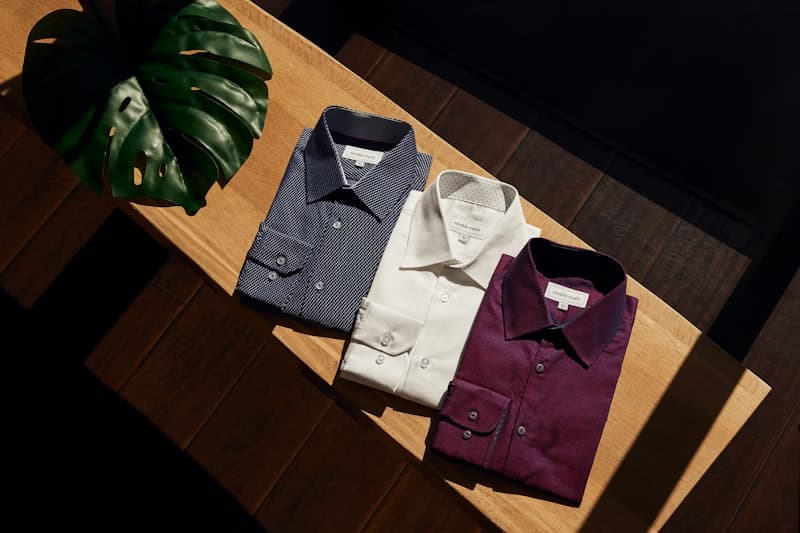
Second is burgundy and grey. Burgundy adds warmth to cool grey without clashing. A burgundy sweater under a grey sport coat, or burgundy sneakers with charcoal joggers, bridges casual and refined effortlessly. Third is cream and tan — two warm neutrals that create a relaxed, sophisticated palette perfect for spring and summer. A cream linen shirt with tan trousers and woven leather sandals captures the essence of coastal casual style.
Reading the Room with Color
Color choices should also account for context and environment. Bright, saturated colors like electric blue or vibrant red work well in creative fields and social settings but feel out of place in conservative corporate environments. Muted versions of the same colors — dusty blue, brick red, sage green — retain visual interest while remaining appropriate for professional settings.
Seasonal color cues matter as well. Spring and summer call for lighter, brighter colors — pastels, whites, tans, and light blues. Autumn and winter welcome deeper, richer tones — burgundy, forest green, mustard, and chocolate brown. Matching your palette to the season creates a natural harmony with the world around you and signals that you are attuned to your environment.
Graduating to Advanced Pairings
Once you are comfortable with the basics, experiment with pattern mixing and texture layering. A striped shirt under a checked blazer can work if both patterns share a common color. Keep one pattern smaller and subtler than the other to avoid visual chaos. Texture also serves as a substitute for color — a heather grey sweater has more visual interest than a flat grey one, even though both are technically neutral.
Finally, trust your eyes. Stand in front of a mirror and ask whether the combination feels balanced. If something looks off, identify which piece is causing the tension and swap it out. Over time, you will develop an instinct for what works. Color matching is not a rigid science — it is a skill you build through practice, observation, and a willingness to try new combinations with confidence.