Complete Guide to Dressing for a Job Interview: Making a Strong First Impression
Complete guide to dressing for a job interview — suit selection, grooming tips, company culture research, and outfit formulas that make a strong first impression.
Why Your Interview Outfit Matters More Than You Think
First impressions are formed in under seven seconds, and research consistently shows that visual cues account for more than half of the initial judgment people make about you. In a job interview, where you have limited time to demonstrate your competence and cultural fit, your clothing is a powerful non-verbal communicator that speaks before you do. It signals attention to detail, respect for the process, and understanding of professional norms — all qualities that employers value highly.
The stakes are particularly high because hiring decisions are heavily influenced by subconscious bias, whether recruiters recognise it or not. Studies from Princeton and Harvard have demonstrated that interviewers rate candidates who are well-dressed as more competent, more intelligent, and more likely to be hired, even when all other factors are carefully controlled. This is not about superficiality; it is about the human brain's natural tendency to use visual shortcuts when making rapid decisions under uncertainty.
The right outfit does not need to be expensive or flashy to make the right impression. It needs to be appropriate, well-fitted, and intentional in its choices. An ill-fitting suit that costs two thousand dollars will make a worse impression than a well-tailored blazer from an affordable brand, simply because fit signals self-awareness and attention to detail. The goal is to remove clothing as a potential distraction, so that the interviewer focuses entirely on your qualifications and your answers, not on your wrinkled shirt or mismatched accessories.
Researching the Company Dress Code
Before you choose a single garment for your interview, you must understand the dress culture of the organisation you are targeting. A technology startup in Silicon Valley has vastly different expectations from a law firm in Manhattan or a creative agency in Brooklyn. Getting this wrong is one of the most common and preventable interview mistakes — dressing too formally can make you seem rigid or out of touch with modern workplace culture, while dressing too casually can signal a lack of seriousness or respect for the opportunity.
The best way to research dress codes is through multiple channels that give you a well-rounded picture. Start with the company's website and social media profiles, particularly their LinkedIn and Instagram pages. Look at photos of team events, office spaces, and employee headshots posted publicly. These images provide direct visual evidence of what people actually wear day to day. Next, check sites like Glassdoor for interview reviews, where candidates often describe what they wore and whether it was appropriate for the specific office culture.
If you have contacts within the company, do not hesitate to ask them directly about the dress culture and expectations. A simple question like "What do people typically wear to the office?" can save you from a significant misstep and shows that you care about fitting in. When in doubt, err on the side of being slightly overdressed rather than underdressed. It is far easier to explain that you wanted to show respect for the interview process than to apologise for looking too casual. The rule of thumb is to dress one level above the everyday office dress code — if the office is business casual, wear a suit without a tie; if the office is casual, wear smart business casual.
The Classic Interview Suit: Fit, Fabric, and Colour
The conservative interview suit remains the safest and most effective choice for professional roles in finance, law, consulting, and traditional corporate environments. A well-fitted suit in a dark neutral colour — navy or charcoal grey — communicates competence, reliability, and respect for tradition in a way that no other garment can match. Black suits are best reserved for evening events and funerals; they can appear harsh or costumey in daytime interview settings and are rarely the optimal choice.
Fit is the single most important factor in suit selection, and this cannot be overstated. The jacket shoulders should align perfectly with your natural shoulder line — no overhang, no pulling across the back. The sleeves should end at your wrist bone, revealing about half an inch of shirt cuff for a polished look. The jacket length should cover your seat completely, and when buttoned, the fabric should lie flat without pulling at the buttons or creating an X-shaped crease across your chest. Trousers should break once on your shoes, with a clean, straight leg that does not bunch up at the ankles.
Fabric weight matters more than most men realise when selecting an interview suit. A tropical-weight wool at 200 to 250 grams per square meter is ideal for year-round interviewing in climate-controlled environments. It drapes well, resists wrinkling during commutes and travel, and breathes adequately in most indoor settings. Avoid polyester blends for a primary interview suit — they trap heat against your body, develop an unappealing sheen with wear, and do not tailor as cleanly as natural fibres. If your budget is limited, a well-fitted off-the-rack suit from Suitsupply or Spier and Mackay with professional alterations will outperform a poorly fitted designer suit every time.
Shirts, Ties, and Shoes: The Supporting Cast
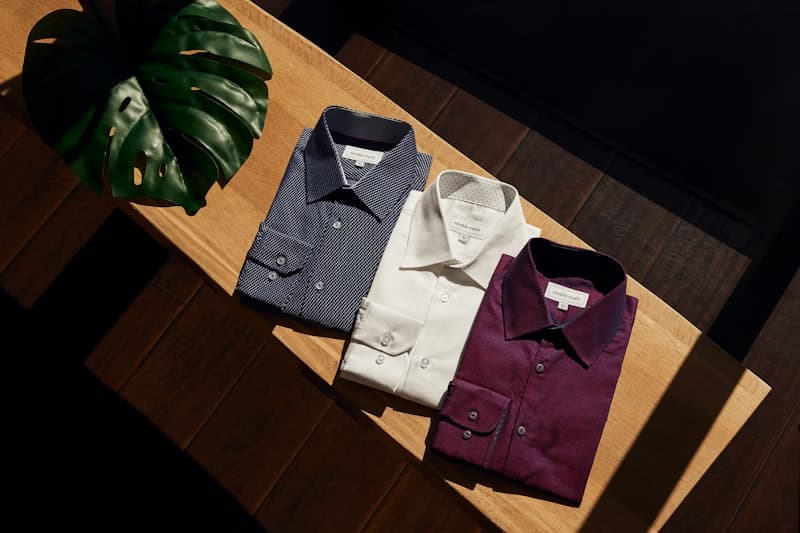
Your dress shirt should be a crisp white or light blue in a classic spread or point collar — these are universally appropriate colours that signal professionalism and attention to detail. The collar should fit snugly without gaping: you should be able to fit two fingers between your neck and the collar when fully buttoned. Spread collars and point collars both work well for interviews, but avoid button-down collars for formal interviews as they are considered slightly too casual. Ensure the collar sits cleanly under your jacket and does not curl or buckle throughout the day.
Ties are becoming less common in modern interviews, but they are still expected in traditional industries and conservative regions. If you wear a tie, choose a solid colour or a subtle pattern in silk or silk-wool blend. Avoid novelty ties, overly bright colours, and anything that could be described as loud or distracting. The tie should reach your belt buckle — no shorter, no longer — and the knot should be clean and symmetrical. In creative fields or relaxed corporate environments, you can skip the tie entirely, but always bring one in your bag just in case the situation calls for it.
Shoes should be polished leather oxfords or derbies in black or dark brown, depending on your suit colour. Your shoes are the first thing many interviewers notice, and scuffed or inappropriate footwear can undo the positive impression of an otherwise excellent outfit. Match your belt to your shoes for a cohesive, intentional look. Socks should be dark and long enough that no skin shows when you cross your legs — never wear white socks with a suit, as this is a basic rule that applies to all professional settings without exception.
Dressing for Creative and Casual Industries
Creative industries — advertising, design, media, and technology — have relaxed their dress codes significantly over the past decade, but this does not mean you should show up in jeans and a t-shirt for an interview. The key to dressing for casual environments is intentionality and effort. Your outfit should demonstrate that you put thought into your appearance without looking like you are wearing a costume or trying to be someone you fundamentally are not.
For smart casual interviews, start with a structured blazer in a textured fabric like tweed, cotton, or unstructured wool that adds visual interest. Pair it with well-fitted chinos or dark denim in excellent condition — no rips, fading, or distressing should be visible. A button-down shirt in oxford cloth, a fine-gauge merino sweater, or even a high-quality polo can work depending on the company culture. The goal is to look polished but approachable, competent but not stiff. Your shoes can be loafers, clean minimalist sneakers like Common Projects or Axel Arigato, or leather boots depending on the specific workplace.
Accessories offer an opportunity to express personality in creative environments without going overboard. A distinctive watch, a quality leather bag, or understated jewellery can signal design sensibility and personal taste without being distracting. The rule is to let your outfit be the frame, not the picture. Your portfolio and your ideas should be the focus of the interview, not your clothing or accessories. If someone remembers your shoes more clearly than your answers to their questions, you have made a stylistic mistake that may cost you the job.
Grooming and Final Preparation Checklist
Your outfit is only half the picture — grooming completes the impression and ties everything together. Ensure your hair is clean and styled appropriately for your industry and personal style. Facial hair should be neatly trimmed or clean-shaven depending on what suits your face and the company culture. Nails should be clean and trimmed. Pay attention to details like fresh breath, deodorant, and minimising strong cologne — many people are sensitive to fragrance, and an overpowering scent can be deeply off-putting in a small interview room where you are sitting close together.
The night before your interview, prepare everything you need so morning stress does not derail your preparation. Lay out your full outfit including socks and undershirt, polish your shoes, confirm that your shirt is properly ironed and your suit is free of lint and pet hair. Check that all buttons are secure and that there are no loose threads or visible wear. Pack a backup shirt and tie in your bag if you have a long commute. Test your outfit by sitting down, standing up, reaching forward, and crossing your legs — ensure there is no uncomfortable pulling or gaping in any position.
Finally, remember that your clothes should make you feel confident and empowered, not constrained or uncomfortable. Wear your outfit around the house for at least thirty minutes before you leave to break in the shoes and adjust to the garments. This allows you to identify any comfort issues and address them before you arrive. When you walk into that interview room, the last thing you want to think about is an uncomfortable collar or a tight waistband. Your focus should be entirely on the conversation ahead, and the right outfit puts you in the right frame of mind to succeed.