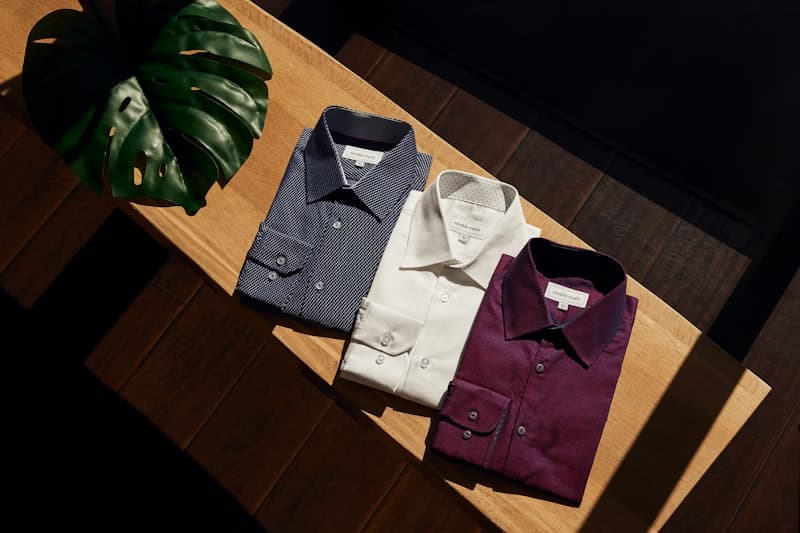
Color Matching Guide for Men's Business Casual Outfits
Learn how to match colors effectively in men's business casual outfits, including neutral foundations, accent colors, pattern mixing, and seasonal palettes.
The Foundation of Color Matching
Understanding color theory is the secret to effortless dressing. The most practical approach for men business casual is to master the 60-30-10 rule. Sixty percent of your outfit should be a dominant neutral color, typically your trousers and base layer. Thirty percent should be a secondary neutral or muted color, often your jacket or sweater. Ten percent should be an accent color introduced through accessories.
Building Your Neutral Foundation
Neutrals are the backbone of every business casual wardrobe. Navy is the most versatile neutral for professional settings because it complements virtually every skin tone and pairs seamlessly with all colors. Charcoal grey offers a softer alternative that works exceptionally well in autumn and winter.
White, cream, and light grey serve as your canvas. These colors work best for shirts and t-shirts worn closest to your face, where they reflect light naturally and brighten your complexion. Brown in its various shades from tan to chocolate anchors casual business outfits effectively.
Incorporating Accent Colors
Once your neutral foundation is established, accent colors add personality and visual interest. Burgundy is the most versatile accent color for business casual. A burgundy sweater, tie, or pair of trousers introduces warmth without being flashy. Forest green offers another sophisticated option.
For warmer months, consider light pink, sky blue, or coral as accent colors. These softer tones bring freshness to summer business casual looks. Mustard yellow works as a bold accent for those comfortable with color.
Pattern Mixing Without Clashing
Pattern mixing intimidates many men, but the rules are straightforward. Stripes, checks, and plaids should differ in scale to avoid visual competition. Pair a fine stripe shirt with a wide check jacket. When mixing patterns, share at least one color between them.
Seasonal Color Palettes
Your color choices should shift with the seasons. Spring and summer call for lighter, brighter colors. Replace charcoal trousers with beige or light grey. Swap dark navy blazers for lighter blue or tan linen jackets.
Autumn and winter invite deeper, richer colors. Burgundy, forest green, rust, and burnt orange replace lighter accent colors. Trousers in chocolate brown or charcoal feel appropriate. Texture becomes important for visual warmth.