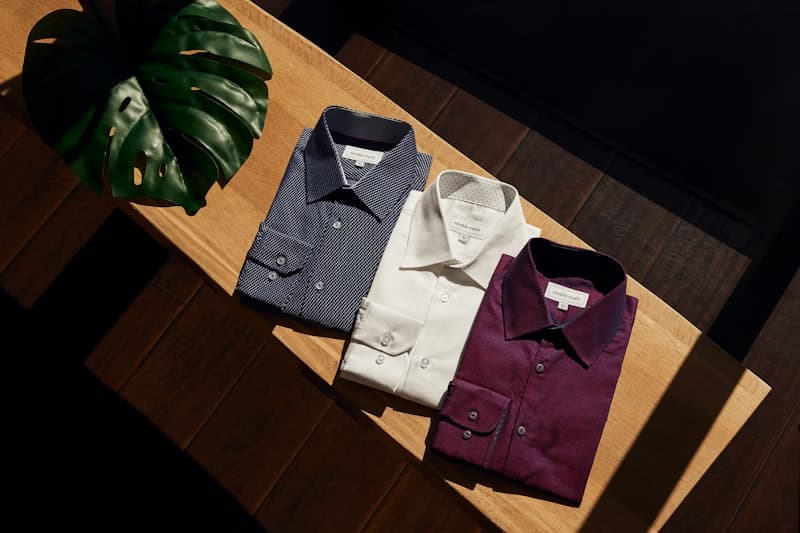
Build a Minimalist Work Capsule Wardrobe: 10 Pieces, 30 Outfits
Staring at a full closet with nothing to wear? This guide shows you how to build a 10-piece work capsule wardrobe that produces 30+ outfit combinations across seasons and workplace scenarios.
The Problem of Too Many Clothes
You open your closet every morning. Fifty hangers, each holding a garment you bought with intention. Shirts you never wear, trousers that need alterations, a blazer that looked good in the store but somehow never works with anything else you own. You have plenty of clothes. You have nothing to wear. And you are running late.
This is the paradox of abundance that defines modern menswear consumption. We accumulate pieces individually, each purchased in isolation, without considering how they interact as a system. The result is a closet full of orphans — garments that cannot be combined into coherent outfits because they were never designed to work together.
A capsule wardrobe solves this. Instead of owning thirty mediocre pieces that combine into three passable outfits, you own ten excellent pieces that combine into thirty or more outfit permutations. Every garment works with every other garment. There is no guesswork, no morning indecision, no orphans.
This guide walks you through building a 10-piece work capsule that covers business casual, smart casual, and occasional formal scenarios across spring, summer, fall, and transitional weather. We cover specific garments, exact colors, fit guidelines, brand recommendations at three price points, and the outfit matrix that proves the math works.
The Philosophy: Why Ten Pieces?
Ten pieces is the minimum number of garments that can produce meaningful wardrobe variety while remaining manageable. Here is the logic:
Each top (shirts, sweaters, blazers) can combine with each bottom (trousers, jeans, chinos) to create a unique outfit. Accessories (shoes, belts, watches, ties) multiply this further. With 4 tops + 3 bottoms + 2 blazers + 1 pair of shoes, you get 4 × 3 = 12 outfits without blazers, or (4 + 2) × 3 = 18 outfits when you factor in wearing a blazer over any top. Adding a second pair of shoes and a few accessories pushes the count past 30.
The key constraint is that every combination must be visually coherent. That means strict color coordination, compatible formality levels, and fit consistency across all pieces. You cannot have one pair of trousers that fits slim and another that fits relaxed — the silhouette shift would break the system.
The 10-Piece System
Here are the ten pieces, organized by category.
Piece 1: Navy Blazer
The navy blazer is the single most versatile garment in menswear. It works with chinos for business casual, with gray trousers for client meetings, with dark jeans for after-work drinks, and with dress shirts for anything up to a smart casual dress code. It elevates every outfit it touches while never being overdressed — unless the dress code explicitly requires a suit, a navy blazer is always appropriate.
Fit requirements: The blazer should fit well across the shoulders (seam at the shoulder bone), with sleeves that show 1/4 to 1/2 inch of shirt cuff. The body should be trim but not tight — you should be able to button it comfortably and have about an inch of room across the chest. Two-button front, notch lapels, patch pockets (more casual than flap pockets) or flap pockets (slightly dressier). A half-canvassed construction with natural or minimally padded shoulders gives the best balance of structure and comfort.
Fabric: Year-round weight wool (around 280-310 GSM). A wool-nylon blend adds durability for daily wear. Avoid super 150s or higher wool counts — they are too delicate for daily rotation. Navy with a subtle texture (hopsack, birdseye, or nailhead) adds visual interest.
Budget options: Suitsupply Havana jacket ($400-500), Spier & Mackay navy blazer ($300-350), J.Crew Ludlow blazer (on sale, $250-350).
Piece 2: Gray Blazer or Odd Jacket
A second jacket adds significant variety. A mid-to-dark gray blazer in a different texture from the navy one creates entirely new outfit combinations. Alternatively, a brown or olive tweed or wool jacket works for fall and winter.
Fit requirements: Same fit specifications as the navy blazer, allowing both to be worn with the same trousers and shirts.
Fabric: Wool flannel for cooler months (300-360 GSM), or a lighter wool-mohair blend for spring-summer (280-300 GSM). Herringbone, glen plaid, or a subtle Prince of Wales check adds pattern variety.
Budget options: Suitsupply, Spier & Mackay, or thrifted vintage Harris Tweed jackets.
Piece 3: Light Blue Oxford Cloth Button-Down (OCBD)
The OCBD is the default shirt for the capsule wardrobe. Light blue is the most versatile color — it works with both navy and gray jackets, with chinos and jeans, and ties well with virtually any tie or no tie. The button-down collar is casual enough for untucked wear but structured enough for a tie.
Fit requirements: The collar should button without gaping. The shoulders should sit at the shoulder bone with the seam aligned. The shirt body should be trim but not tight — you should be able to pinch an inch of fabric at the chest. The hem should be long enough to stay tucked in but not so long that it bunches. Sleeves should end at the wrist bone.
Fabric: 100% cotton oxford cloth. Oxford cloth has a basketweave texture that hides wrinkles and softens beautifully over time. Avoid pinpoint oxford (too dressy) or broadcloth (too formal).
Budget options: Brooks Brothers (the original, $90-130), Mercer & Sons (best OCBD maker, $140-160), Spier & Mackay ($50-70).
Piece 4: White Dress Shirt
A white dress shirt is essential for formal occasions and provides contrast when you need a clean, crisp look. It is the anchor shirt for meetings, presentations, and any situation where you need to look your best.
Fit requirements: Slightly more fitted than the OCBD. The collar should accommodate a tie without bunching. Spread collar or point collar both work — spread is more modern, point is more traditional. French cuffs add elegance but require cufflinks; barrel cuffs are more practical.
Fabric: 100% cotton broadcloth or pinpoint oxford. Look for a two-ply fabric (120s-140s thread count) for durability and a subtle sheen.
Budget options: Charles Tyrwhitt ($40-70 on offer), TM Lewin ($35-60), Suitsupply ($90-130).
Piece 5: Blue or Pink Chambray or Button-Down Shirt
Adding a third shirt in a different color or fabric expands the wardrobe significantly. A blue chambray shirt offers a different texture from the OCBD while maintaining the same versatility. A pink or white-and-blue striped shirt adds pattern variety.
Fit requirements: Same as the OCBD. Consistency across all shirts ensures they all work with the same trousers and jackets.
Budget options: Uniqlo for chambray ($40-50), Gitman Vintage ($200-250), Kamakura ($120-150).
Piece 6: Navy or Mid-Gray Wool Trousers
One pair of tailored wool trousers provides the foundation for dressier outfits. Mid-gray is the most versatile color, pairing well with both navy and gray blazers. Navy trousers also work but limit your jacket pairings.
Fit requirements: Flat front, medium rise (sitting at or just below the natural waist), straight or slightly tapered leg with a full break or no break depending on preference. The waist should fit without a belt — use side adjusters for a cleaner line. No cuffs (cuffs are more casual and shorten the leg line).
Fabric: 100% wool tropical or worsted wool (280-310 GSM). A wool-elastane blend (2-3% stretch) adds comfort for all-day wear.
Budget options: Suitsupply ($200-250), Spier & Mackay ($150-200), Banana Republic travel pants ($100-150).
Piece 7: Khaki or Beige Chinos
Chinos are the most casual trouser option that still works in most business casual environments. Khaki or beige is the classic color, but stone, navy, or olive also work well.
Fit requirements: Same cut as the wool trousers for silhouette consistency. Slightly more relaxed through the leg is acceptable. No pleats. Cuffs optional.
Fabric: 100% cotton twill, 8-10 ounce weight. Stretch chinos are comfortable but do not hold a crease as well. Look for wrinkle-resistant finishes for office wear.
Budget options: Dockers Alpha or Signature ($40-60), J.Crew 484 or 770 ($70-80), Bonobos ($90-120).
Piece 8: Dark Wash Raw Denim Jeans
Dark indigo jeans without distressing bridge the gap between casual and dressy. Paired with a blazer and dress shirt, they create a modern smart casual look. With a button-down shirt and chukkas, they are the default weekend outfit.
Fit requirements: Straight or slim-straight leg, medium rise. No rips, no fading, no whiskering. The cut should be similar to your chinos for consistency.
Fabric: 100% cotton raw selvedge denim, 14-16 ounce weight. Unwashed raw denim will fade and mold to your body over time, creating a personal garment.
Budget options: Uniqlo selvedge ($50-60), Gustin ($80-100), Naked & Famous ($150-200), 3sixteen ($200-250).
Piece 9: Brown Leather Derby Shoes or Brogues
One pair of brown leather shoes is sufficient for the entire capsule. Brown is more versatile than black — it pairs with navy, gray, khaki, and indigo equally well, while black clashes with brown belts and some trouser colors.
Style: Derby shoes are less formal than oxfords and more versatile. Full brogues add character and visual interest. A medium brown shade in calf leather works with everything.
Fit requirements: Leather shoes should fit snug at the heel with room to wiggle toes. Break them in properly before wearing them for full work days.
Budget options: Meermin ($180-250), Loake ($200-300), Herring Shoes ($150-250).
Piece 10: Brown Leather Belt and a Watch
A belt matching your shoe color is essential — it ties the outfit together. A brown leather belt with a simple brass or silver buckle works with all trousers. Add a versatile watch: a stainless steel dive watch on a bracelet or a leather-strap field watch.
The Outfit Matrix
Here are 30 outfit combinations from these 10 pieces. Each outfit is numbered and ready to wear.
Blazer + Trousers + Shirt combinations:
Navy blazer + wool trousers:
- Navy blazer + gray wool trousers + white dress shirt + brown brogues
- Navy blazer + gray wool trousers + light blue OCBD + brown brogues
- Navy blazer + gray wool trousers + blue chambray + brown brogues
Navy blazer + chinos/jeans: 4. Navy blazer + khaki chinos + light blue OCBD + brown brogues 5. Navy blazer + khaki chinos + white dress shirt + brown brogues 6. Navy blazer + khaki chinos + blue chambray + brown brogues 7. Navy blazer + dark jeans + light blue OCBD + brown brogues 8. Navy blazer + dark jeans + white dress shirt + brown brogues 9. Navy blazer + dark jeans + blue chambray + brown brogues
Gray blazer + wool trousers: 10. Gray blazer + gray wool trousers + white dress shirt + brown brogues 11. Gray blazer + gray wool trousers + light blue OCBD + brown brogues 12. Gray blazer + gray wool trousers + blue chambray + brown brogues
Gray blazer + chinos/jeans: 13. Gray blazer + khaki chinos + light blue OCBD + brown brogues 14. Gray blazer + khaki chinos + white dress shirt + brown brogues 15. Gray blazer + khaki chinos + blue chambray + brown brogues 16. Gray blazer + dark jeans + light blue OCBD + brown brogues 17. Gray blazer + dark jeans + white dress shirt + brown brogues 18. Gray blazer + dark jeans + blue chambray + brown brogues
No blazer combinations: 19. Light blue OCBD + gray wool trousers + brown brogues 20. White dress shirt + gray wool trousers + brown brogues 21. Blue chambray + gray wool trousers + brown brogues 22. Light blue OCBD + khaki chinos + brown brogues 23. White dress shirt + khaki chinos + brown brogues 24. Blue chambray + khaki chinos + brown brogues 25. Light blue OCBD + dark jeans + brown brogues 26. White dress shirt + dark jeans + brown brogues 27. Blue chambray + dark jeans + brown brogues
Weekend / Casual combinations: 28. Light blue OCBD shirt worn untucked + dark jeans + brown brogues (no belt, or belt undone) 29. Blue chambray worn untucked + khaki chinos + brown brogues 30. White dress shirt (sleeves rolled) + dark jeans + loafers (if you swap shoes)
With a tie added to any blazer-based outfit, you get a formal look suitable for client meetings. With the blazer removed and sleeves rolled, the same shirt-and-trouser combination becomes a smart casual look.
Seasonal Adaptation
Spring and Fall: The capsule works as-is. Add a merino wool crewneck sweater in navy or charcoal gray as an 11th piece for colder mornings — wear it under the blazer or on its own with any trouser.
Summer: Swap the gray blazer for an unstructured linen blazer (same color family) if the office is very warm. Replace the wool trousers with a lighter-weight pair. The OCBD and chambray shirts work year-round.
Winter: Add a wool overcoat in charcoal or camel as an outer layer. The capsule beneath remains the same. A cashmere scarf and leather gloves complete the look without adding pieces to the core system.
How to Shop for Your Capsule
Do not buy everything at once. Start with the two pieces you wear most often — probably the dark jeans and the light blue OCBD — and build outward. Wear each new piece with everything you already own. If a piece does not work with at least three existing pieces, do not buy it.
Buy the best quality you can afford, especially for the blazers and shoes. These are the foundation pieces that everything else builds on. A $400 blazer worn 200 times costs $2 per wear. A $150 blazer worn 20 times because it does not fit well costs $7.50 per wear. Buy once, wear many times.
The Capsule Mindset
The real benefit of a capsule wardrobe is not the money saved or the closet space reclaimed. It is the cognitive freedom. Every morning, you open your closet and every combination works. There is no decision paralysis, no second-guessing, no "maybe this shirt works with these trousers if I roll the sleeves just right." You dress in three minutes, confident that you look good, and you move on with your day. That clarity is worth more than any individual garment.