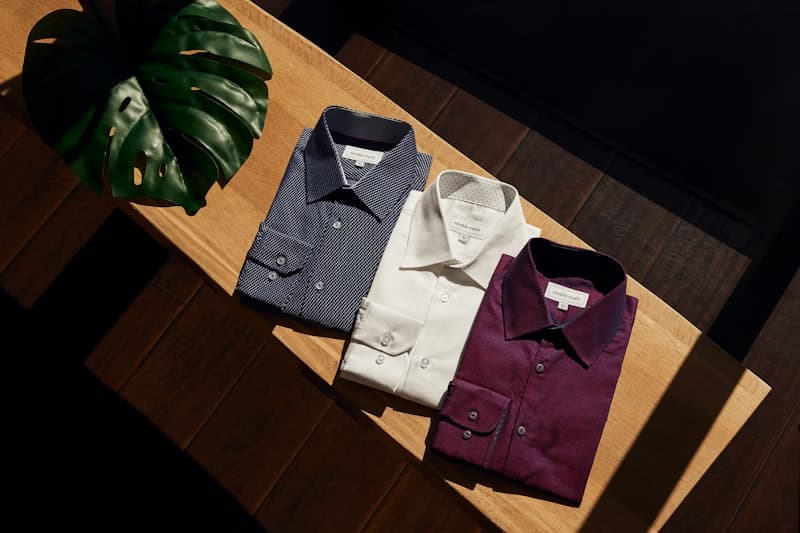
The Complete Business Casual Guide for Men: Professional Without Being Stuffy
Business casual is the most commonly misunderstood dress code. A complete guide to building a versatile work wardrobe — from core pieces to seasonal outfits.
The Complete Business Casual Guide for Men: Professional Without Being Stuffy
Introduction: What Business Casual Really Means
Business casual is the most misunderstood dress code in modern workplaces. It's neither "wear whatever you want" nor "just take off your tie." The sweet spot of business casual lies at the intersection of structured ease — you look like you made an effort, but not like you're about to attend a wedding.
Most Common Misconceptions:
-
Myth 1: A polo shirt and jeans is business casual.
→ Most professional environments don't accept distressed denim, and polos need to be worn with intentionality. -
Myth 2: Just skip the tie on your dress shirt.
→ A formal dress shirt (French cuffs, stiff collar) without a tie looks deliberately undone — not in a good way. -
Myth 3: A blazer and matching dress trousers = business casual.
→ That's just a suit missing its jacket partner. The key is to mix textures and formality levels. -
Myth 4: Sneakers are fine.
→ Only in the most relaxed tech/creative environments. For most offices, sneakers are still a no-go.
What It's NOT:
- A wrinkled polyester shirt with khakis, white athletic socks, and black dress shoes
- A black suit jacket with black trousers and a white shirt (that's service staff, not business casual)
- A graphic t-shirt under a blazer (trying too hard to be edgy)
The Core Principle:
Business casual = pieces that are professional in nature but relaxed in execution. A blazer instead of a suit jacket. Chinos instead of dress trousers. Loafers instead of oxfords. Knits instead of stiff dress shirts.
Core Item Checklist
A well-built business casual wardrobe revolves around versatile pieces that can mix and match into dozens of outfits. Here's your checklist:
1. Blazers & Sport Coats — The Anchor
Unlike a suit jacket, a blazer or sport coat is designed to be worn with non-matching trousers. The fabric and texture are richer and more varied.
Must-Have:
- Navy wool blazer — The single most versatile piece. Pairs with everything.
- Brown or grey tweed sport coat — For fall/winter texture
- Linen or cotton blazer — Light grey or beige for spring/summer
Recommended:
- High-end: Canali ($800-1,500), Ring Jacket ($900-1,200)
- Mid-range: Suitsupply ($400-600), Spier & Mackay ($300-450)
- Budget: J.Crew Ludlow ($250-400), Uniqlo ($100-150)
2. Collared Shirts — The Soul
Every shirt should have a collar, but it doesn't need to be a formal dress shirt.
Must-Have:
- Oxford Cloth Button-Down (OCBD) — The quintessential business casual shirt. Soft roll collar means no tie required
- White and light blue poplin shirts — One each, for when you need a cleaner look
- Gingham or striped shirt — Adds visual interest
- Linen shirt — Essential for summer
Recommended:
- High-end: Drake's ($200-350), Gitman Vintage ($180-300)
- Mid-range: Brooks Brothers Red Fleece ($80-120), Kamakura ($70-100)
- Budget: Uniqlo Oxford ($30-40), Charles Tyrwhitt ($40-60 on sale)
3. Knits — The Winter MVP
A sweater instead of a shirt is the secret weapon of business casual. It dramatically changes the formality level.
Must-Have:
- Merino wool or cashmere crewneck — Grey, navy, charcoal
- V-neck wool sweater — Can layer over a shirt
- Knitted polo — A step up from a regular polo in both fabric and style
Recommended:
- High-end: John Smedley ($150-250), Inis Meáin ($200-300)
- Mid-range: Charles Tyrwhitt merino ($60-100), J.Crew merino ($70-100)
- Budget: Uniqlo merino ($30-50), Uniqlo cashmere blends ($60-80)
4. Trousers — Chinos to Wool
The biggest differentiator from formal business wear is what you wear on your legs.
Must-Have:
- Khaki/beige chinos — The business casual staple
- Navy or grey chinos — For when you want to dress it up slightly
- Wool-blend casual trousers — Fall/winter, more refined than chinos
- Linen trousers — Beige or light grey for summer
Fit Guidelines: Avoid skinny fit. Go for straight or slim straight. Hem should just kiss the top of your shoe with no break (minimal stacking).
Recommended:
- High-end: Incotex ($250-400), Rota ($300-450)
- Mid-range: Dockers Alpha ($50-80), J.Crew 484 ($60-100)
- Budget: Uniqlo stretch chinos ($30-50), Gap ($40-60)
5. Footwear — The Foundation
Shoes set the tone for the entire outfit.
Must-Have:
- Penny loafers or horsebit loafers — Brown suede or calfskin
- Derby shoes — More casual than oxfords, perfect with chinos
- Chelsea boots — Fall/winter essential
- Suede derbies or loafers — Softens the look beautifully
Recommended:
- High-end: Alden ($600-800), Crockett & Jones ($500-700)
- Mid-range: Meermin ($200-300), Loake 1880 ($250-350)
- Budget: Clarks ($80-120), Thursday Boots ($150-200)
6. Accessories
- Belt — Match to shoes. Brown or black, simple buckle
- Socks — No-show with loafers, or socks matching trouser color. Never white athletic socks
- Watch — Simple steel bracelet or leather strap. Avoid oversized divers
- Pocket square — Optional but adds polish to a blazer
Fabric & Quality: Why Texture Trumps Brand
In business casual, fabric quality determines whether an outfit looks expensive or cheap — far more than any logo or brand name. A no-name jacket in superb fabric will always look better than a designer piece in cheap polyester.
How to Identify Good Fabrics
Wool
- Quality wool should be labeled Super 100's or higher (120's, 150's)
- Feel: Crisp with good hand feel, not limp or floppy
- Weight: 250-300gsm for four-season versatility
- Look for: Woolmark certification, Italian or English mills (Vitale Barberis Canonico, Loro Piana, Holland & Sherry)
Cotton
- Long-staple cotton (Egyptian, Supima, Sea Island) has superior feel and durability
- Oxford cloth should have visible texture and a slightly soft hand
- Poplin should be crisp but not stiff
- Avoid: Hard, board-like finishes or paper-thin sheerness
Linen
- Quality linen is soft but has structure, not rough like burlap
- Natural wrinkles are part of the character — don't over-iron
- Linen-cotton or linen-wool blends resist wrinkles better
Cashmere
- Pure cashmere is lighter and warmer than blends
- 2-ply or higher for durability
- Should feel incredibly soft, never scratchy
- Pilling is normal for new cashmere; use a fabric comb
Quick Fabric Check:
| Fabric | Good Signs | Cheap Signs |
|---|---|---|
| Wool | Crisp handfeel, good bounce-back | Shiny, paper-thin, limp |
| Cotton | Soft but structured, visible weave | Board-stiff or tissue-thin |
| Linen | Soft drape, irregular texture | Rough, burlap-like |
| Cashmere | Light, soft, warm | Scratchy, excessive pilling |
Rule of thumb: Read the care label. Natural fibers (wool, cotton, linen, silk, cashmere) should make up at least 70% of the fabric. Anything dominated by polyester, nylon, or elastane is likely to look cheap.
6 Seasonal Outfit Combinations
🌸 Spring (2 Outfits)
Outfit 1: Classic Prep
- Jacket: Navy wool blazer (Suitsupply Havana)
- Shirt: White Oxford cloth button-down (Brooks Brothers)
- Trousers: Khaki chinos (Dockers Alpha)
- Shoes: Brown calfskin penny loafers (Meermin)
- Accessories: Brown leather belt, no-show socks
- Best for: Client meetings, office days
Outfit 2: Soft Tones
- Jacket: Light grey linen-blend blazer (Spier & Mackay)
- Shirt: Light blue fine-stripe poplin
- Trousers: Navy chinos
- Shoes: Suede derbies (Loake 1880)
- Accessories: Navy knit tie (optional), brown belt
- Best for: Spring business lunches, interviews
☀️ Summer (2 Outfits)
Outfit 3: Jacketless & Breezy
- Top: White linen shirt (Drake's), sleeves rolled to forearm
- Bottom: Beige linen trousers
- Shoes: Brown suede loafers (Clarks)
- Accessories: Braided leather belt, sunnies
- Note: Leave collar unbuttoned, no tie
- Best for: Casual Friday, summer travel
Outfit 4: Light Blazer
- Jacket: Beige linen blazer (Uniqco linen series)
- Top: Navy knitted polo (John Smedley)
- Bottom: Lightweight grey wool chinos
- Shoes: Dark brown derbies
- Accessories: Brown belt, wire-rimmed sunglasses
- Best for: Important summer meetings, networking events
🍂 Fall (2 Outfits)
Outfit 5: Layered Texture
- Jacket: Brown herringbone tweed sport coat (Harris Tweed heritage)
- Mid-layer: Light blue OCBD
- Knit layer: Navy V-neck merino sweater over shirt (Uniqlo)
- Trousers: Charcoal wool trousers (Rota)
- Shoes: Dark brown Chelsea boots (Thursday Boots)
- Accessories: Navy wool scarf, brown leather gloves
- Best for: Fall client presentations, industry events
Outfit 6: Smart Casual Blend
- Top: Dark green merino wool crewneck (Charles Tyrwhitt)
- Trousers: Khaki wool-blend chinos (Incotex)
- Shoes: Burgundy cordovan penny loafers (Alden)
- Outer (cold): Camel wool overcoat
- Accessories: Simple leather-strap watch
- Best for: Team gatherings, creative industry meetings
Balancing Formal vs. Casual: What Works and What Doesn't
✅ Approved Elements:
- Mixing jacket and trouser textures: Blazer + chinos (classic), tweed sport coat + wool trousers
- Contrast between shirt and jacket: White shirt with dark blazer, striped shirt with solid jacket
- Casual footwear: Loafers, derbies, Chelsea boots — all work beautifully
- Knits replacing shirts: Crewneck sweaters as the outermost layer, or knit polos
- Subtle color pops: Socks, pocket squares, or tie bars in restrained accent colors
❌ Red Lines (Never Acceptable):
- Sneakers (unless explicitly stated) — white sneakers, running shoes, cross-trainers
- Jeans — unless the office has a formal "jeans allowed" policy. Even then, dark raw denim only, no rips or heavy washes
- Shorts — under no circumstances does business casual = shorts
- T-shirts — especially graphic tees or any t-shirt with visible logos
- Formal dress shirt without tie or jacket — French cuff and stiff collar shirts look awkwardly incomplete without proper neckwear and a jacket
- Athletic wear — hoodies, sweatshirts, tech-fabric gear
- Loud colors or large prints — neon colors and oversized patterns are off-limits
The Balance Rule:
One formal, one casual. If your jacket is formal (wool blazer), your inner layer can be casual (knit). If your shoes are casual (suede loafers), your trousers should be more formal (wool). This tension is what makes business casual work.
Common Errors & How to Fix Them
Error 1: Poor Fit
The most expensive garment looks cheap if it doesn't fit.
Fix it:
- Shoulder seams should end exactly at your shoulder bone
- Shirt cuffs should peek 1-1.5 cm past blazer sleeves
- Trouser hem should just kiss the shoe, no pooling
- Waist should sit comfortably — no belt-muffin-top
Error 2: Monochrome Without Texture
Navy blazer + navy chinos + black shoes = flat and lifeless.
Fix it: Different shades within a color family, or introduce one contrasting piece. A brown belt and shoes immediately add warmth to a navy outfit.
Error 3: Sock Disasters
White athletic socks with loafers is the cardinal sin of business casual.
Fix it:
- Loafers = no-show socks always
- With boots/derbies, match sock color to trouser color
- Subtle patterned socks (dots, stripes) can add personality, but keep colors muted
Error 4: Over-Ironing
Pressing linen perfectly flat kills its natural texture.
Fix it:
- Linen and tweed should keep natural wrinkles
- Steam shirts rather than ironing them flat
- Knits shouldn't be ironed at all — lay flat to dry
Error 5: Neglected Shoes
Scuffed, dusty, unpolished shoes ruin the most carefully curated outfit.
Fix it:
- Use shoe trees after every wear
- Polish regularly (once a month minimum)
- Rotate between 2-3 pairs — leather needs rest days
- Use a horsehair brush before each wear
Budget Allocation Guide
A smart business casual wardrobe follows the "heavy top, solid bottom" principle: invest in your jacket and shoes; save on trousers and base layers.
Budget Tier 1: Entry Level ($500-800 / 4-5 core pieces)
| Item | Budget | Recommendation |
|---|---|---|
| Blazer | $100-150 | Uniqco wool blazer |
| Shirts ×2 | $60-80 | Uniqlo OCBD + Charles Tyrwhitt poplin |
| Chinos ×2 | $60-80 | Dockers Alpha + Uniqlo stretch |
| Loafers | $80-120 | Clarks suede loafers |
| Belt | $30-50 | Simple brown leather, H&M or Massimo Dutti |
Budget Tier 2: Mid-Range ($1,500-2,500 / complete wardrobe)
| Item | Budget | Recommendation |
|---|---|---|
| Navy blazer | $400-600 | Suitsupply Havana |
| OCBD ×2 | $140-200 | Kamakura or Brooks Brothers |
| Merino sweaters ×2 | $120-200 | Uniqlo + J.Crew |
| Chinos ×2 | $120-180 | Dockers Alpha + J.Crew 484 |
| Derby shoes | $200-300 | Meermin or Loake |
| Loafers | $200-300 | Meermin penny loafers |
| Accessories | $80-150 | Belt, socks, pocket squares |
Budget Tier 3: Investment ($4,000+ / heirloom quality)
| Item | Budget | Recommendation |
|---|---|---|
| Navy blazer | $800-1,200 | Canali or Ring Jacket |
| Tweed sport coat | $600-900 | Spier & Mackay or Drake's |
| Shirts ×3-4 | $500-800 | Drake's or Gitman Vintage |
| Cashmere sweaters ×2 | $600-900 | John Smedley or Inis Meáin |
| High-end chinos | $300-500 | Incotex or Rota |
| Dress shoes ×2 | $900-1,400 | Alden + Crockett & Jones |
| Accessories | $300-600 | Belt, shoe trees, care products |
Investment Priority (from most to least important):
- 🥇 Shoes — The highest ROI item. Worn every day, quality difference is immediate. Start at Meermin/Loake level.
- 🥇 Jackets (Blazer/Sport Coat) — The visual centerpiece. Dictates the quality of the entire outfit.
- 🥈 Trousers — Mid-range is acceptable; focus on fit and fabric composition.
- 🥉 Shirts — Consumables. Mid-range is fine if the fabric is decent.
- 🥉 Knits/Sweaters — Can go budget-friendly (Uniqlo merino is excellent value).
- Accessories — Splurge on a good belt; everything else can be budget.
Conclusion
Business casual isn't about following a rigid set of rules. It's about understanding the spectrum between formal and casual and finding your place on it. Invest in a few high-quality core pieces, learn the basic principles of mixing textures and formality levels, and your work wardrobe will serve you for years.
Remember: The goal of dressing well isn't to show off — it's to show respect for the occasion and for yourself. When you're dressed appropriately, you're more confident, more focused, and better equipped to do your best work. That's what business casual is really about.