Advanced Men's Color Matching: From Neutrals to Earth Tones
Go beyond basic color matching. Learn how to combine earth tones, saturated hues, and neutrals into sophisticated outfits that command attention without shouting.
Beyond the Neutrals: Building a Color Vocabulary
Most men start their style journey with a wardrobe of strict neutrals — black, white, navy, grey, and olive. This is a safe and sensible foundation, but it limits the depth and personality of your outfits. Advanced color matching begins when you understand that neutrals are not the destination but the canvas. The real skill lies in knowing which non-neutral colors to introduce and how to combine them without creating visual chaos. Building a color vocabulary means learning to identify undertones, saturation levels, and the emotional weight that different hues carry in an outfit.
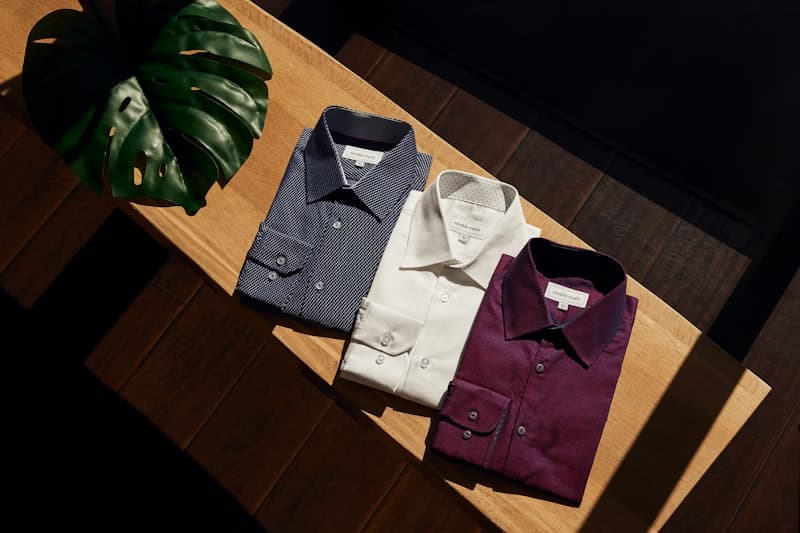
The first step beyond neutrals is mastering earth tones: olive, khaki, rust, camel, burgundy, and forest green. These colors share a warm, muted quality that makes them naturally compatible with each other and with traditional neutrals. An earth-tone palette is the safest expansion from a neutral wardrobe because it retains the grounded, masculine feel of neutrals while adding visual warmth and interest. A rust-colored sweater over olive chinos with brown leather boots is an earth-tone trifecta that reads as sophisticated without requiring any color theory expertise.
The Art of Tonal Dressing
Tonal dressing involves wearing multiple pieces in the same color family but at different saturation levels and textures to create depth. This is the most sophisticated color technique in men's fashion because it creates the illusion of a monochromatic outfit while adding rich visual complexity. For example, pair a charcoal wool overcoat with a heather grey turtleneck and light grey wool trousers. The outfit reads as grey from head to toe, but the variation in texture between the smooth coat, the knit turtleneck, and the woven trousers prevents it from looking flat or uniform.
To execute tonal dressing effectively, you need at least three distinct values of your chosen color family. A dark value for your outer layer, a mid value for your base or mid layer, and a light value for your trousers or accent piece. Texture becomes the secret weapon in tonal outfits because when color variation is subtle, the tactile differences between fabrics carry the visual interest. A tonal outfit in navy might pair a smooth cotton blazer, a ribbed merino sweater, and a pair of brushed wool trousers. Each piece is navy-adjacent, but the textures create a conversation between the layers.
Color Blocking and Complementary Combinations
Color blocking — pairing two or more distinct, saturated colors in a single outfit — is the most advanced technique and carries the highest risk-reward ratio. The key to successful color blocking is understanding the color wheel and choosing either complementary colors (opposite each other on the wheel) or analogous colors (next to each other). For men, the most successful complementary pairings tend to be muted rather than pure. Forest green and burgundy is a classic combination that works because both colors carry enough earth-tone influence to feel grounded rather than garish.
A practical approach to color blocking is the sixty-thirty-ten rule. Devote sixty percent of your outfit to a dominant neutral, thirty percent to a secondary color, and ten percent to an accent color. This structure gives you a safety net while allowing you to experiment. A navy blazer (sixty) with olive chinos (thirty) and a burgundy pocket square or pair of socks (ten) follows this rule perfectly. As you grow more confident, you can push the proportions toward more aggressive ratios. The goal is not to be noticed for your colors alone, but for how effortlessly those colors work together to create a complete, intentional look.